

Zeynep Gülçur on Marina Abramović’s four-hour performance piece, where the sacred can easily tip into kitsch and the grotesque into comedy.
The artist is not present. I repeat, the artist is not present.
Marina Abramović turns to the stage with her latest endeavour, Balkan Erotic Epic. It is an ambitious return to her roots, to the myths, rituals and bodily beliefs of the Balkans, where she grew up.
Begun in 2005 as a series of videos, the project has since grown into something considerably larger, unfolding across exhibition spaces and theatrical stages. In Berlin, the exhibition took over Gropius Bau before the stage version opened this year’s performing arts season at the Haus der Berliner Festspiele. Meanwhile, Florentina Holzinger opened the season at the Volksbühne. Berlin, it seems, is in no danger of running out of naked bodies.
Abramović has spoken of sexual energy as a force that can be transformed into creativity and spirituality, or repressed until it emerges as aggression, anger, war and torture. Balkan Erotic Epic draws on Balkan folk traditions in which genitals and bodily fluids were believed to influence nature, fertility and everyday life.
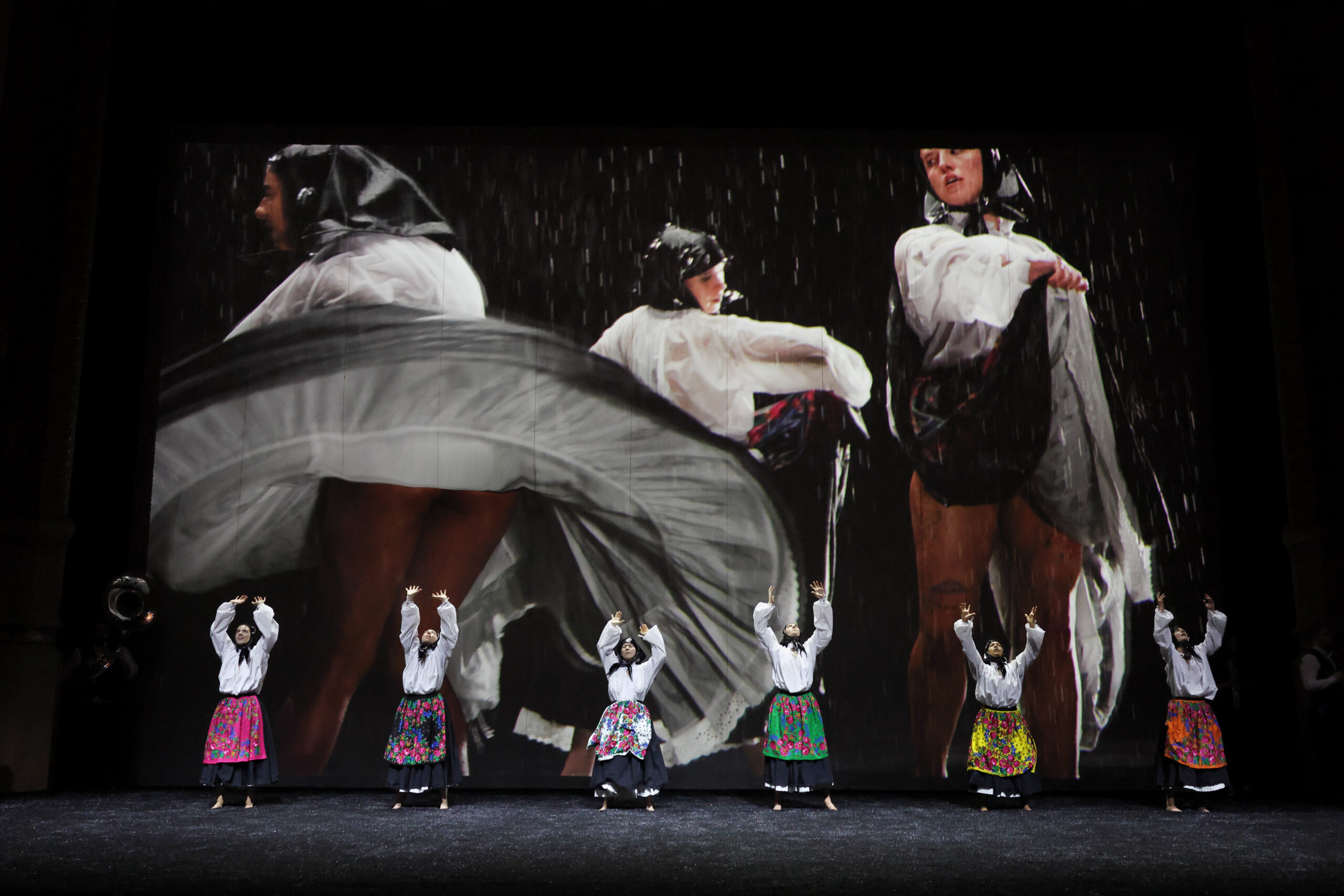
In these rituals, the body becomes an instrument for intervening in the world: a means of stopping the rain, securing fertility or negotiating with the forces of life and death. The premise is fascinating. The erotic is not merely private pleasure, nor is it confined to the bedroom. It connects the individual body to the land and to the community.
At Gropius Bau, Abramović conjures a world in which ancient fertility rites collide with the Western gaze on the Balkans. Phallic towers rise from the earth; men hump the land to encourage the harvest. The effect is deliberately excessive, at times almost cartoonish. But how much does it take to make us look?
The stage production takes it further. This is the third iteration of Balkan Erotic Epic, this time with 10 acts, following the immersive version in Manchester and the stage premiere in Barcelona. But in Berlin, Abramović herself is absent from the stage.
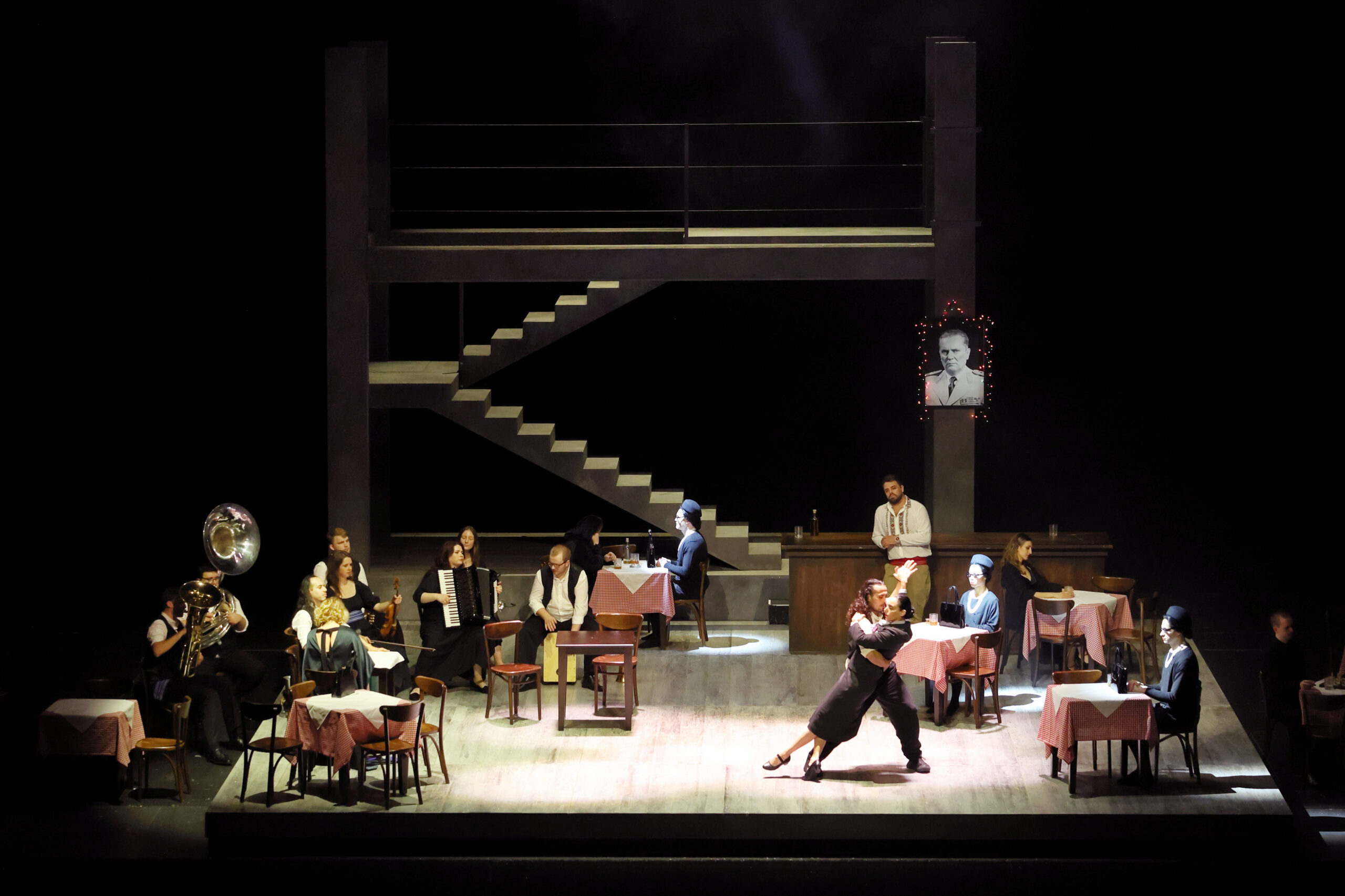
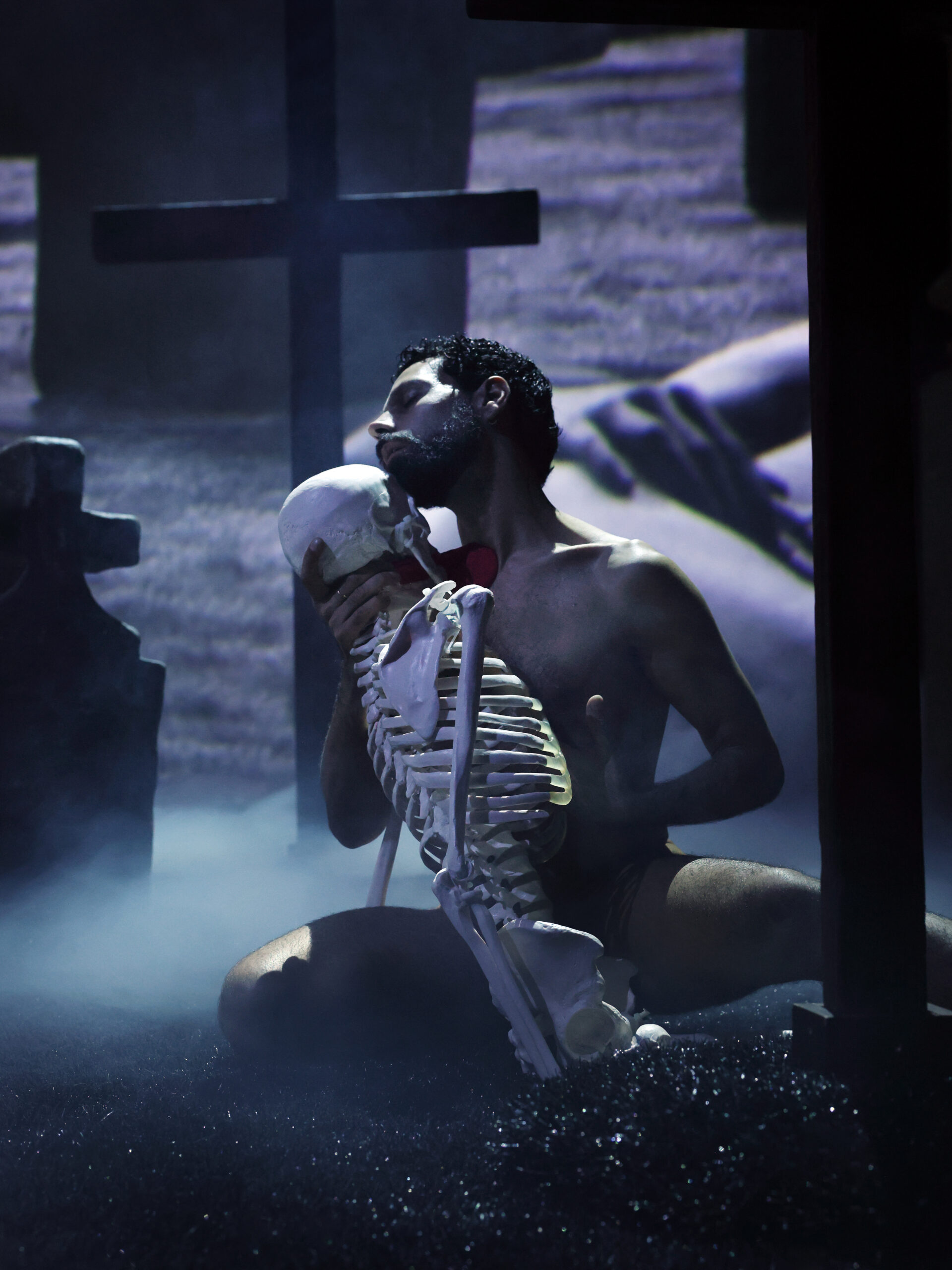
Mirrored costumes catch the light; wooden swords flash through a knife dance; a Flemish scientist named Elke, in oversized glasses and a white lab coat, introduces us to the stranger corners of ancient beliefs. Six performers flash their vaginas at the sky to stop the rain. Later, couples writhe among gravestones and fake skeletons in a cemetery orgy.
There is a lot to take in, and a familiar theatrical vocabulary at work: a little Robert Wilson in the set, a little Pina Bausch in the choreography, a little Florentina Holzinger in the unapologetic display of flesh. The ingredients are all there. What remains less clear is what they make together.
Abramović, now 80, has described this as the most ambitious work of her career — a claim that, to me, doesn’t quite hold up. This is, after all, the artist who let an audience do whatever they wanted to her for six hours, leaving her naked, bleeding, cut, chained and with a loaded gun held to her head; who lay inside a burning star and, after repeatedly jumping through the flames, lost consciousness from lack of oxygen.
Ambition, in her case, has a formidable history. But is doing more the same as saying more?
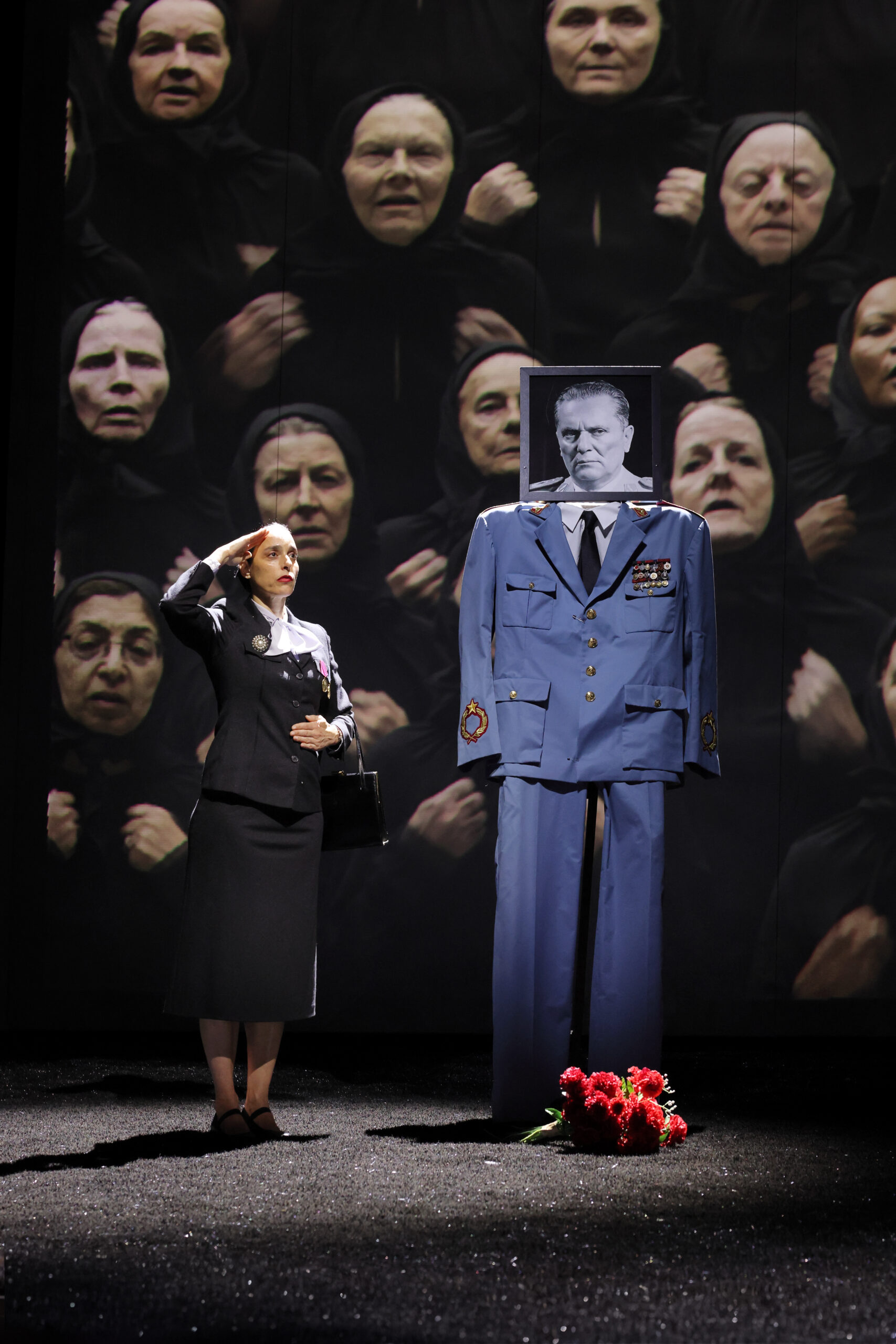
There are moments when the production suggests an answer. Perhaps the most revealing concerns Abramović’s mother, Danica. She first appears at Tito’s funeral, then keeps returning throughout the performance as a strict, buttoned-up observer.
In the Kafana scene, Danica finally lets go, surrendering to music, desire and striptease. Abramović has described watching herself liberate her mother as the most autobiographical thing she has ever made.
It is an intriguing confession. In a piece so determined to turn everything up to eleven, this glimpse of something genuinely personal feels almost lost in the noise. Yet it hints at a more compelling work: one in which the rituals are not simply spectacles to be consumed, but ways of confronting the emotional inheritance of a family and a culture.
But I’m not fully convinced. Abramović knows better than almost anyone that a performance doesn’t need to explain itself, let alone decorate itself into significance. Here, however, the accumulation of bodies, props, costumes and effects rarely seems to intensify the ideas at its core.
And yet, embarrassment is more interesting than it might initially seem. At Gropius Bau, the giant penis sculptures and hyperreal videos of orgies provoke that particular discomfort of looking at something you’re not entirely sure you’re supposed to be looking at. You become acutely aware of the other people in the room, their reactions and your own. Are they embarrassed? Am I? Should I be? The work turns the audience into an unwilling community, united by the awkwardness of being there together. There is something to be said for that.
Shame is rarely experienced in isolation; it is learned, enforced and maintained in public.
But embarrassment is a tricky material. It can open up a conversation about the body, sexuality and the rules governing what can be shown, or it can become a cheap trick.
When does provocation stop challenging our shame and discomfort and start relying on them as a substitute for something more? Is cringe the new black? And if we have become accustomed to seeing everything, from the naked body to elaborate simulations of sexual transgression, what exactly is left to shock us?
In Balkan Erotic Epic, where the sacred can easily tip into kitsch and the grotesque into comedy, the question is not whether the material is strange enough. It is whether the staging allows us to feel its strangeness as something more than an elaborate spectacle.
One of the most compelling works appears in both the exhibition and at the stage: Tito’s Funeral. Projected onto a screen, it revisits the death of the former Yugoslav leader through rows of women dressed in black, beating their chests. The gesture is at once theatrical and visceral, somewhere between grief and trance. It becomes a site where collective mourning and political memory converge, where private feeling is transformed into a public act. The work achieves an emotional intensity with a sense that the performance has somewhere to go.
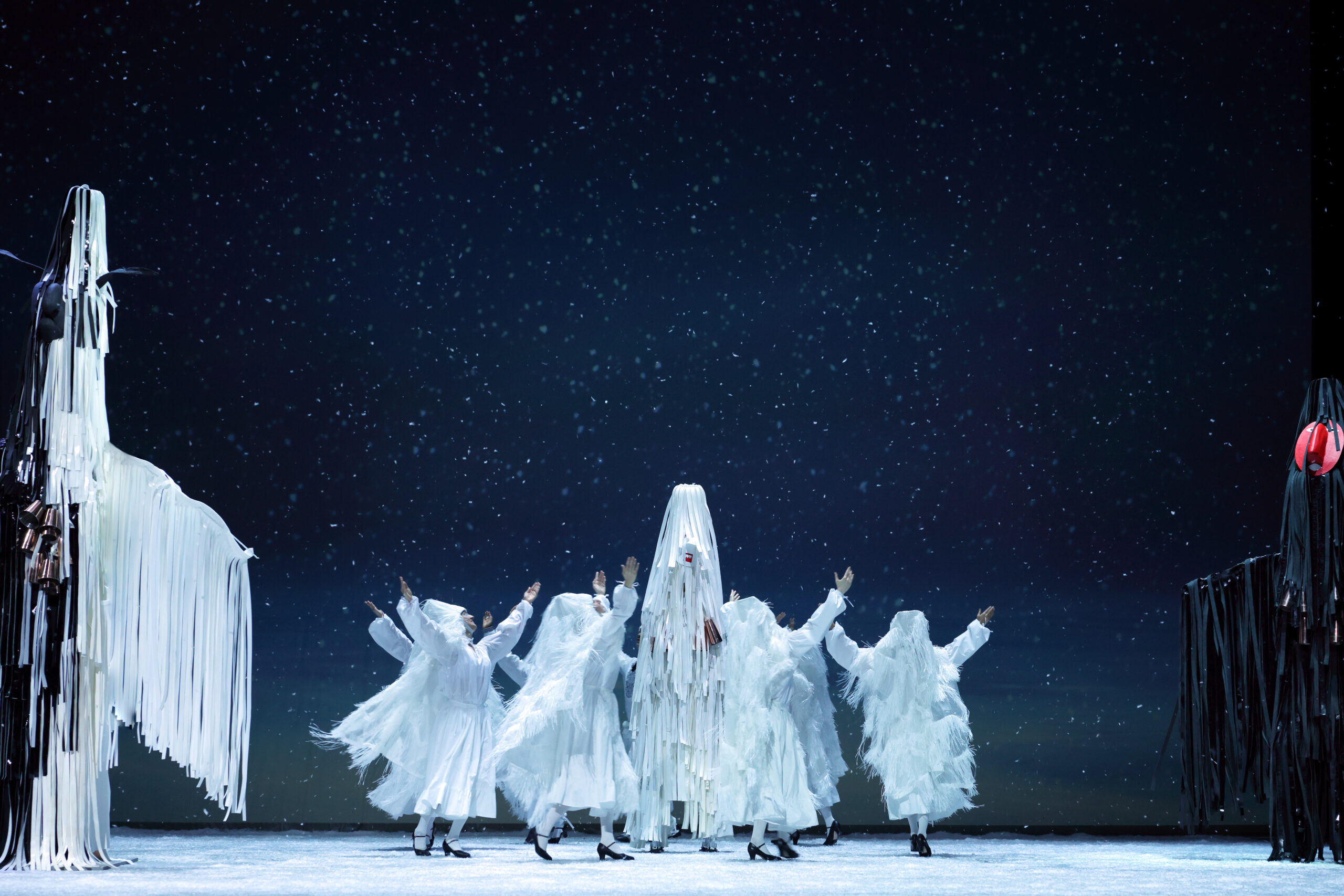
The final act, Ancestor’s Dance, is where the piece finally finds its footing. Against a snowy landscape, three masked figures with bells move in measured steps, accompanied by dancers in white traditional clothing performing a Balkan dance. After the visual noise and theatrical excess that precede it, the scene feels almost startlingly restrained.
There is no need for another penis, another provocation, another elaborate set design. The bodies move together, and the image is allowed to hold. It is the strongest moment of the evening precisely because it seems to understand what the rest of it often forgets: for once, the work trusts the image to speak for itself.
The tension becomes more pronounced when we consider the trajectory of Abramović’s career. We don’t call her “the grandmother of performance art” for nothing. But she also paved the way for performance art to enter the art market, where it could be documented, circulated and sold.
But what happens when the artist who once tested the limits of the institution becomes one of its most recognisable faces? When radical gestures become an established artistic language, and that language becomes a brand?
I was going to use Wolfgang Tillmans and his music as an example of what happens when an artist’s name becomes the main event. Then I saw Balkan Erotic Epic and thought: Dear Mr Tillmans, I owe you an apology. I had been too harsh. You deserve better.
The joke is on me, of course. But it raises a more serious question: when an artist becomes an institution, are we still judging the work, or have we started grading it against the mythology of the artist?
Abramović’s name carries expectations of endurance, transcendence and the pushing of limits. But can the work still surprise us when the Marina Abramović experience has become so familiar?
That is what makes Balkan Erotic Epic frustrating. The problem is not that Abramović has changed, or that she has moved from performance to theatre. Artists are allowed to evolve, and a return to the myths of her childhood could open up new possibilities. It is that the scale of the production repeatedly threatens to eclipse the ideas that supposedly justify it.
It wants to be monumental, grotesque, funny, spiritual, political and erotic all at once. Sometimes it is all of these things. Too often, it simply looks like a great deal of effort being made to ensure that we notice.
Perhaps shock is the wrong measure of Abramović. Shock is a limited currency, and the contemporary art world has become remarkably good at spending it. The question is whether she can still make us see something differently — about our bodies, our histories, our collective memories, or the strange relationship between eroticism and ritual. At its best, Balkan Erotic Epic suggests that she can. At its worst, it mistakes accumulation for intensity and duration for depth.
In the booklet, Abramović says that we will feel the ancestors. Three hours in, the only things I feel are my aching knee and thirst. They wouldn’t even let me bring my water bottle inside. The ancestors will have to wait.