
Chloe Wise joins Moses Sumney and Ben Ahlers to discuss her sci-fi romantic comedy PsyFi. Words by Job Piston.
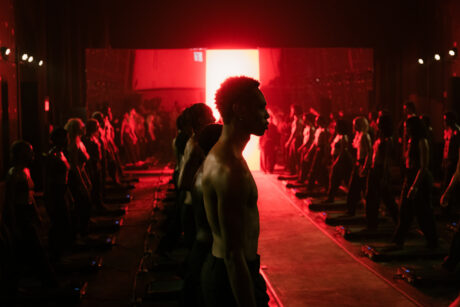
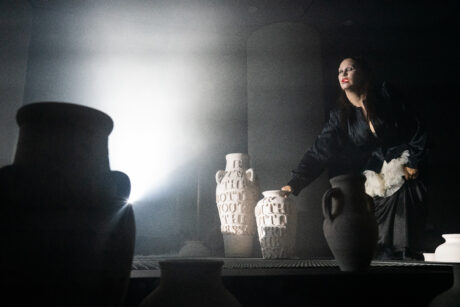
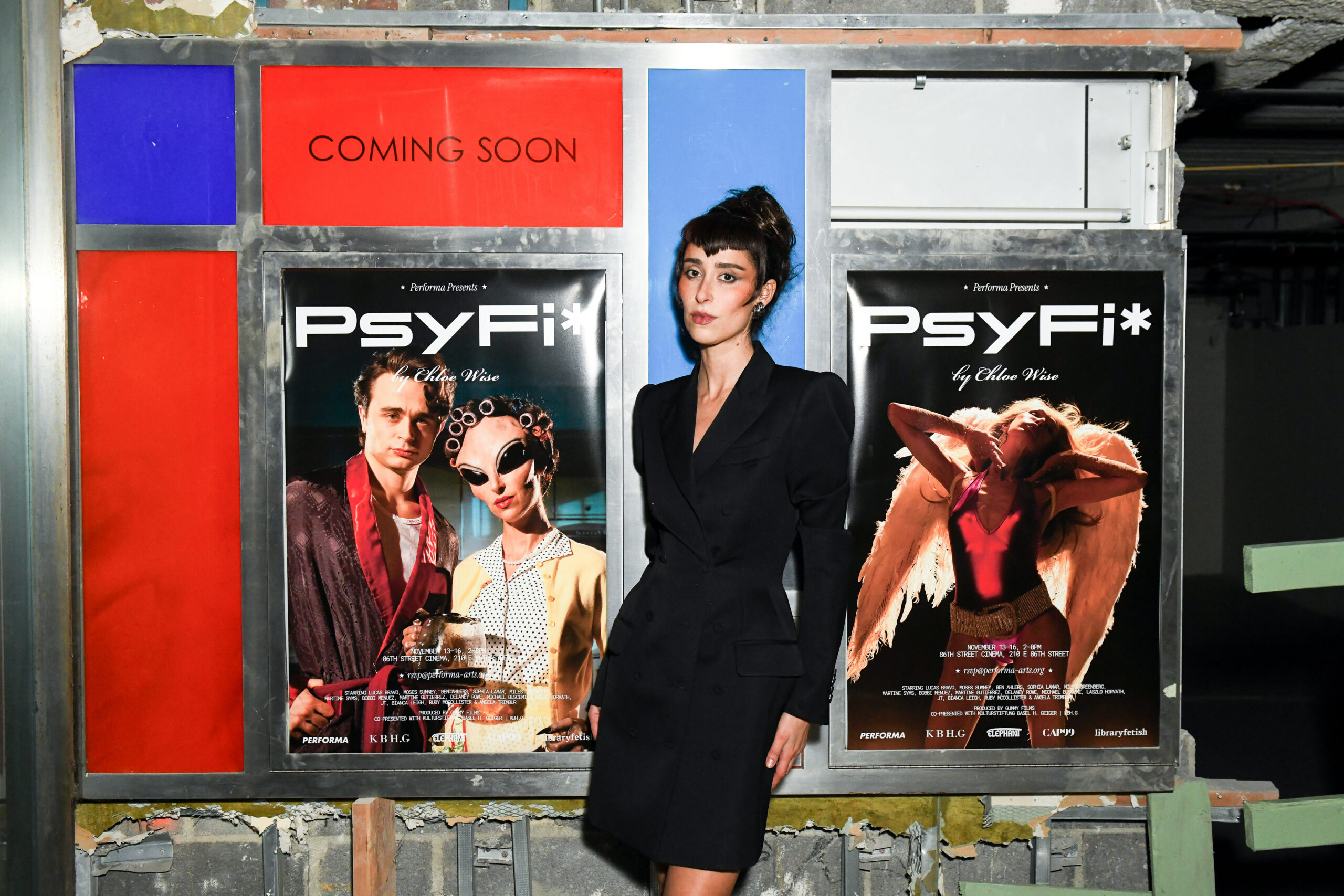
Artist Chloe Wise has beamed back to New York from Basel for the U.S. premiere of PsyFi*, her latest and most ambitious film, marking a new turn in her work. Originally commissioned and exhibited by Kulturstiftung Basel H. Geiger in Switzerland, the film is now on view at New York’s 86th Street Cinema from 13 to 16 November, presented by Performa in partnership with Elephant, Library Fetish and CAP99. PsyFi* is a 30-minute sci-fi romantic comedy in which pop culture, religious imagery, and absurdist humor converge into a strange, seductive universe shaped by belief, fantasy, projection, and the possibility of extraterrestrial contact. Best known for portrait paintings drawn from her downtown New York circle of artists and performers, Wise now sets that social world in motion, translating it into a heightened cinematic language of character, spectacle, and performance.
Wise moves freely between painting, film, language, and performance, guided by a comic sensibility that surfaces in sharp wordplay, puns, and jokes capable of stopping you dead in your tracks, or whatever you happen to be doing, and completely derailing your train of thought. Co-stars Moses Sumney and The Gilded Age actor Ben Ahlers join us for a transmission from somewhere between the studio and outer space.
Job Piston: Have you had a spiritual reawakening in the lead-up to the New York premiere of PsyFi*? Or are you still waiting for one?
Chloe Wise: One could say I’ve awoken with the spirit of woke 3.
JP: Where did PsyFi* begin for you? What was the first idea, image, or obsession that set the whole thing in motion?
CW: For the last six years, if not more, I’ve been obsessed with reading books and watching films that pertain to explorations of the broad and multifaceted theme I’m going to refer to as “the phenomena”: questions of the ineffable, of UFOs, of divinity, of consciousness, what is “out there”? And I’ve been trying to find a way to bring that into my work. When I got the opportunity to make a film for my exhibition in Basel, I knew where to start.
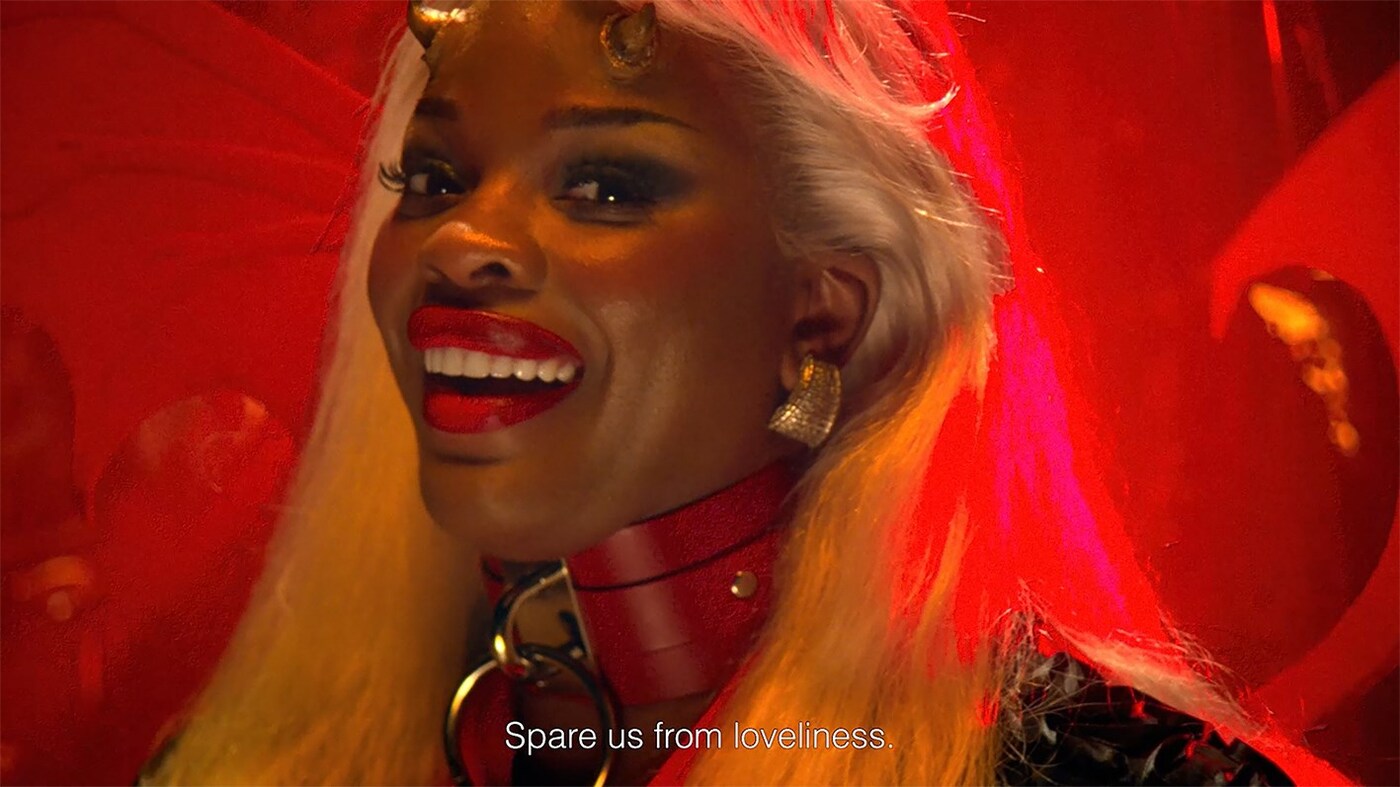
JP: The film moves through several cinematic bloodlines: science fiction, cult film, rom-com, soap opera, and fashion spectacle. I see a Warholian type of casting, mixed with the cerebral theatre of Mike Kelley and David Lynch, and the fever dreams of Ryan Trecartin. The film’s pop-cultural iconography collides with absurdist devices, and where it really takes off brilliantly is in its strange contradictions of contemporary life, both deep and ridiculous.
Who are some of the artists, movie stars, and directors you felt close to while making this?
CW: You nailed it. You seriously just listed them. I definitely ask myself, “What would Mike Kelley do?” And I’ve said it before, and I’ll say it again: Ryan Trecartin is my favorite artist. There’s definitely a Lynchian dream logic here, and I’ve shown my video work at the Warhol Museum, so I absolutely see the connection. I’d say there’s also some John Waters inspiration and Peter Greenaway energy in there, with a sprinkle of Pierre et Gilles.
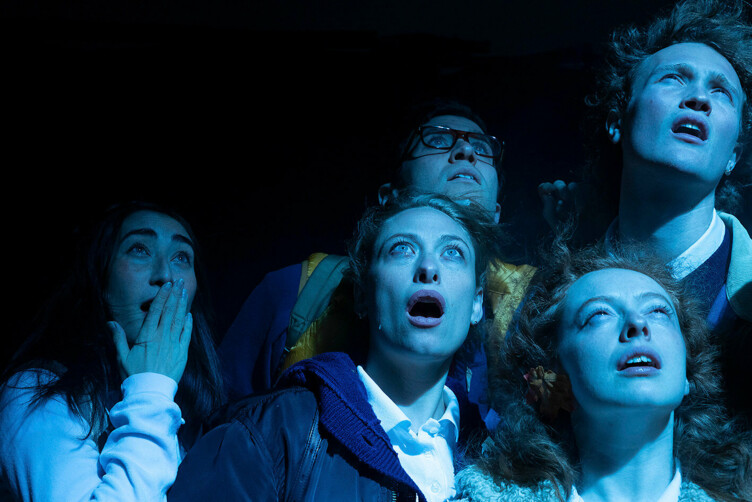
JP: Producing a film, much like a performance, relies heavily on collaboration. Here you have brought together a stable of performers from musicians, actors, comedians, nightlife figures and visual artists. Can you talk a little about who you choose to assign roles, and how you worked together within your own vision?
CW: This was my favorite part of making something like this come together. I’m a deeply collaborative and social person, and painting is so solitary, so this is my opportunity to work really closely with people I love and trust. Lole, who I’ve worked with for 10 years, is such an ambient musical genius. He’s so cool, for lack of a better word, that sometimes people are surprised we know each other. He has a way of consistently elevating my work with his harmonium, synths, samples, and musical style, and he knows exactly what I mean when I say I want the score to sound like angels in heaven singing a hymn, but as if it were also coming out of a UFO.
JP: You’re very good at mixing people, disciplines, and sensibilities that might not obviously belong together, and somehow create chemistry between them. How do friendship and free association shape the way you cast?
CW: Laughter!!!
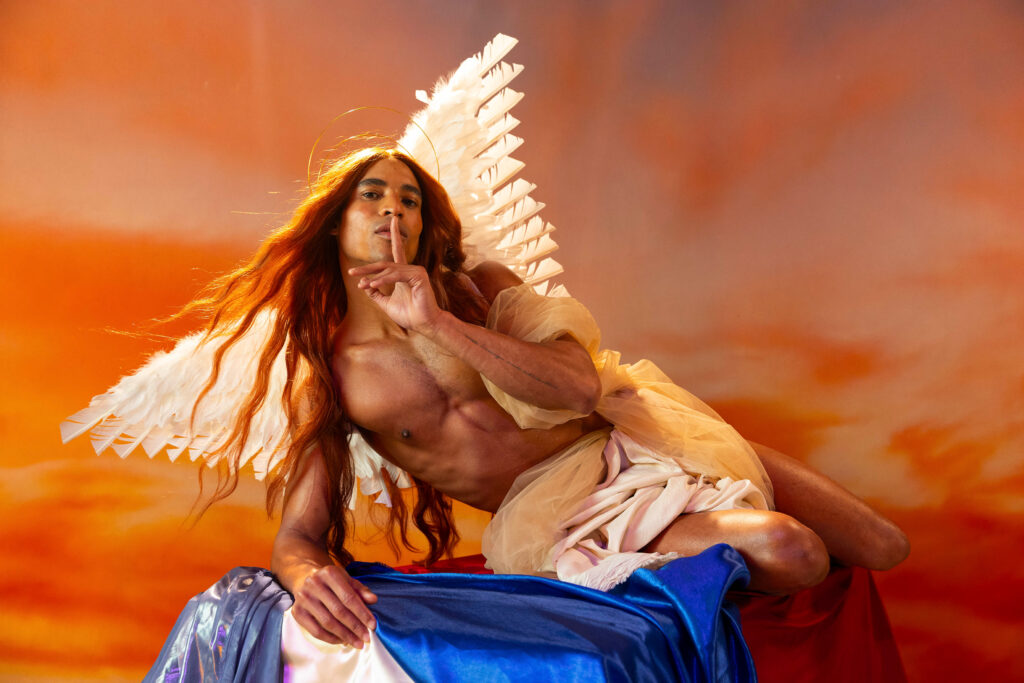
JP: Moses is a perfect example of that. Moses, you play an angel sent by the heavens. What did you do to prepare to be modeled after iconic Baroque and Renaissance frescoes?
Moses Sumney: I underwent a strict impurity-free diet to imbue myself with the holiness of the cherubs. I ate nothing that had been killed, and also nothing that had not experienced the blessing of life. I would chase all of that by imbibing Holy Water. I am always sort of reaching a finger limply out to God like Adam in The Creation of Adam, so this felt divinely aligned.
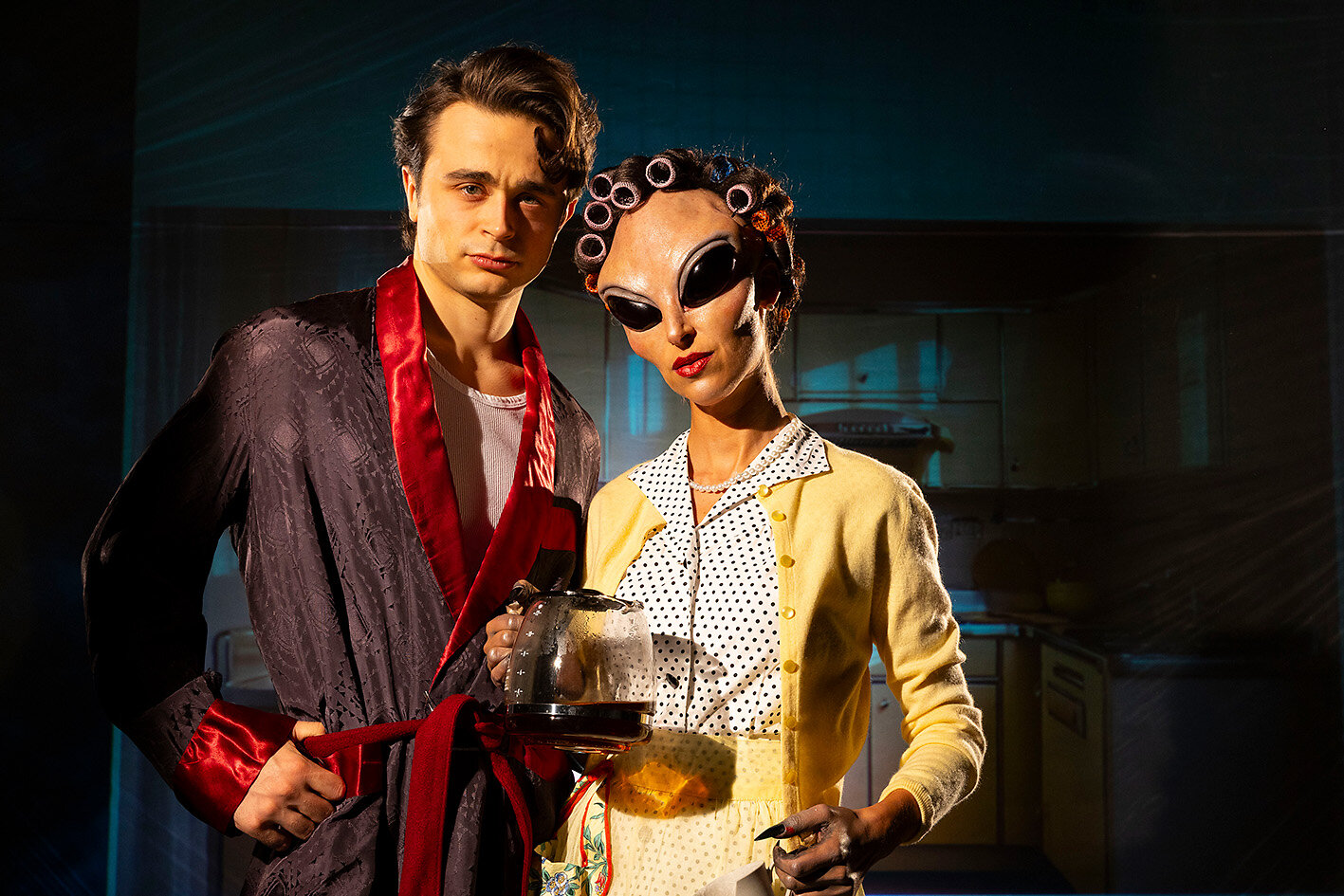
JP: There’s a lineage of artists who build entire worlds through casting, from Warhol to Telfar, where the people around them become part of the language of the work. What interested you about entering Chloe’s world?
MS: I am already in Chloe’s world, locked in a cosmic game of will they/won’t they. What’s great about the casting here is that it is a natural extension of Chloe’s social circle, in which we get to explore whether or not we were all divinely placed in each other’s paths. I long to be a part of a community while maintaining my position firmly above everyone, and playing an angel allowed me to do both.
JP: You’re playing an image that has existed in painting for centuries, but here that image suddenly has a body, a voice, and movement. Innocence, desire, and divinity also run parallel to your own musical performances, which can be theatrical, statuesque, and emotionally vulnerable. Your 2022 self-directed film installation at Nicola Vassell, Blackalachia, introduced us to an emotionally transparent sensibility, whereas PsyFi* asks you to step into Chloe’s highly constructed world of camp, humor, and artifice. Did stepping into that tone unlock a different side of you?
MS: I am always thinking about God. I’m making an album right now, and my running joke is that every song is a gospel song, regardless of genre. So this world didn’t unlock a different side of me; it let me exit my modality, in which everything is Very Serious, and engage in nonsense. Chloe and I are drawn to similar metaphysical questions. I often wonder whether nonsense might be the truest expression of the wordless spirit realm (hello Cocteau Twins, hello speaking in tongues), and Chloe explores that through silliness. In this film, I got to be silly in a way that’s much closer to the person my friends know in everyday life.
JP: That idea of metaphysical becoming physical comedy, and even a little silly, feels like a good place to return to PsyFi*. Chloe, expanded cinema has always been interested in what happens when the image escapes the screen. In producing a live intervention for the US premiere of PsyFi* with Performa, what are you most interested in or curious to find?
CW: I’m excited to see how our performance, which is a sort of musical intervention that takes one scene from the film and lets it bleed into reality, affects the people around it. When you’re watching a film, you know you’re seated and ready to watch something transpire, but I love the idea of the melody from the film sort of following you offscreen, to the bar, to the dance floor, possibly home.
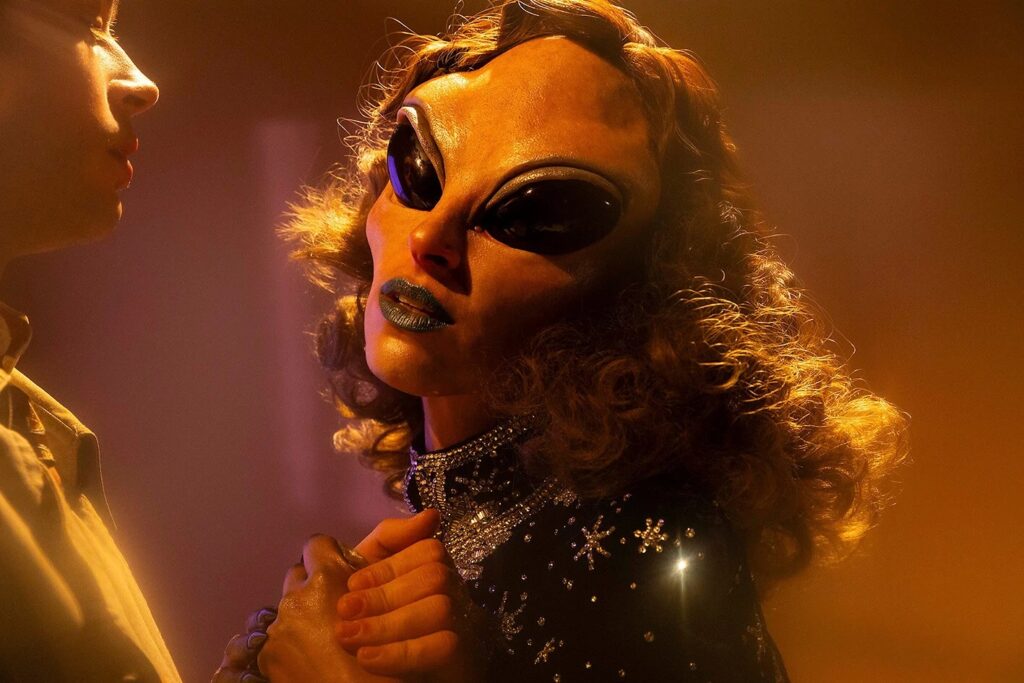
JP: What freedoms do you feel you have as an artist making a film that a commercial filmmaker or project might not?
CW: At every turn, conventional filmmaking has to prioritize moving the plot forward and maintaining entertainment value. Here, I rejected plot and conventional narrative structures almost entirely. I was able to freely juggle playful improvisation with poetic repetition, and jokes with serious concepts; to let an idea move me impulsively, almost like painting with people; and to allow strange, unresolved ideas to remain strange and evade definition or resolution. And if I felt like throwing in a conventional cinematic device, I was able to do that too. I feel exceptionally blessed to have had that freedom while making this work.
JP: Anything to say about the conditions of commercial work that the fine artist doesn’t have?
CW: Cash.
JP: Cashing in. Cashing out!
Ben, you were on the receiving end of some of that anarchy. You play Bradford in the alien melodrama, a film within the film. You’re the human lover left behind by your extraterrestrial partner. Did you draw on any real-life heartbreak for this, or how does one prepare to be abandoned by an alien?
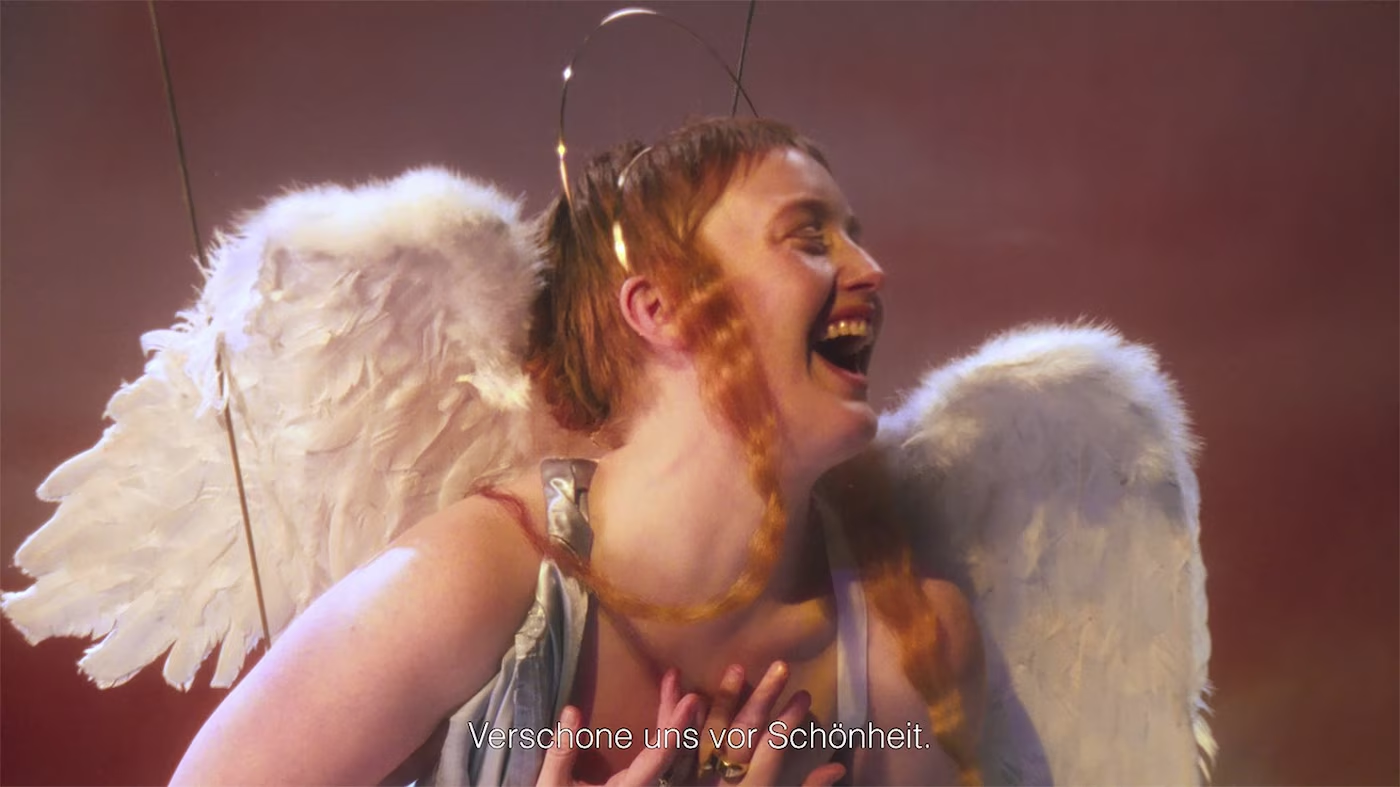
Ben Ahlers: My first heartbreak was during recess under the tornado slide in 4th grade. That’s all the life experience you need as an actor.
JP: You’ve likened acting to a physical workout, as something that requires endurance, repetition, even a kind of cross-training! You’ve described theatre as an exercise in presence, while television gives you the chance to self-reflect. Did PsyFi* ask you to access a different part of yourself as a performer? Or perhaps it brought you back to something more intuitive, playful, or even untrained?
BA: Chloe’s set was so playful and explorative. But her writing also calls on a rich, shared cinematic language. She provided the perfect balance of known and unknown.

JP: In the PsyFi* melodrama, overacting, comedy, and ridiculousness aren’t mistakes to be corrected, they’re part of the zany aesthetic language of Chloe’s world. Did working with Chloe on an art film change the way you think about what good acting is? Did it push you somewhere into another part of your creativity you haven’t been before?
BA: I was so grateful to get dropped into such a zany world where every choice was welcome and investigated with real respect and curiosity. Getting out of the way of my self-judgement and perfectionism and throwing things at the wall opened up a whole other side of my artistry. You don’t always get to be impulsive and silly and “wrong” in a safe environment. And I’ve become really hungry to foster a healthy sense of anarchy within myself and my pre-conceived ideas of the good and bad choice. My Catholic/Iowa boy upbringing takes some time to move out of the way for my Freak Flag to find its space. Thankfully there are artists like Chloe who operate in that place with excellence, passion, and enthusiasm for those of us still finding ourselves.
JP: That feels like the perfect place to sit with for the moment: permission to be impulsive, silly, and even wrong. Chloe, what should the audience believe by the time they leave?
CW: In everything.