
In Paris, the six-day Reference Festival, this year themed FREIE KUNST, unfurled across an eclectic mix of venues, from nightclubs and high-end fashion department stores to cultural institutions and even a bakery. Words by Jad Salfiti.
At dusk, outside the Institut du Monde Arabe in the French capital, hundreds queue along the banks of the Seine. Beneath the building’s striking glass façade and Islamic-inspired apertures, Reference Festival staff check off names of attendees on iPads.
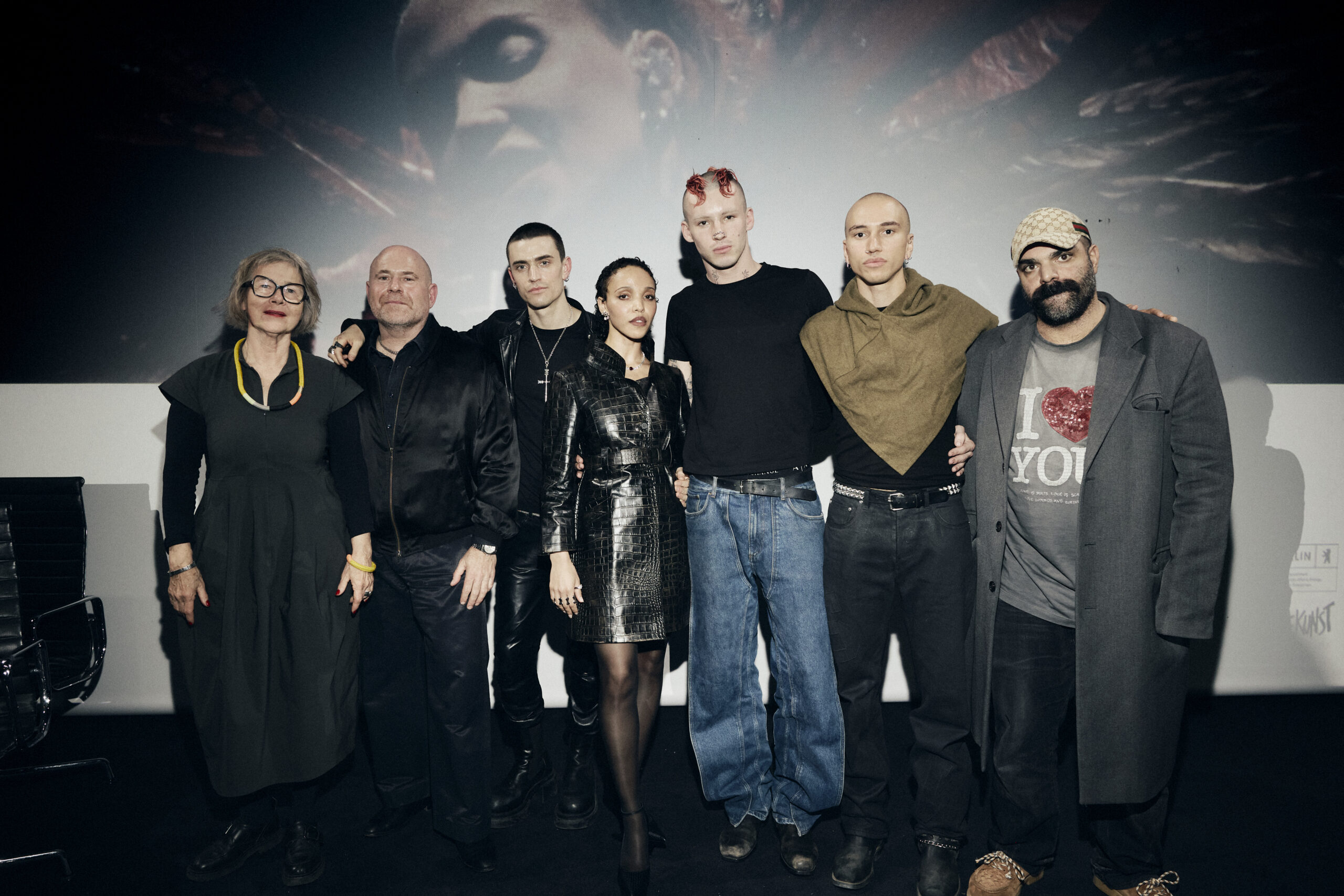
Downstairs, a packed auditorium screens the concert film of British experimental artist FKA Twigs, filmed during the Paris stop of her Body Highs tour. The film is propulsive and hypnotic, its steel-blue haze punctuated by flashes of red as her operatic vocals soar over vibrating bass. In one sequence, Twigs seizes up like a statue, her dancers then pull her body apart, only to remould it. The artist has been based in Paris for the past five months, shooting a Josephine Baker biopic by French filmmaker Maïmouna Doucouré.
During the Q&A following the screening of FKA Twigs’ film, Haïati takes the mic to pose the final question with a mischievous glint, an air malicieux, in his eye. “People say you speak fluent French now?” The room breaks into laughter. “Can we have a little glimpse?” Initially reluctant, Twigs rises to the challenge, delivering an impressive response in French to warm applause.
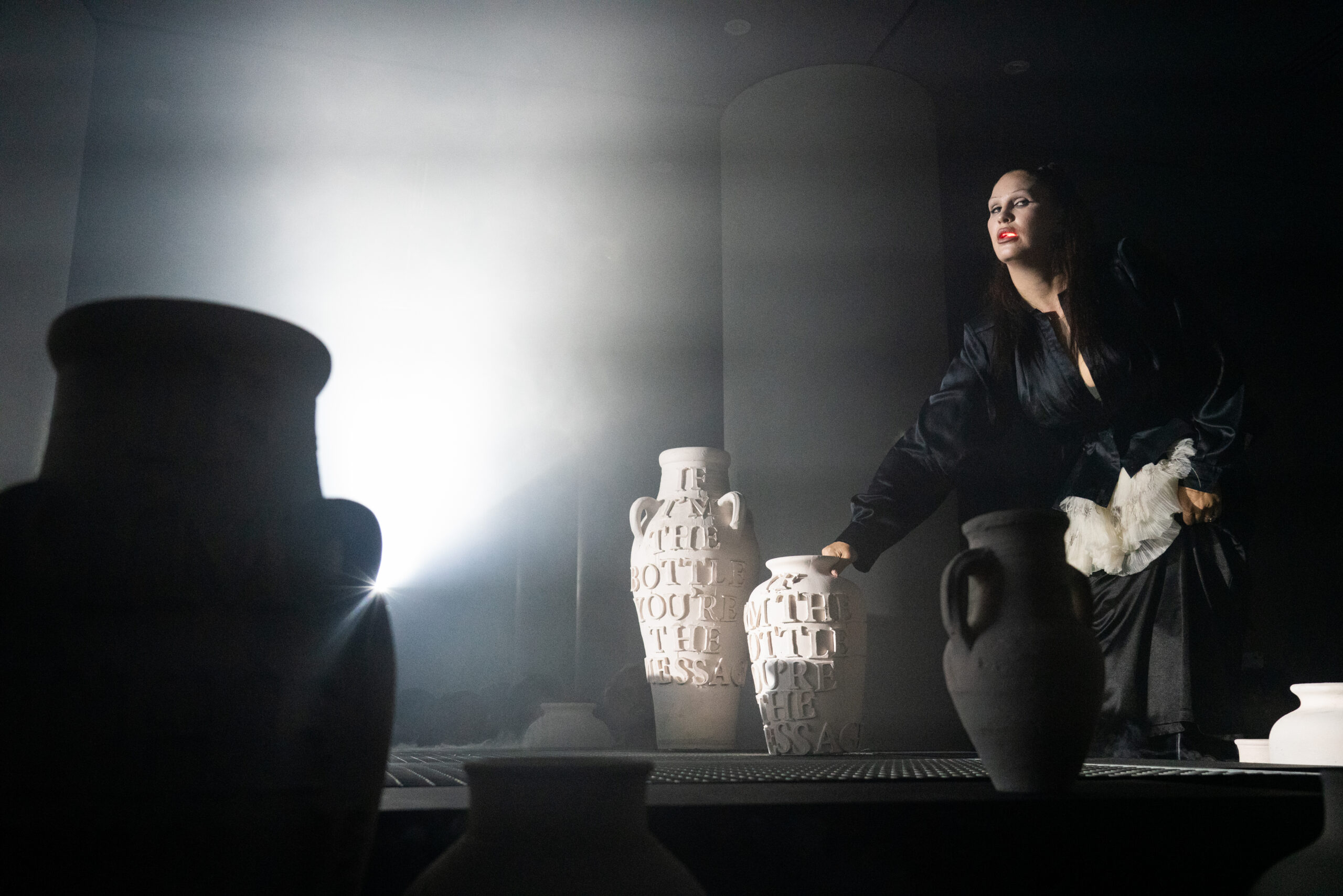
Elsewhere at the festival, American avant-garde artist Eartheater appeared with her hair scraped back into a sleek ponytail, wearing a glossy black wrap jacket and tiered white ruffled skirt. A glowing red mouthpiece illuminated her face as she moved among 3D-printed Grecian urns created for her performance.
It’s apt programming for the Reference Festival for its Parisian debut. Now in its eighth edition, the festival evolved out of Reference Studios, the Berlin-based communications agency founded by Mumi Haïati. Through the agency and its Intervention platform, Haïati has invigorated German’s capital’s fashion ecosystem, and now, with Reference Festival, his ambitions are stretching out of Berlin.
Starting its life in 2019 in an empty parking garage in Neukölln, Reference Festival has since grown into a platform for the city’s experimental mix of fashion, art, music and nightlife. Titled FREIE KUNST (“Free Art”), the programme brings together artists and creatives across venues including the Institut du Monde Arabe, Dover Street Market Paris, and Silencio.
Is there an inherent contradiction between luxury and subculture? “I think it’s a false dichotomy. Culture and commerce have always been connected. What matters is how meaningful that relationship is, at least to me. And at Reference, we’re not simply interested in tapping into a scene or borrowing its credibility. Cultural relevance isn’t really something you can just buy; it’s something you have to contribute to.”
The festival line-up included American filmmaker Jordan Firstman, whose debut feature Club Kid was the talk of Cannes; Munky, guitarist with nu-metal band Korn; French-Algerian creative Michèle Lamy; American experimental musician and performance artist Eartheater; and British-Canadian techno pioneer Richie Hawtin. The connective tissue is in many ways the tastes of Haïati himself.
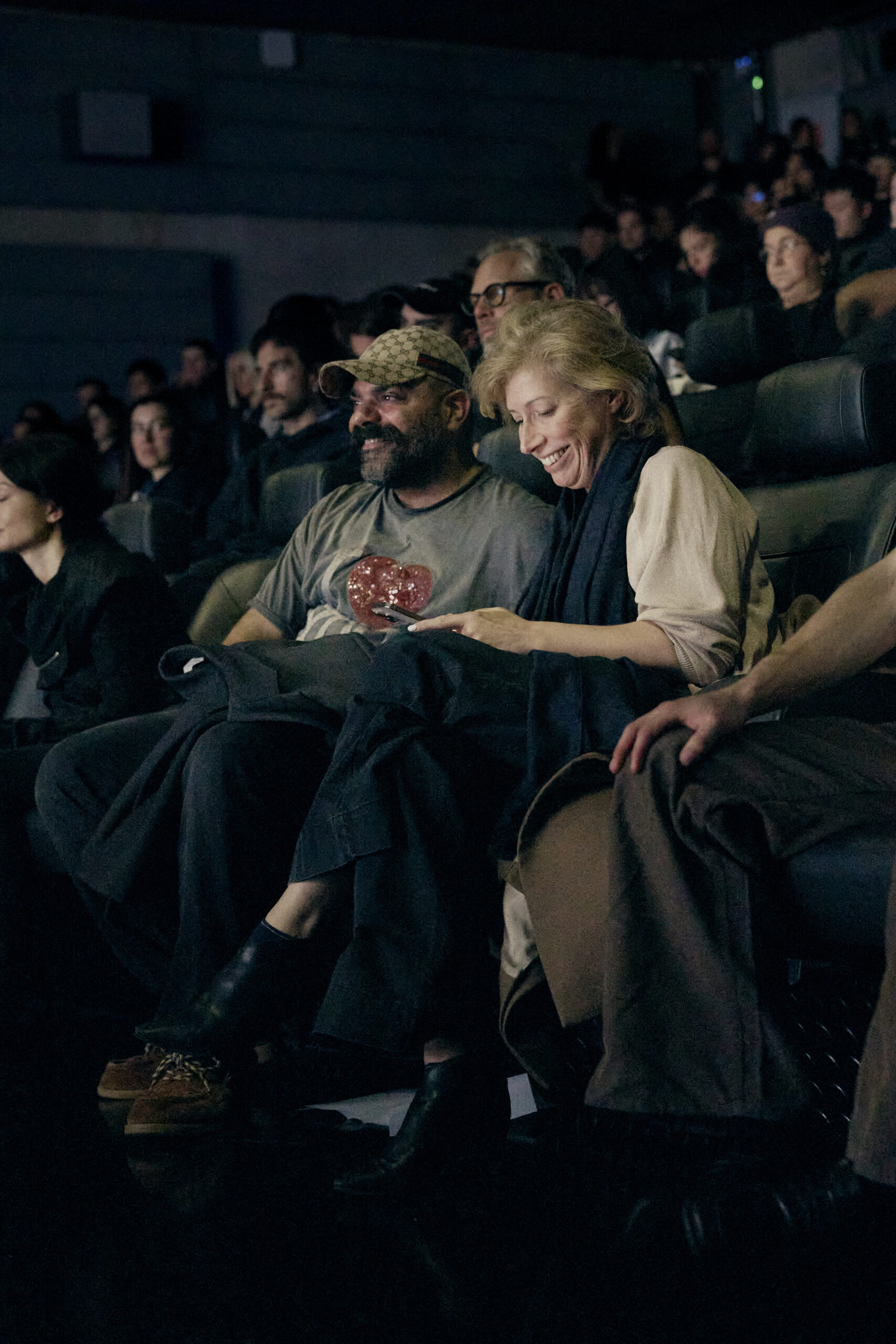
Like many in the diaspora, his identity has always been hybrid. Much of the fun for him lies in bridging different scenes and sensibilities. “I’m fascinated by what happens when different worlds collide,” he says. “Being Iranian and growing up in the Rhineland, I never really felt defined by one culture. I was excited to explore different identities and communities. I was this little club kid, sort of an introverted extrovert, but curious,” he recalls. By 12, his older-looking appearance helped him slip through club doors undetected. He and his friends gravitated towards underground drum and bass nights and hip-hop clubs around Frankfurt and near the Belgian border. Decades later, it appears Haïati never left the club. But rather found a way to bring the establishment inside.
Haïati currently lives between the two European capitals. But how does Paris compare to Berlin? “Everything is organised and functional and prosperous,” he says referring Paris. Berlin, on the other hand, is “dysfunctional, chaotic, full of contradictions – and somehow that’s the German capital, and I actually love that.” Perhaps it has been a driving force in the vision of Reference “You can draw from different worlds and create something entirely your own. And I guess that’s still very much how I approach everything today, including Reference. I’ve never been particularly interested in staying within one world”, he says. “A strong community isn’t one where everyone is the same. It’s one where everyone has the freedom to become themselves by recognising the same freedom in others.”
For Haïati, Berlin needs room to evolve. “What’s so radical about repeating yesterday’s idea of rebellion? And honestly, I think that’s a problem with certain subcultures too. They start out challenging conventions, and eventually become completely trapped inside their own. I think we should learn from the past, preserve what’s valuable, but also have the courage to move beyond it.”