
In a diary from 150 feet above Times Square, artist Kinlaw reflects on FALL RISK, a performance exploring care and the failures of the American healthcare system.
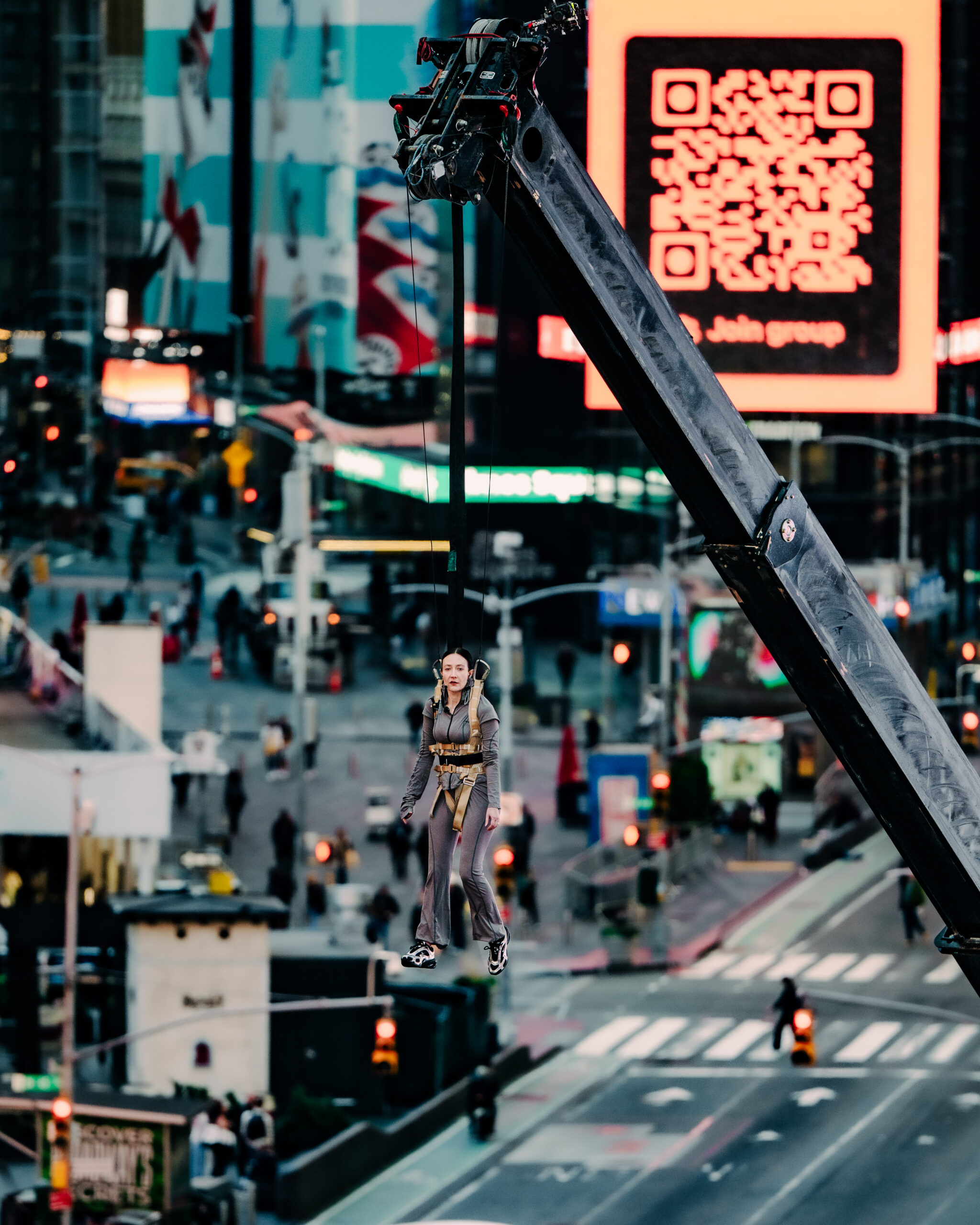
It’s taken a year to get permission to hang from a crane in Times Square. FALL RISK is about trying to get my mom and dad the care they need from an insurance system that profits by withholding it. Tonight I’ll be speaking about this 150 feet in the air. First we have to work out where to park the truck.
4:15 am — October 13
I get ready with the lights off so my boo, Maddy Talias, can keep sleeping. We’re in a hotel a few blocks from the plaza, and they’ll be up soon to shoot video. I walk out, remember I’ve forgotten my herbal motion-sickness patches, and go back to get them.
5:00 am — rehearsal
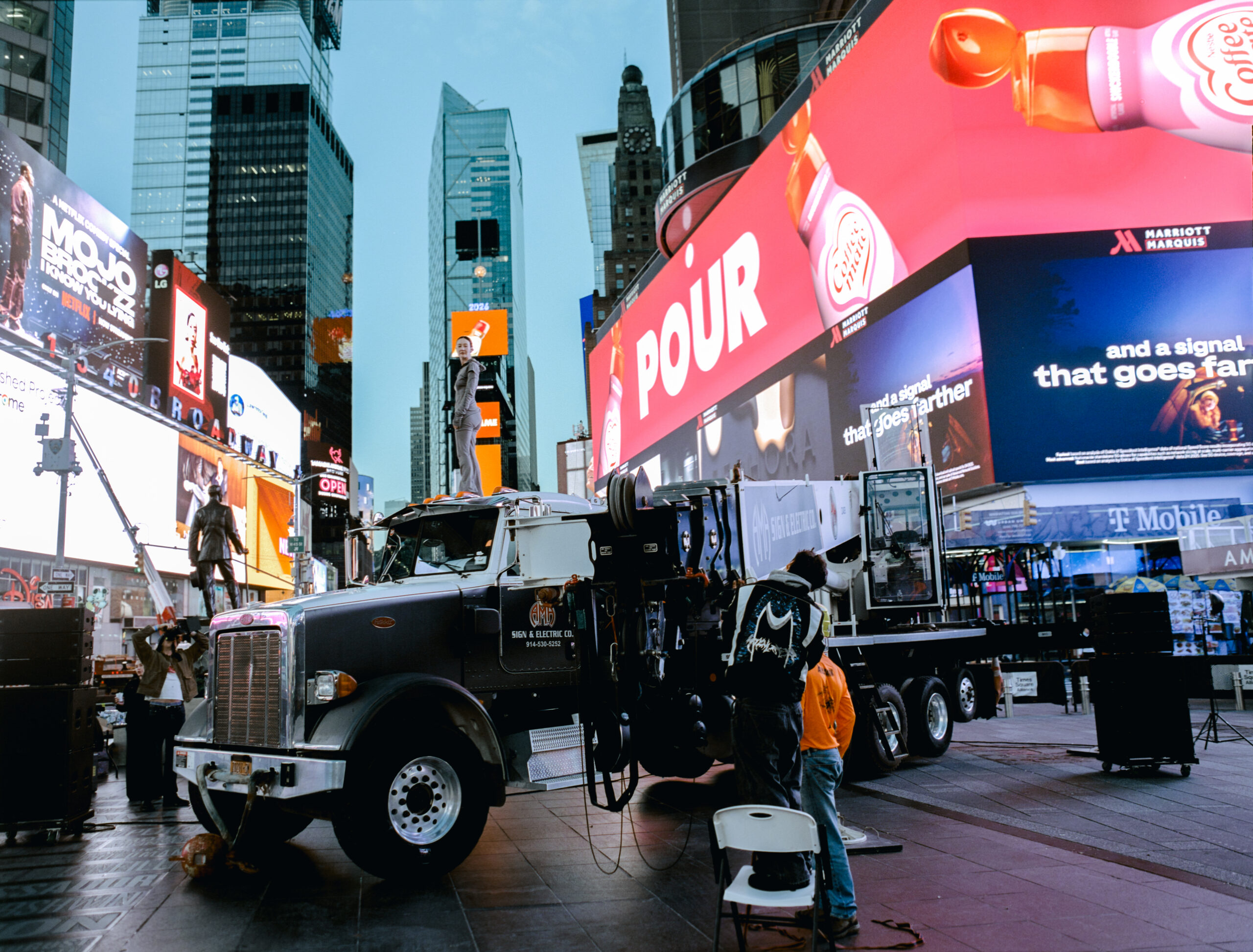
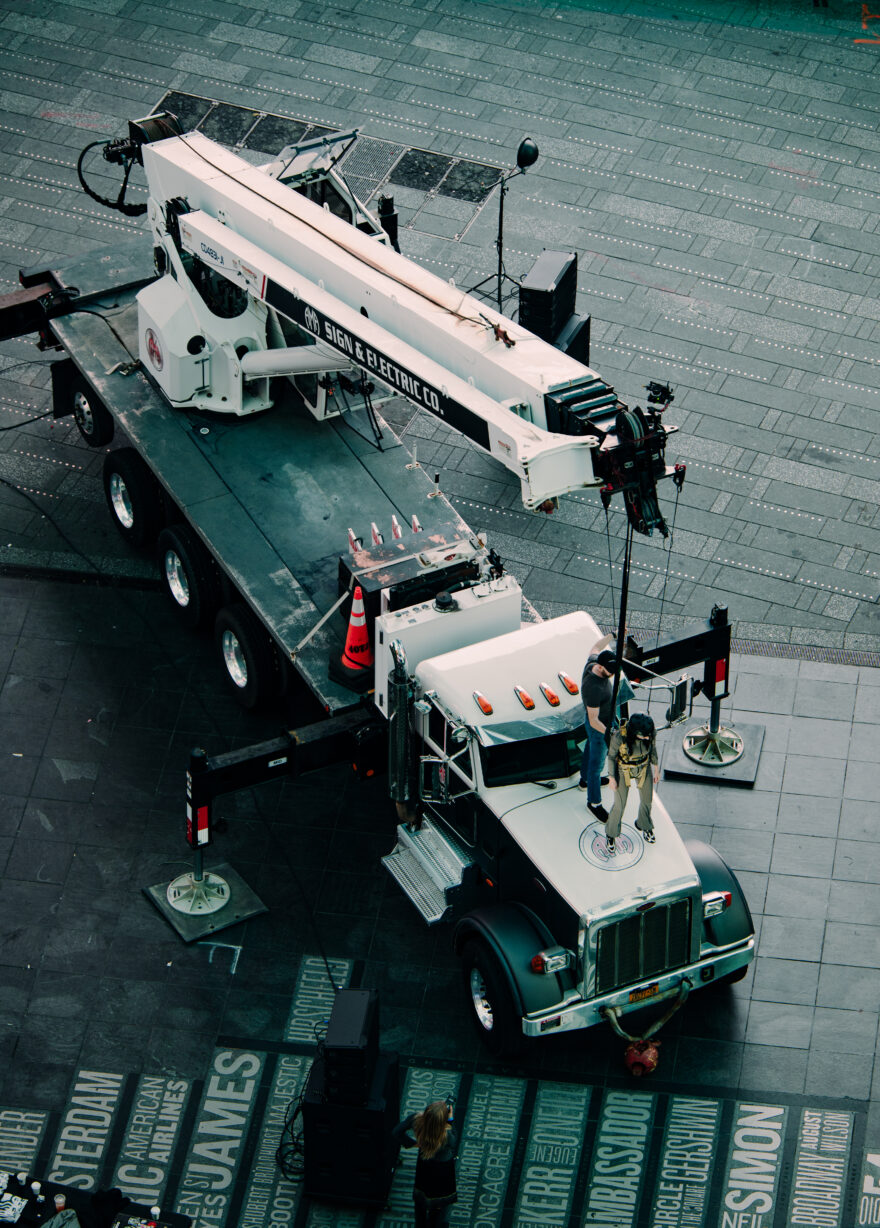
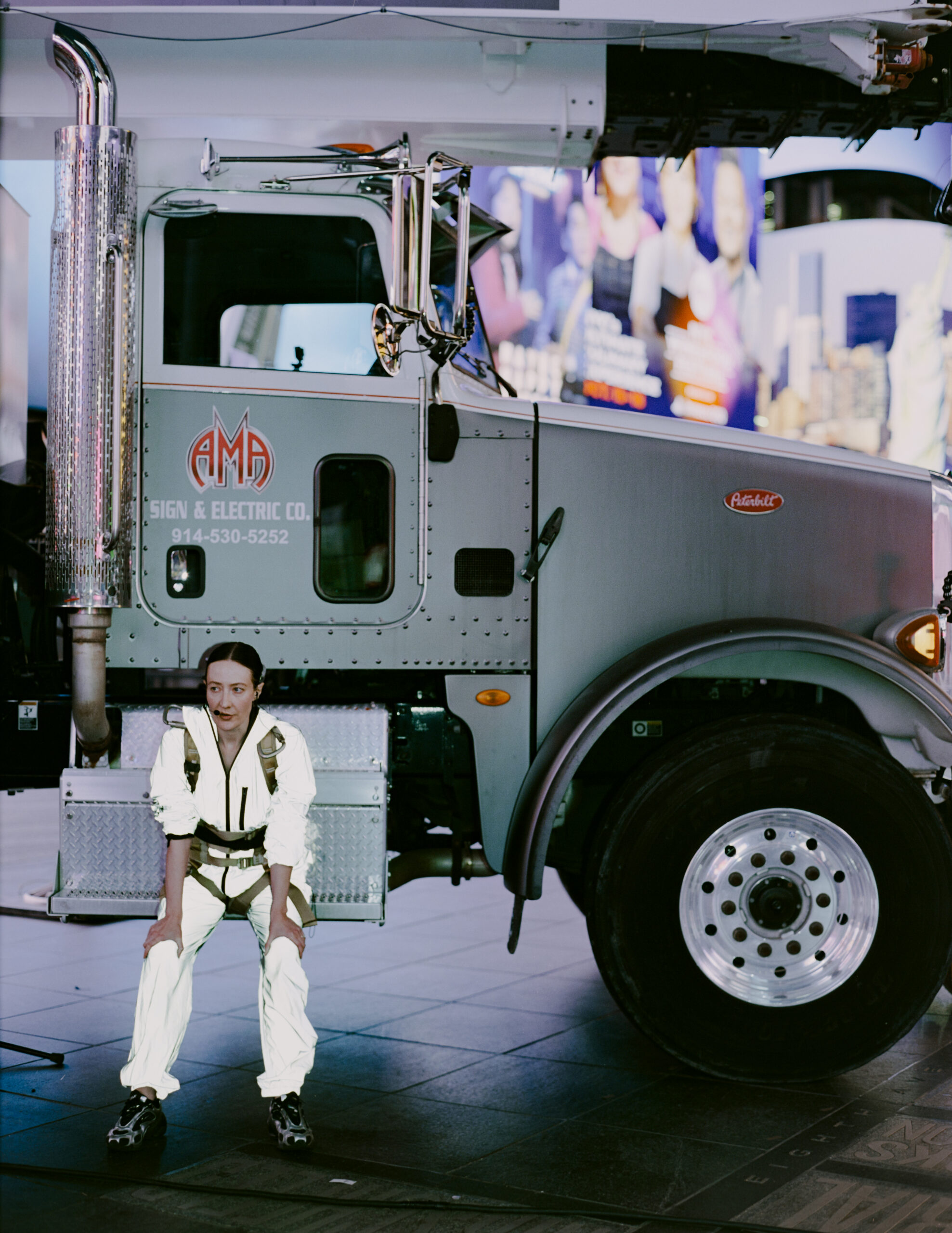
The plaza is already barricaded. Sara O’Keeffe, the curator, meets me. Damian Santucci is helping coordinate with the crane company as we position the truck. We have to rehearse before the morning commute, then leave everything in place until tonight.
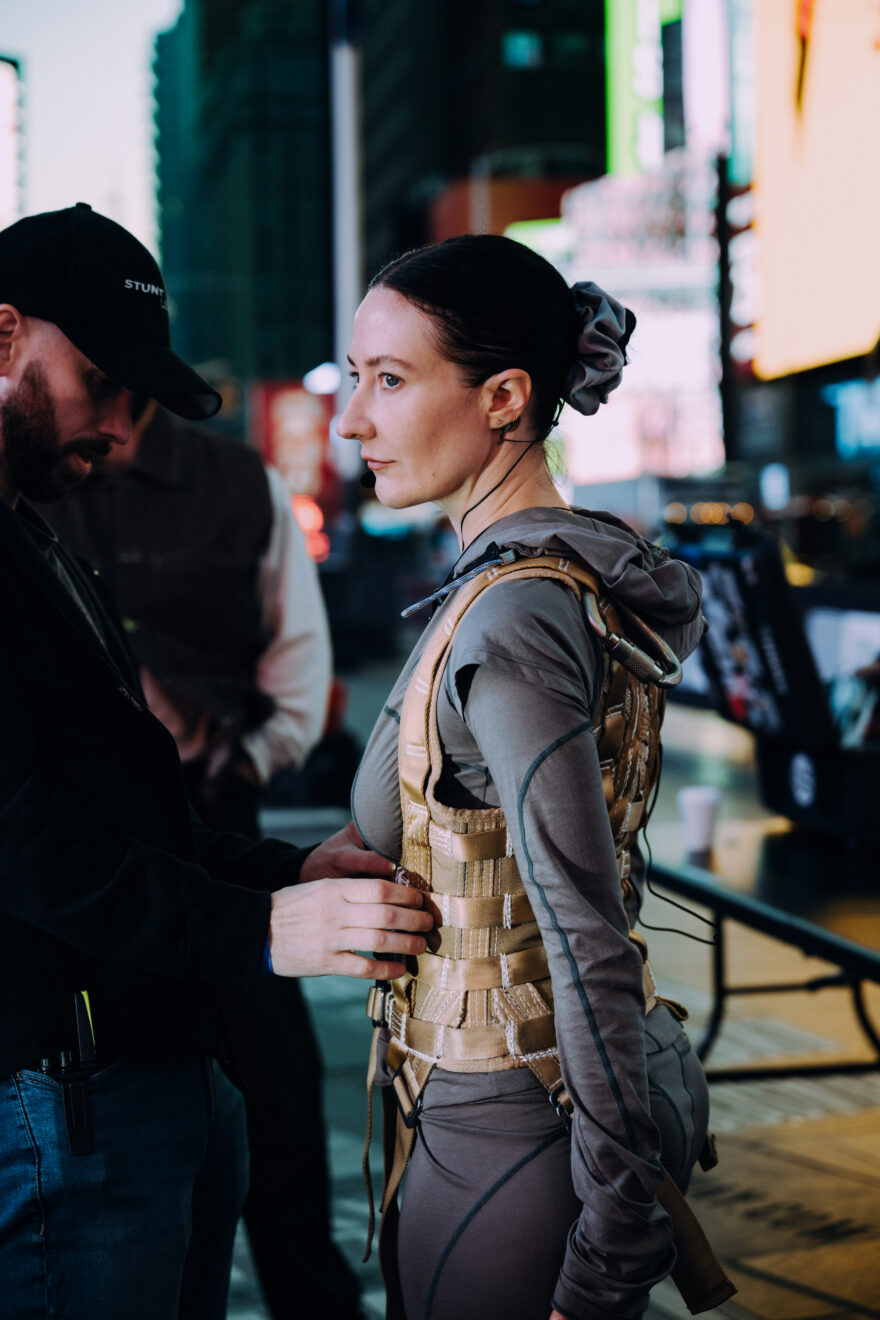
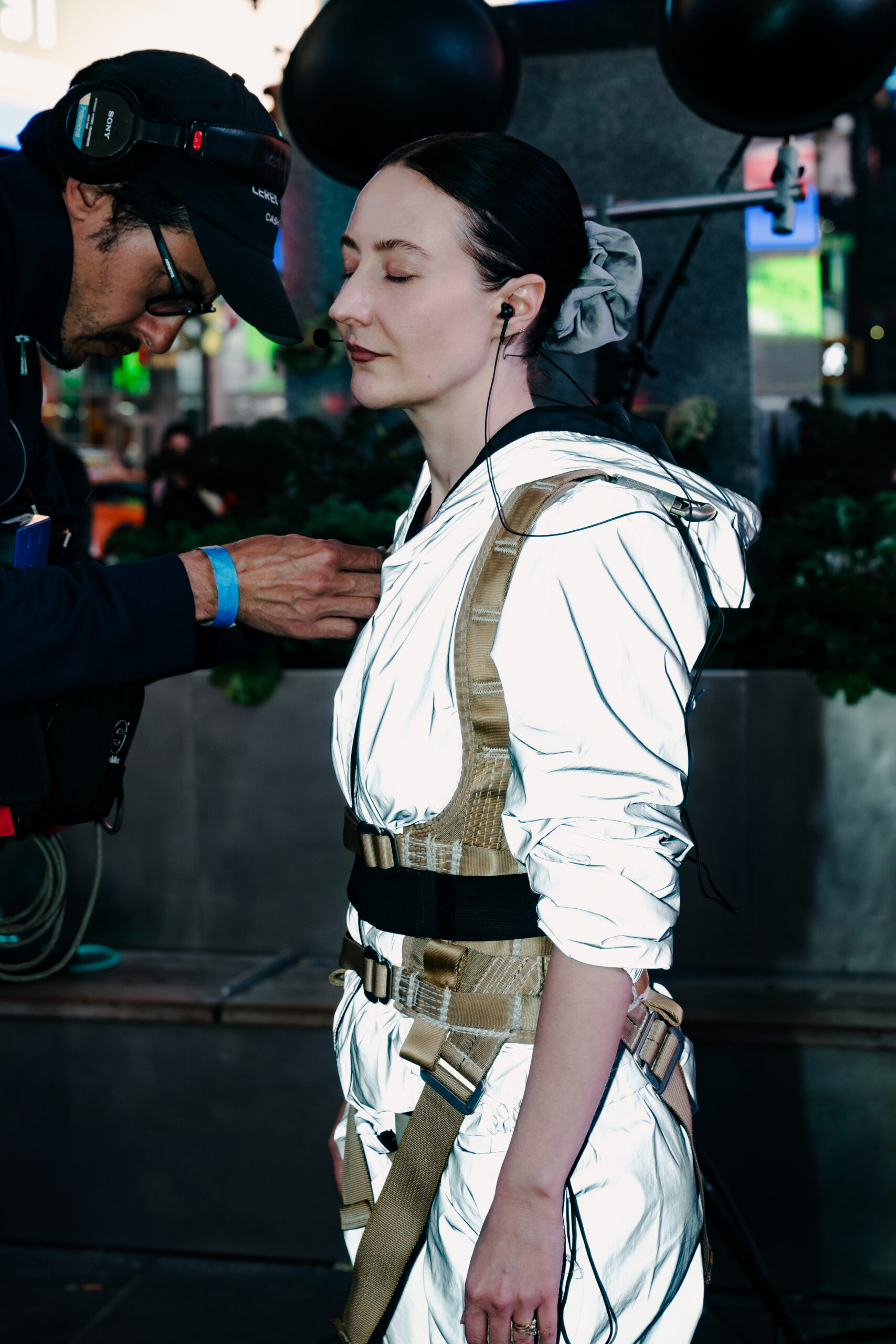
Frank Alfano, our stunt coordinator, fits me into my harness while Mark Moeske, crane operator, gets ready.
I love the way the harness looks once it’s on. Getting into it is less cool. Frank gives me extra padding, which I appreciate, but fitting it involves me tugging at my groin while he tightens everything. Apparently this part is also open to the public.
My mom loses her ability to walk. I push mine harder. That’s the dynamic. That’s the dance.
6:00 am
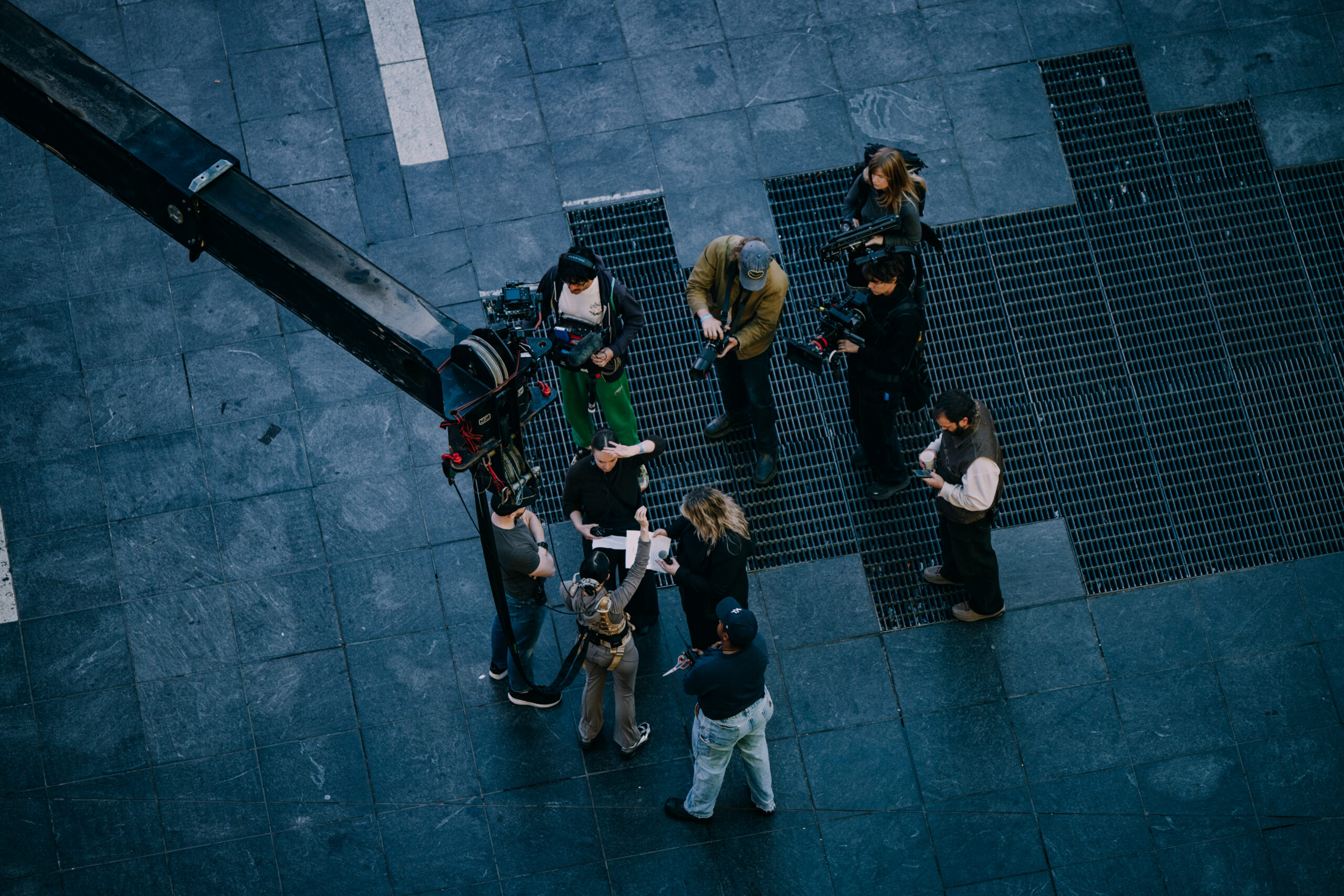
Producer Cameron Sczempka, Director Jason Sondock from Rubberband, and Maddy arrive as the film team. Kathleen Dycaico, my creative director, gets on a walkie-talkie with Mark.
I trust Kathleen to give Mark crane directions, although apparently we have different ideas about how quickly to begin. She takes me almost immediately to 150 feet. This is the only time I ask to come down and stay at mid-height for a while. I’m ready to go, just not that fast.
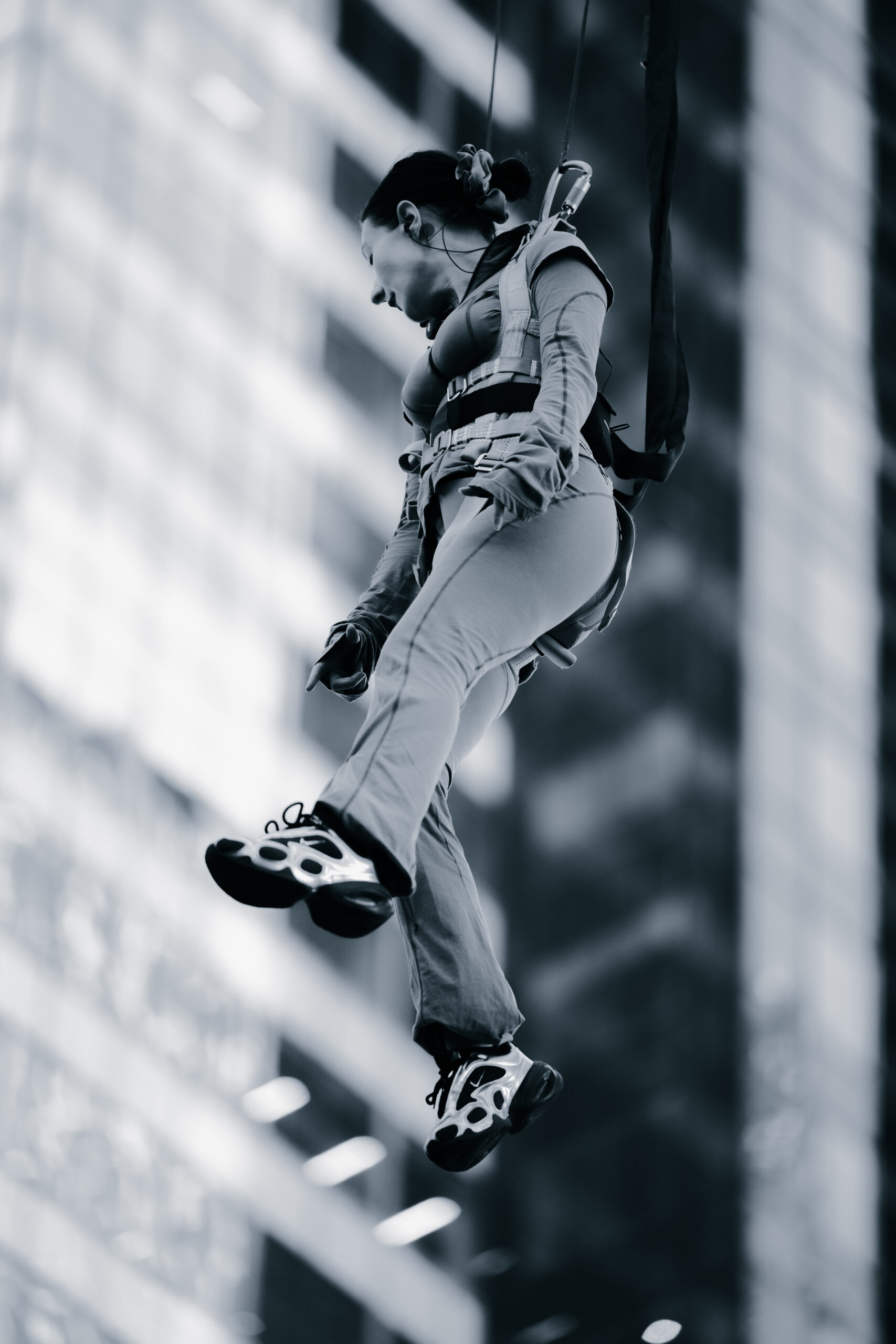
8:00 am — soundcheck
I’d been told people would stop to watch, but I hadn’t understood how many would crowd around taking photos. There are local news crews with live cameras. We’re still rehearsing.
By 9 am, we’re done. I go back to the hotel and sleep.
Sometime later
I wake up ten minutes before a Zoom interview with AM New York, with creases from the bedding still on my face. I don’t really remember what I said, but I think it went fine. I go back to sleep.
Maddy and I have lunch. It costs $115 for two people and isn’t very good. We work together a lot, and having them on a project is one of my favorite things. I’m going to owe them more than lunch, and certainly a better lunch. They go back to prep cameras with Jason and Cameron.
5:30 pm
A phone interview puts me behind for the live local news interview I agreed to do at six. Most people ask the same questions: why Times Square, why am I doing this? Fair questions. I try to give a slightly different answer each time. I appreciate the interviews, though I get annoyed if I can tell someone has checked out during my answer.
I discovered I’m good at on-air handshakes. One reporter and I do this snapping handshake, and every time our hands meet perfectly. It’s reassuring to still be present and coordinated.
Around 7:30 pm
Maddy and Jason are on the tenth floor of a nearby building, filming through an open window. I’m supposed to weave through the crowd, talking to myself about FALL RISK and why I’m doing it. I’m usually good at this, but the plaza and red stairs are filling up, and I keep recognizing people.
I’m taking something very private and making it extremely public. Trying to get my parents care has often left me feeling like I missed something. A document, a requirement, some amount of money that would have made it possible to help my dad the way I wanted to.
I pull medical records from MyChart to prove what should be obvious: How likely he is to fall.
I turn dad into evidence. Tell them how confused he is. Aetna knows he needs help but they won’t pay for it.
I worry people will see a stunt. I’m not a stunt artist, but I’m comfortable pushing myself hard when I understand why I’m doing it. I think of FALL RISK as a minimal performance: I’m strapped into something, lifted, and speaking. Getting those three things to happen requires an enormous amount of coordination.
8:00 pm — performance
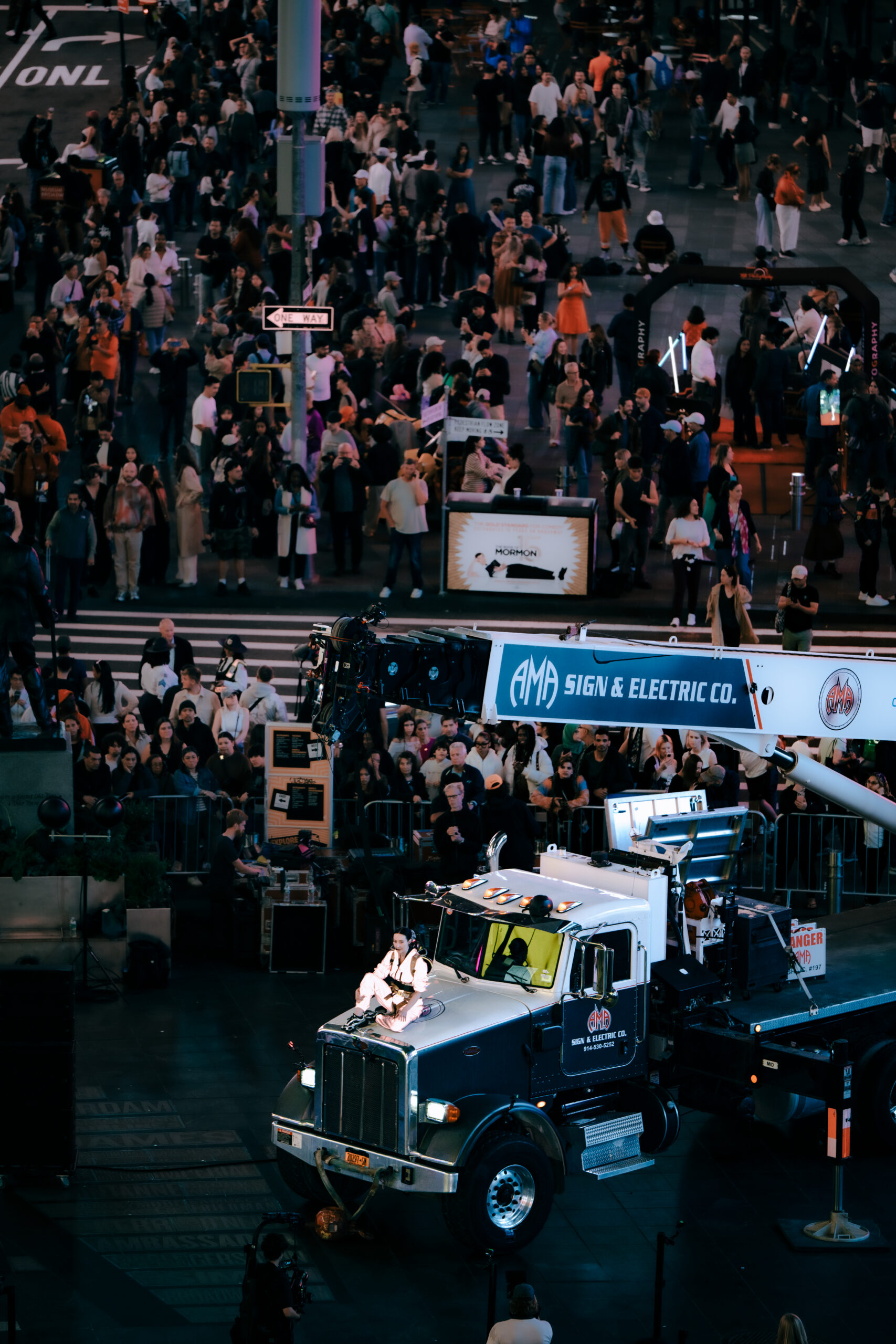
Sitting on the edge of the boom truck, I spot my sister in the front row behind the barricade. After all that discussion about getting her onto the VIP red steps, she’s right there. I see my friend Grace and her daughter Ripley, who makes a heart with her fingers. I make one back. Jen’s eyes are poking out from behind a row of people. There are strangers who were probably on their way to the Hershey’s store, and people I’ve known and loved for more than a decade. I feel wholly supported.
Then I hear Sara in my ear: “We’re starting.” We’ve only done three runs before the show, but I feel ready. In people’s videos afterward, I see myself repeatedly reaching back to touch my buckles. A fair tic to have.
Over the past three years, especially this one, I’ve surprised myself with how calm I stay under pressure. I’m not comfortable, exactly. I’m just less thrown by it.
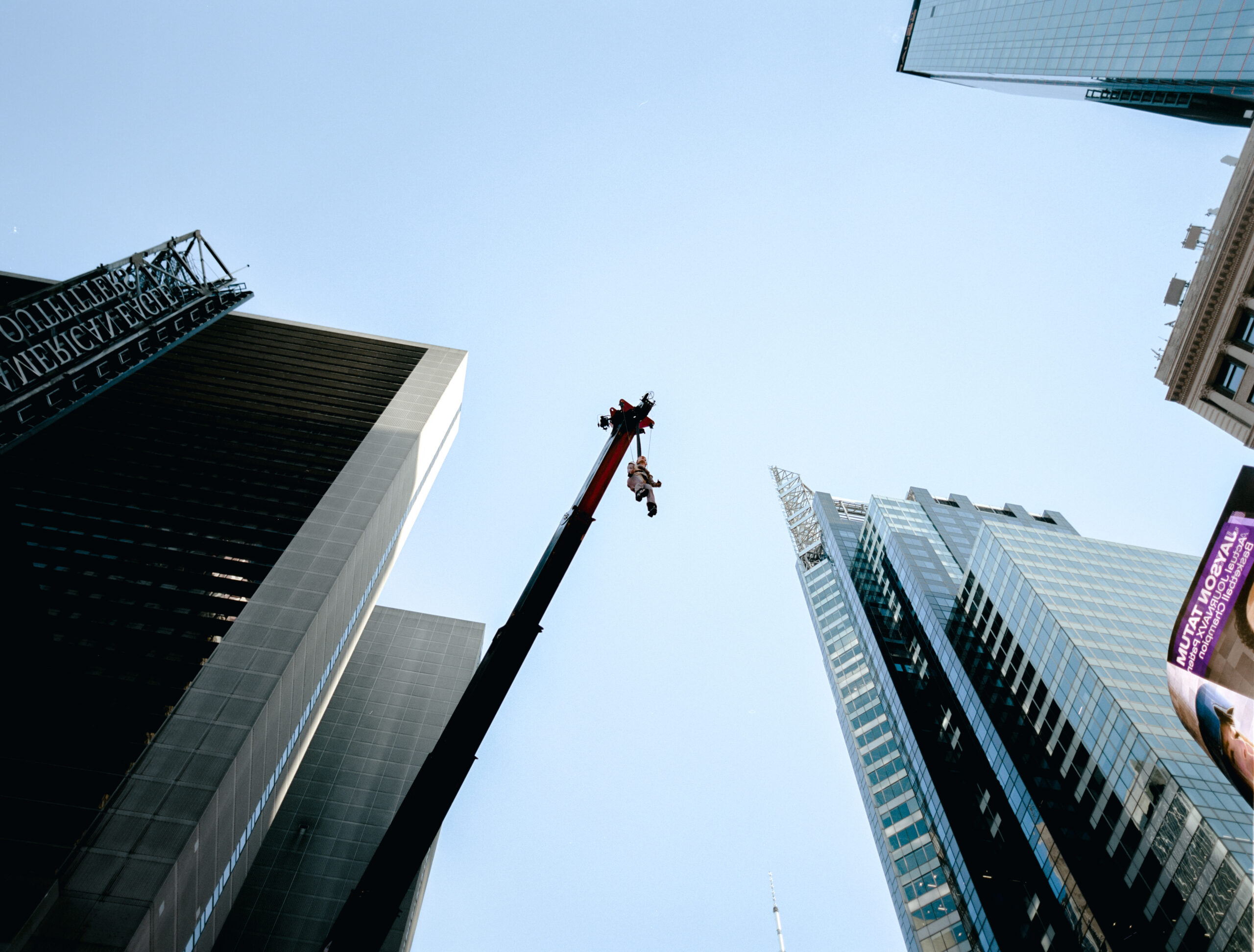
The crane movements are mostly linear this time. We’re using height and staying there rather than flipping and turning. It feels right against the chaos of Times Square.
See, I can choose it. I can leave it behind. I can arrange for it. Rehearse it. Perform it. With a crane operator, a stunt coordinator, a safety team.
I volunteer. Dad didn’t.
He needed someone to help him walk to the bathroom.
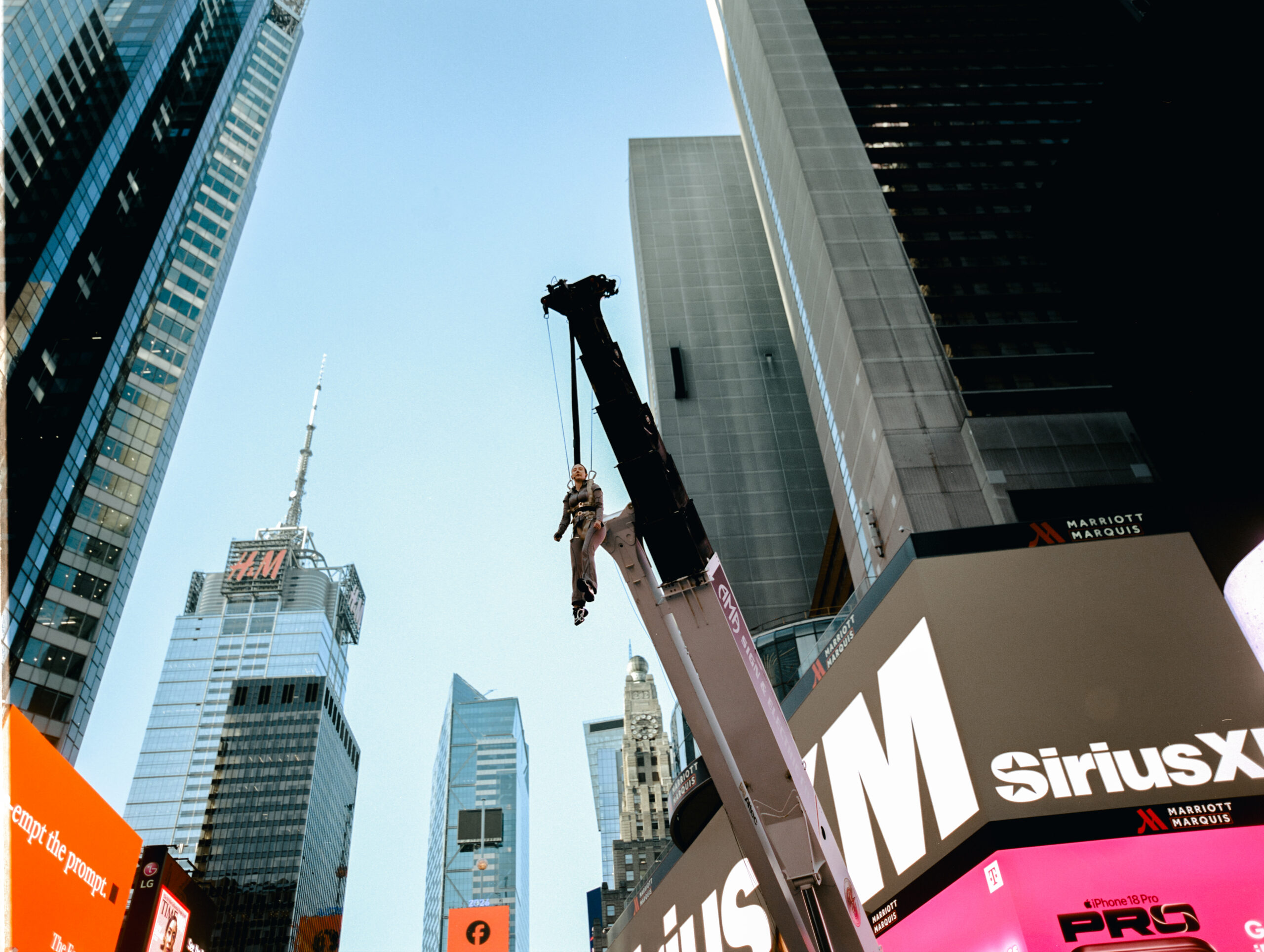
At the top, it’s so quiet. I’ve been told not to look down, but I do a couple of times. Mostly I look out. The streets seem to run parallel toward me before coming together around Times Square like a little river of headlights.
As the crane extends, there’s sometimes a small bump that shakes me. I have to relax and remind myself that this doesn’t mean I’m about to fall. I really don’t like heights. I’m aware this is a difficult thing to explain about myself under the circumstances. I’m higher than the billboards around me, and it feels like I’m flying.
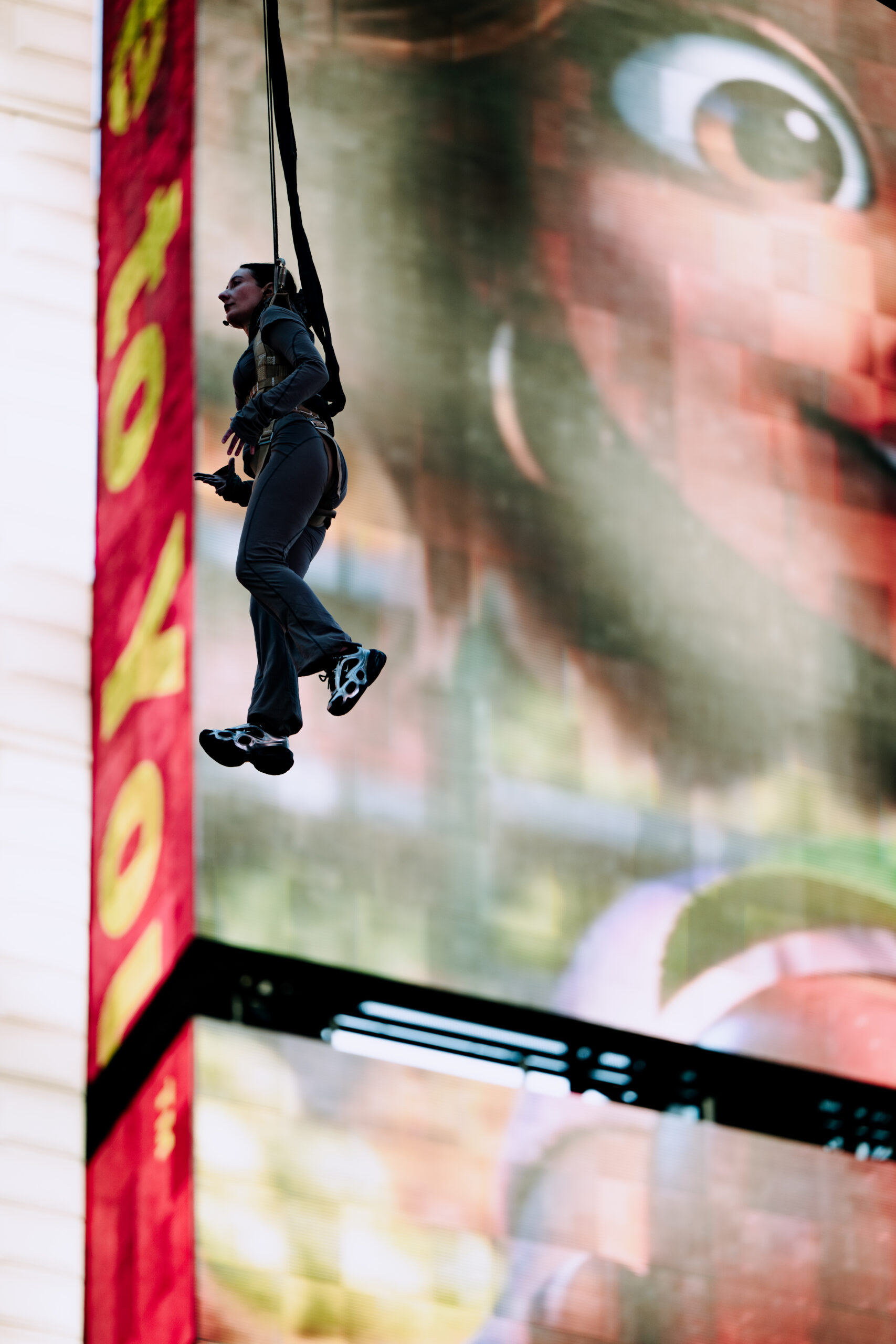
We’re standing in the middle of an enormous economy of wants. I spent the last weeks of my dad’s life trying to establish what counts as a need.
Someone makes money when the answer is no.
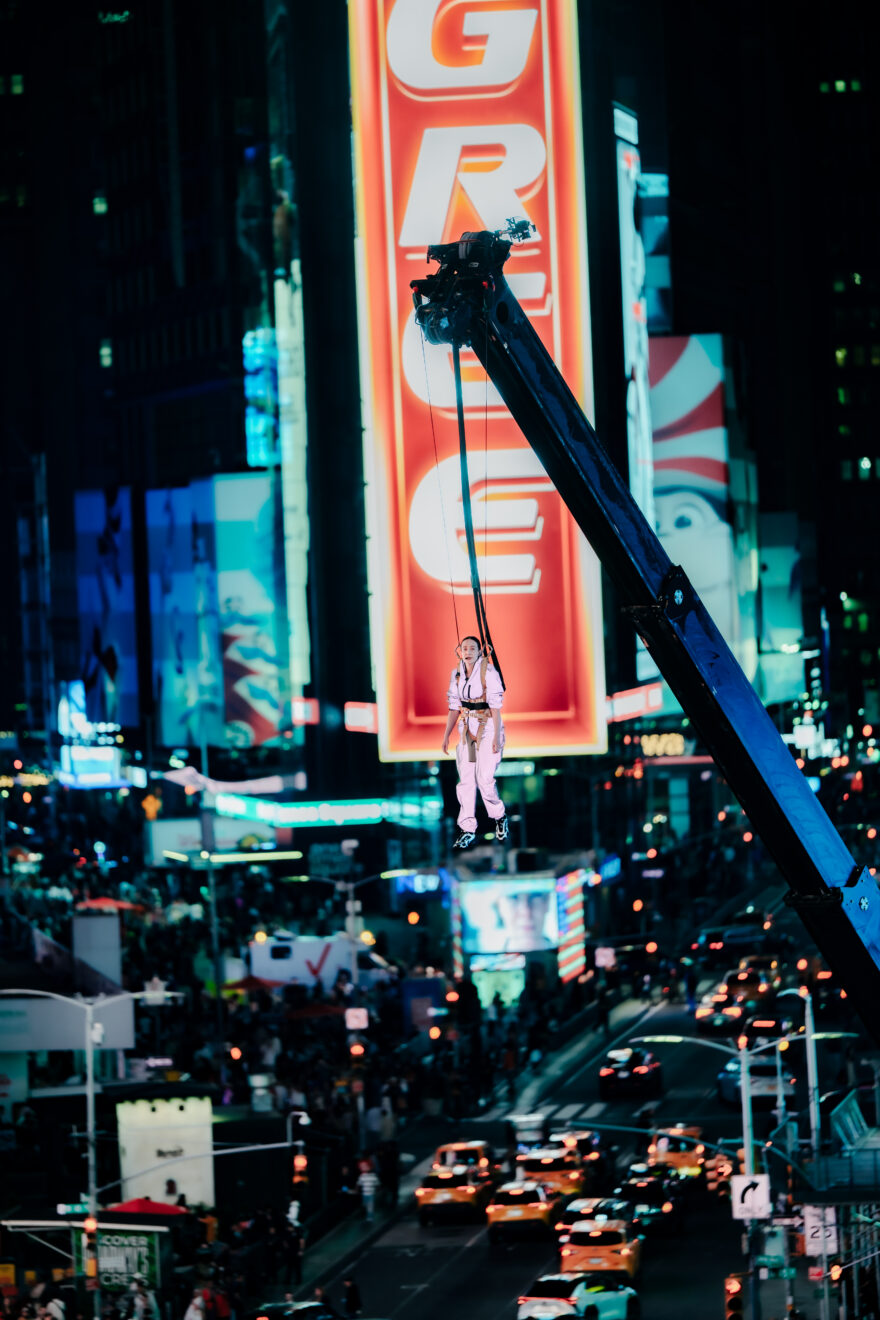
I hear my words coming back muffled from the buildings. I focus on the words and the skin around my nostrils as I breathe. My voice doesn’t shake. I keep my feet and toes moving. Last time, my legs folded when I came down.
My dad died a month ago. I’m a skeptic, but I’ve been trying to allow myself a little relief in the possibility of signs. After he died, I went into his room and quietly asked him for two white flowers growing on the same stem, so nobody could hear me. I told no one. It felt a little like testing the dead. Three days later, the flowers appeared outside my mother’s window.
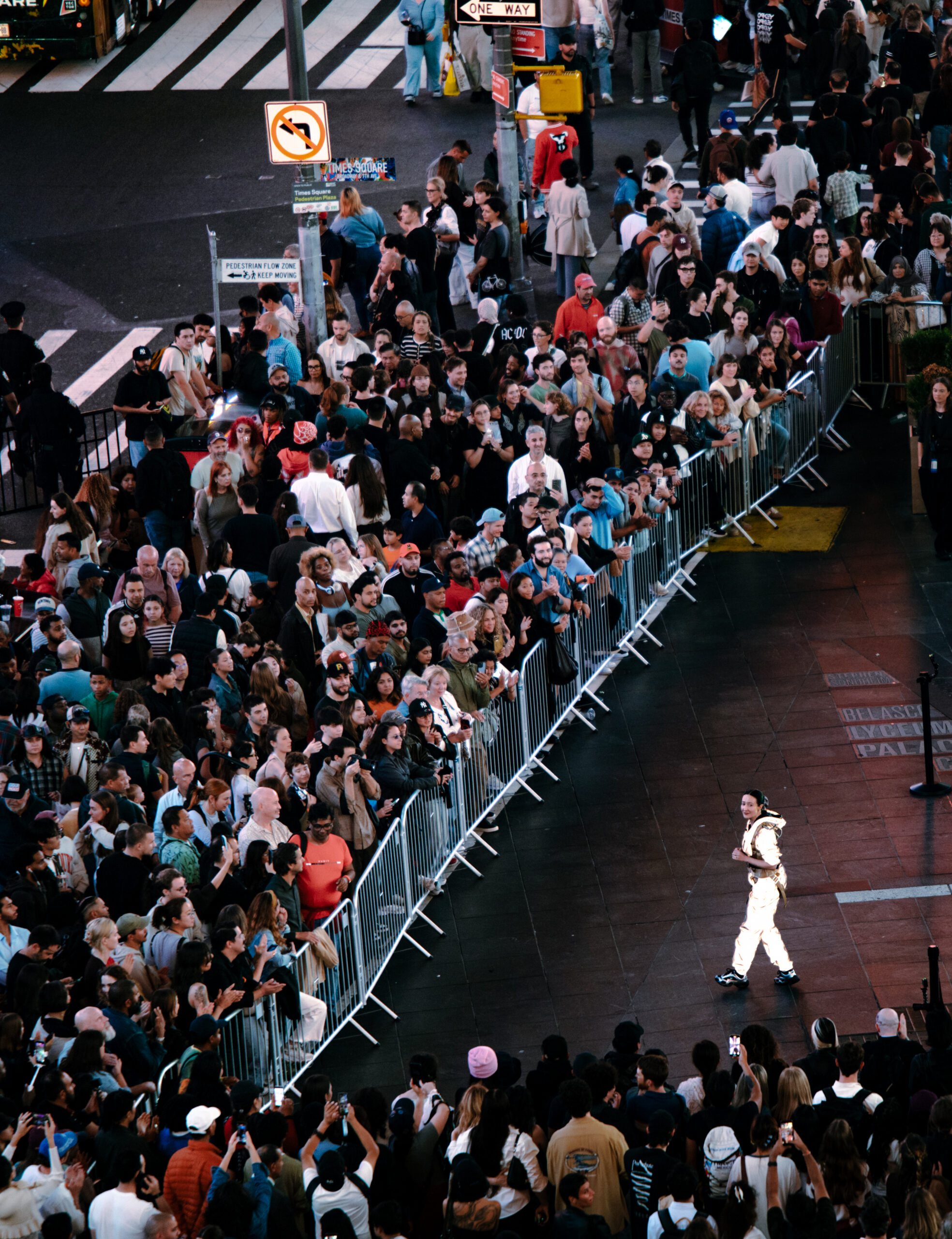
Outside my mom’s apartment window, one long stem of swamp rose mallow grows out of the pond with two big white flowers that will each last exactly 24 hours, which seems like an extravagant amount of effort for such a short life.