
Jo Rosenthal talks to fashion historian and collector Abe Lange about his 500-piece archive, the appeal of wear and tear, and preserving histories of art, music and subculture through clothing.
Abe Lange is a collector. It’s in his blood. He grew up in a creative family that always supported his endeavours, so when he moved to New York for college and then became a full-time fashion historian and art collector, it just made sense. Lange is one of the co-founders of Distressed Fest, a bi-yearly festival celebrating vendors of all types of vintage, distressing, and art. History is preserved best in the garments he’s collected over the years, making each piece one-of-a-kind. His collection now contains over 500 pieces from his travels around the world, and he’s not even halfway through his life yet.
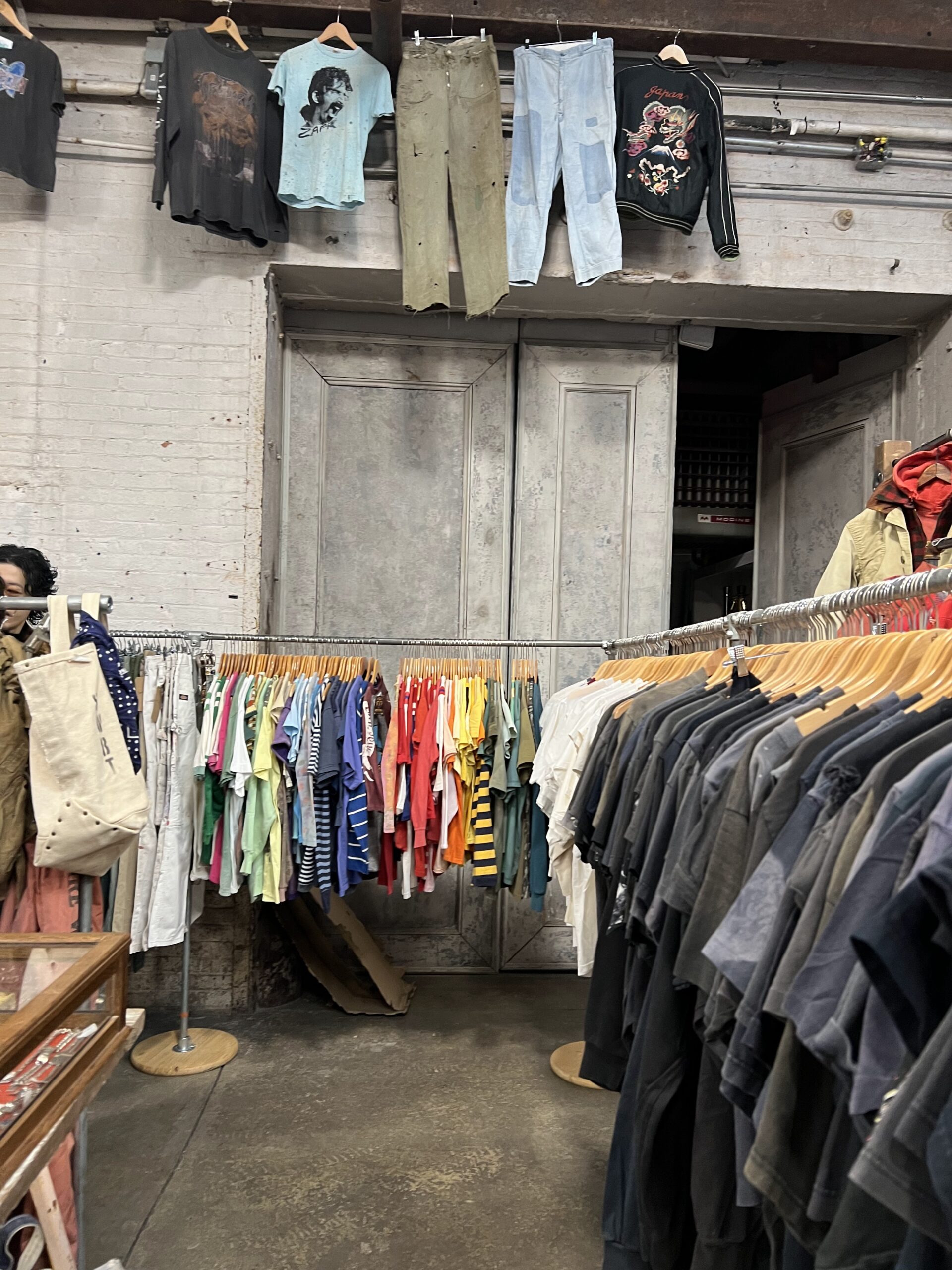
For Lange, collecting is less about owning something and more about understanding where it came from. He’s drawn to pieces that show their age, whether through a faded graphic, a worn-in collar, or a repair made decades before it reached his hands. Nothing needs to be pristine, and he prefers it that way. In fact, the signs that someone else lived in a garment are often what makes it worth keeping. Over time, his collection has become an archive of decades worth of art, music, subcultures, and everyday life through clothing. What started as an instinct to hold onto things has grown into a way of preserving stories that otherwise disappear. It also earned him the spot as a historian on the popular TV show, Antiques Roadshow.

Lange’s days begin with an espresso and a list of everything that needs to get done. From there, he takes appointments in his Brooklyn showroom and tries to keep parts of his day relatively open. He likes to stay adaptable, dealing with whatever feels most pressing, while slowly chipping away at long-term projects. No matter how busy the day gets, he always makes a little time for playing his guitar.
With a background in fine art and auction houses, Lange approaches clothing more like art rather than something meant to be bought and worn. He’s interested in the idea that an object can become more valuable because of its history and character rather than what the market says it’s worth. It’s an approach that has taken him from digging through flea markets and private collections to appraising vintage, all while trying to close the gap between the art world and the vintage one.
As Distressed Fest LA approaches, preparation starts a few days in advance, when Lange begins pulling pieces from his collection and deciding what will make the cut to display. His approach to showcasing his pieces is part strategy and part disruption. He likes to show things that feel in line with the style and audience of the shows, but makes sure to throw in a couple of archival pieces that feel completely out of place. The New York crowd is completely different than in LA. “I always try to bring a combo of what is most in line with the style of the show, and what is least in line with the show and will make people say, ‘the fuck is this?’”
When it comes to his private collection, Lange has few regrets. If anything, he admits he tends to keep too much. What he does wish he held onto are wooden fingerboards from his childhood, when he was, as he puts it, a ‘sponsored pro fingerboarder.’Companies would pay him in fingerboard gear, which left him with enough excess to start selling on eBay. It became his first lesson in selling things online, long before vintage became his business. Looking back, he wishes he had kept more from his childhood, not necessarily for what it might be worth today, but simply because he desires more mementos from that era of his life.
Lange’s collecting instincts extend beyond things you can wear, using visual art as a way to look back at important moments in time. Although he’s not willing to reveal his favorite artists and prefers to gatekeep for protection, his taste is always changing. At the moment, David Hammons, Richard Diebenkorn, and Robert Polidori are among the artists occupying his attention.
Maybe it makes sense, then, that Lange has built his collection in New York, a place that he describes as “pleasantly overstimulating.” For him, there is always something to be inspired by, and something that makes him want to escape the city altogether. His dad has a phrase for it: “the multifaceted variegated tapestry that is New York,” something he would say in response to anything from a wonderful moment to a terrible annoyance to the collision of cultures that happen here every day. For Lange, that constant push and pull is part of the appeal. New York gives you endless reasons to feel something, and just as many reasons to keep looking. That comes through in his art, archival practice, and personal life. “I love New York,” he says. “It’s a shit show, but I love it.”