

Artist Márcia Falcão reflects on her solo presentation at Frieze London with Fortes D’Aloia & Gabriel, exploring the relationship between colour, the female body and camouflage as a response to violence against women.
On my way to London, I found myself thinking about earth tones. The week before my trip, I had been speaking with my English teacher, who is British, and he told me about the seventeenth-century fires that changed the city’s building regulations, banning timber construction and requiring brick instead, giving London’s landscape its enduring shades of brown.
The earth tones that provoked this initial thought are not the same as those in my work. I have come to Frieze London with Fortes D’Aloia & Gabriel, with paintings that take the body as a territory of inquiry, though it is the palette that draws me to painting in the first place.
My journey into painting began at university, where I was introduced to this field of human knowledge. I studied at the Escola de Belas Artes da Universidade Federal do Rio de Janeiro [School of Fine Arts at the Federal University of Rio de Janeiro], in the city where I was born, grew up and still live. Founded in the nineteenth century, the school was rooted in European academic principles and the traditions of Western painting. There, I learned to think about colour through a limited palette, essentially earth tones, as a starting point for building a painting’s chromatic structure. To begin with less saturated tones before making leaps into colour.
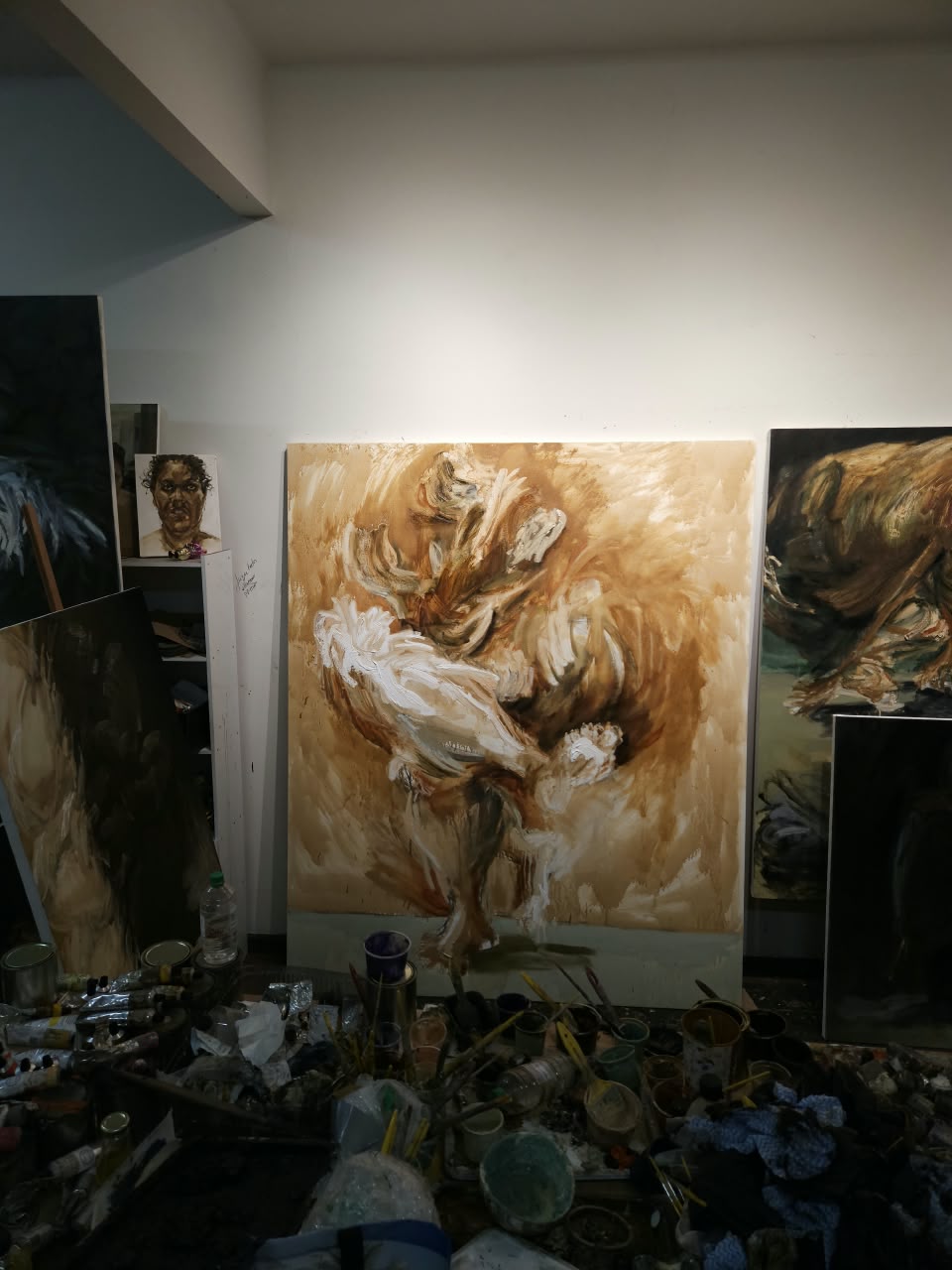
My interest in this way of working began some twenty years ago, as an attempt to understand how colours relate to volume and visual weight. But it took on other dimensions when I recognised the symbolic power of exploring these particular colours through the body in painting. To think of browns no longer as supporting players in a composition, but as the colours that lead it, with saturated colours becoming the areas of shadow. To reverse what our perception conditions us to understand as figure and ground, perhaps allowing us to challenge relationships that have remained fixed for so long.
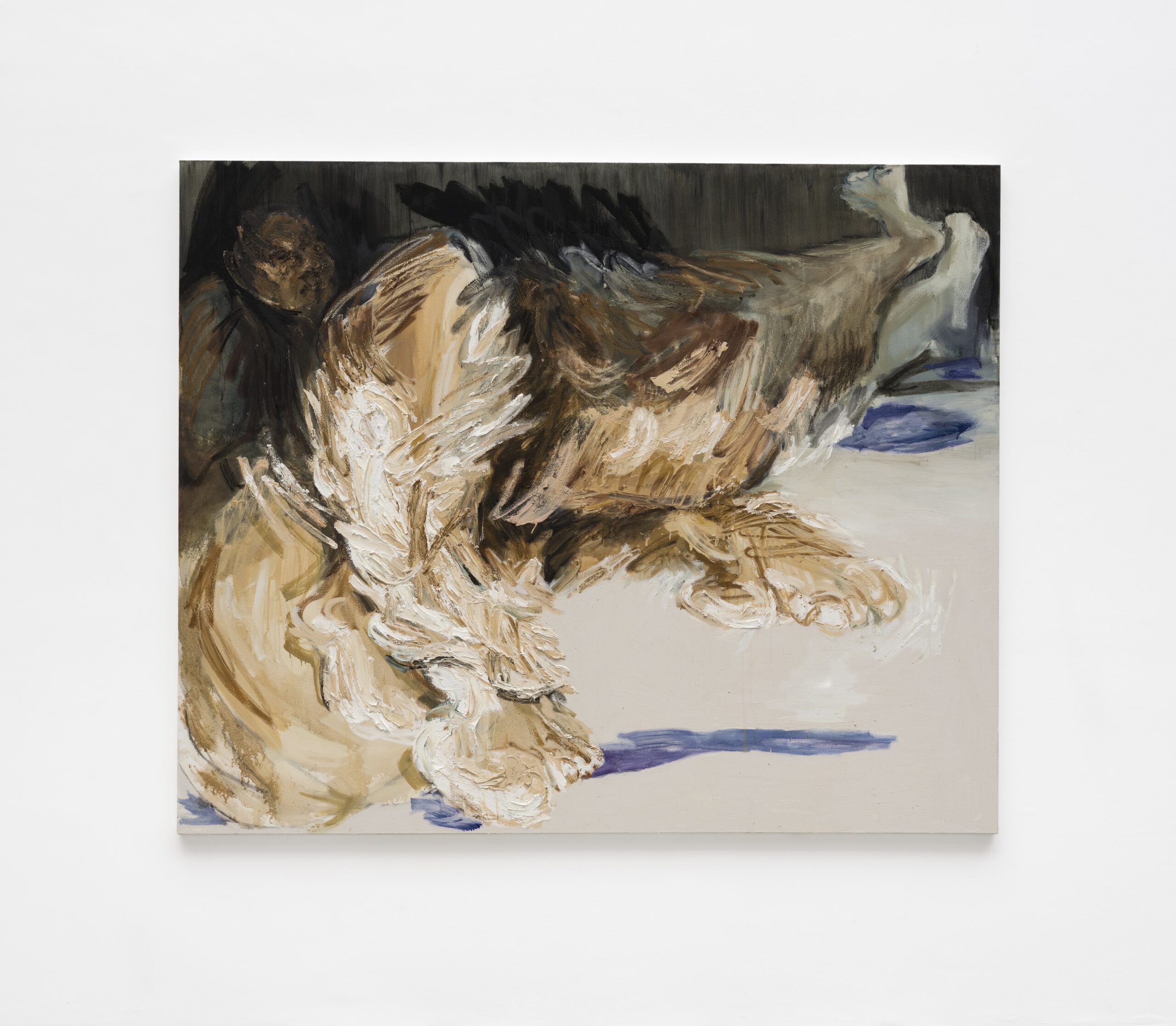
I come from Rio de Janeiro, in the Global South. I always say that we have the privilege of light. Within these chromatic relationships, light is essential, and being able to draw on it in all its variations is an invaluable resource in a painter’s development. With all these questions in mind, I have brought to Frieze London a solo presentation of a series that explores these chromatic relationships through the body, beginning with brown. What started as an extension of the research I began in 2022 with the series Ioga Psicológica [Psychological Yoga] arrives here as Camufladas [Camouflaged]. In this series, I intend to keep exploring the territory of the body, seeking to make viewers spend more time with the paintings by distorting anatomy, not only through gesture and exaggerated anatomical forms, but also through sharper contrasts of light and shade and the use of foreshortening to construct forms.
This series grew out of the realization that, although women are increasingly present in every sphere of society, recent years have seen an increase in violence against their bodies. I found myself thinking that, by bringing these bodies into the spotlight, I also needed to take responsibility for them. So I imagined the possibility of camouflaging them. I researched the British navy’s dazzle camouflage from the early twentieth century and its use of painting as a strategy to confuse the observer, with lines that distorted the appearance of ships. A desire to keep these bodies centre stage, but now protected.
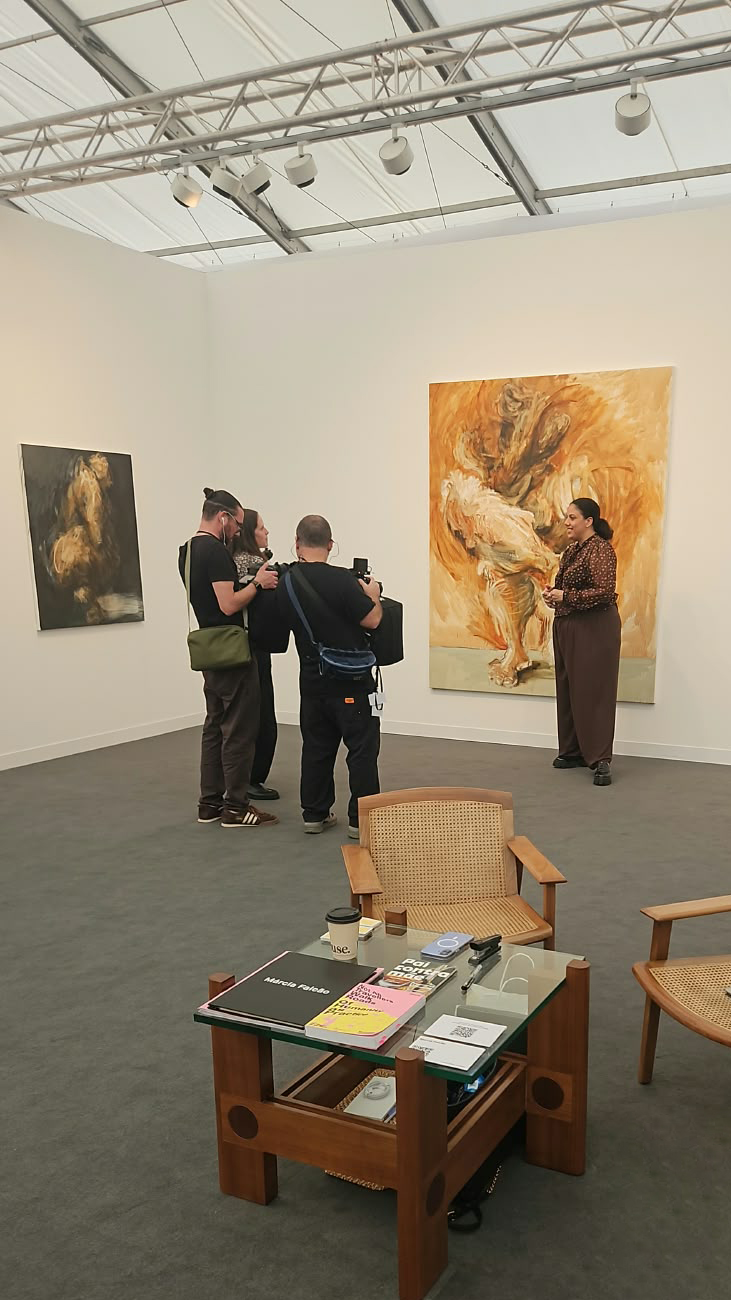
Being at the entrance to the fair with this group of paintings makes me very happy, because it seems like the perfect place for this body to become ever more visible. I often say that the work is always about painting. And it is. But as a painter, I am always looking for new “excuses” to paint. I admit that I wish the time would come when violence was no longer a relevant subject, but that time has not yet arrived. I am always struck by how deeply people from different backgrounds are moved by the work. They recognise connections to their own experiences.
Being in the city and seeing these responses to the work, while also drawing nourishment from the work of fellow artists, is a rich experience that will certainly feed into future paintings. The fair makes possible an exchange that is irreplaceable.