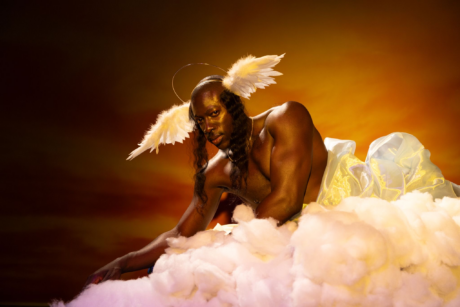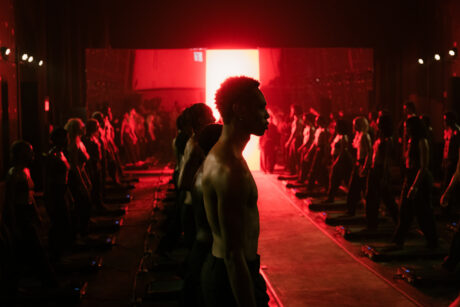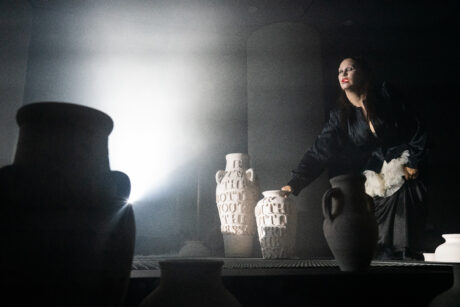

Cultural producer and curator Ryan Lanji reflects on THE HANG, the opening party for Minor Attractions, and the art of bringing people together in a room where anything might happen.
Wow, what was last night?
I always laugh and tell people I’m an artist and my medium is people. So I can understand why painters like to see paint move.
But what even is culture anymore?
Everyone seems to be standing in front of it.
Art behind them. Flash in front of them. Someone taking the photograph. Someone waiting to be photographed. Someone just wants to be seen. Someone just wants to be known. Someone just wants to be remembered.
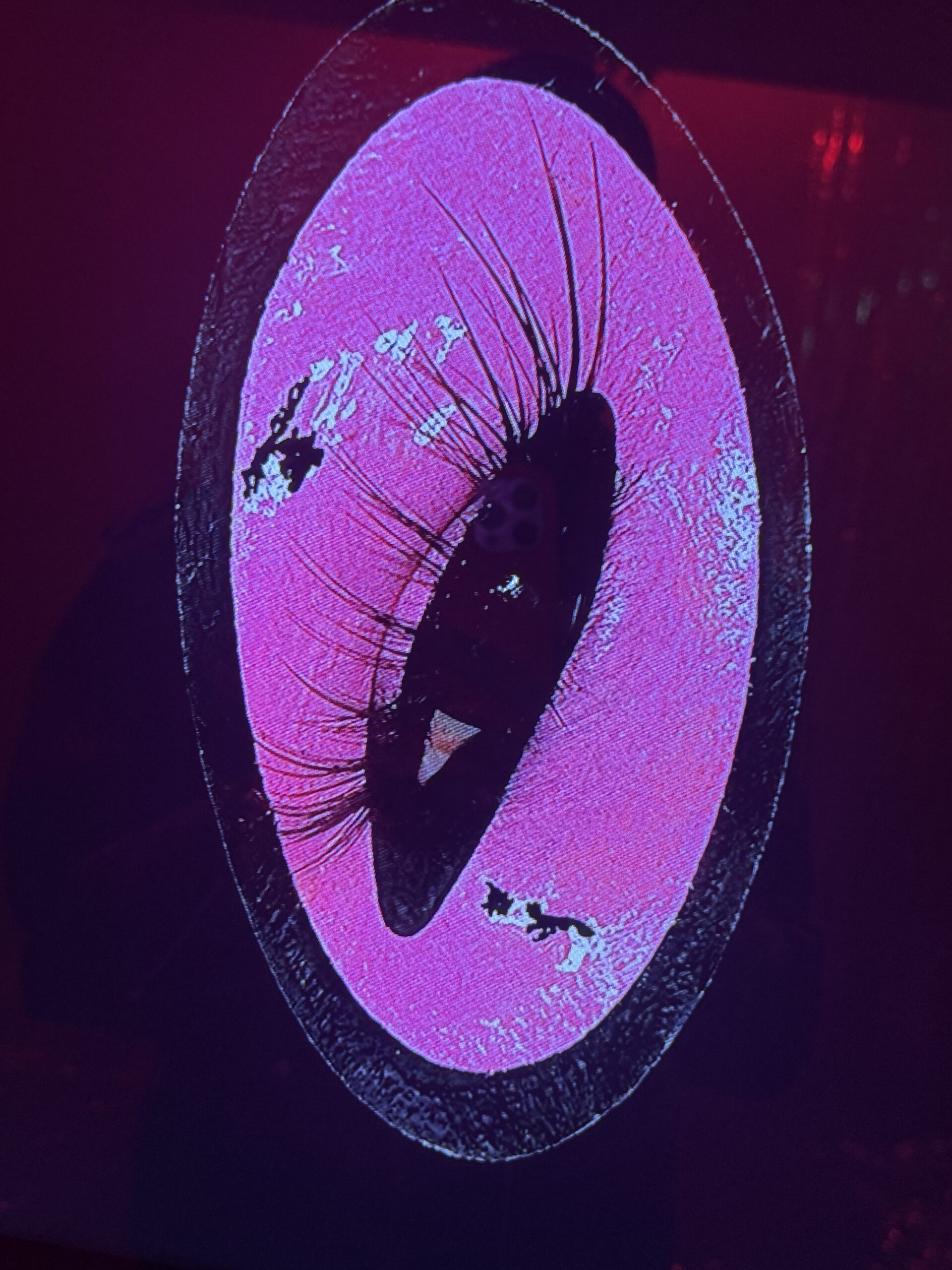
And eventually it all ends up as pixels.
Proof you were part of something.
Proof you were invited.
Proof you were there.
Proof is so boring.
We were bored too.
Bored of everyone looking at themselves. Bored of step-and-repeats. Bored of champagne glasses. Really bored of Prosecco. Bored of people attending culture rather than making it. Bored of rooms full of supposedly interesting people knowing exactly who everyone else is, when really nobody has a fucking clue.
And then along comes Minor Attractions.
An art fair that creates a transient world that exists for a few days and then disappears. Galleries from around the world living together, fighting for space, sympathetic in some rooms and completely at odds in others.
So I wanted an afterparty where people could actually hang.
Where the white cube came undone.
Where people became fluid.
Where somehow the rave came back.
The queers. The famous. The artists. The people nobody knew yet.

I enlisted Lucia Blayke, Jack Mudd, Lexii, Joel Mignott and The Stiletto Prince and dragged everyone to Electrowerkz, a haven for the underbelly of rave and techno culture. Fringed everywhere and projected Bo Quinn wherever I could.
Then we added artists and fashion people and club kids and collectors and beautiful people and enthusiasts and strange people and people who probably thought they were very important.
Some of them were.
Naturally, it doesn’t really matter once everyone starts sweating.
It’s funny how much the art world loves the word juxtaposition.
Everything is always juxtaposed against something else.
Fine.
Let’s stop saying it.
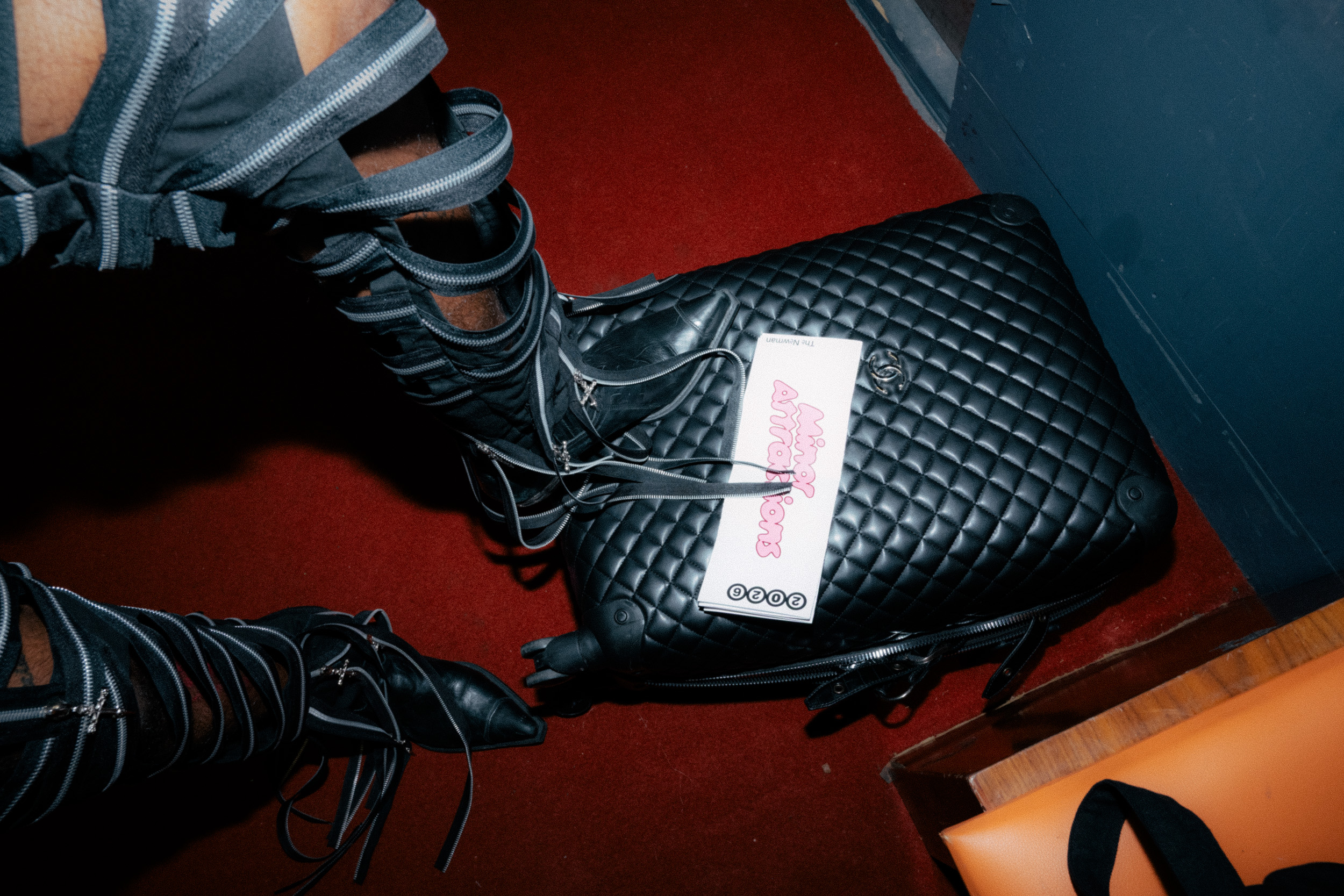
Let’s put everything in a room and see what happens.
Because I don’t think culture happens when everyone blends together. I think it happens when they don’t.
When the artist is dancing with the drag queen. When the collector doesn’t know who the DJ is. When someone incredibly important is standing next to someone completely unknown and, for three minutes under a strobe light, the unknown person is much more interesting.
Sometimes the rule-breakers have the most fun.
Sometimes the ones who follow the rules get in.
That’s nightlife.
Or at least that’s what nightlife used to do to me.
When I first moved to London, I didn’t know anyone.
I had a lighter.
That was enough.

You’d stand in a smoking area and watch somebody pat their pockets.
Left pocket. Right pocket. Jacket.
Nothing.
You held out a lighter and suddenly you knew each other.
It was a good system.
A cigarette became a conversation. A conversation became another club. Another club became someone’s kitchen at six in the morning.
Sometimes you became friends. Sometimes you slept together. Sometimes you never saw them again.

All three could be equally important.
There wasn’t an algorithm telling you that you had seventeen mutual friends.
You just liked their face.
Or their shoes.
Or the song they requested.
Or maybe they just needed a light.
We made friends in smoking areas.
We made love under the bass.
We looked beautiful under strobes because everybody looks beautiful under strobes.
That’s probably why they invented them.

And you never really knew who you were going to meet.
Now we know everything before we even say hello.
We know where they went on holiday. Who they know. What they ate. How many mutuals we have. What party they were at last night. We know their politics and their skincare routine.
I can’t really be arsed with skincare.
I’m more of a scent person.
It’s exhausting.
The algorithm keeps introducing us to ourselves.
People like you.
Music like you.
Clothes like you.
Restaurants like you.
People who bought this also bought that.
Imagine if nightclubs worked like that.
You’d walk through the door and everyone would be you.
Terrifying.
Last night wasn’t terrifying.
Last night was amazing.
I think the best rooms are often accidents.

You can invite everyone, but you can’t decide what happens when they arrive.
Some people never do.
That’s the part I’m interested in.
I’ve spent years being called a curator, but recently I’ve started thinking that curating people is really just arranging the possibility of an incident.
You find a room.
Turn the lights down.
Make the music loud.
Move people around.
Change the sound.
Change the BPM.
Change the colour of the lights.
Maybe too much smoke.
And then you wait.
Maybe nothing happens.
Maybe everything happens.
That was THE HANG.
Not networking. Not content. Not another Frieze Week photograph proving you stood near some art.
Just a room full of people who weren’t necessarily supposed to meet.
And then they did.
Maybe that’s all culture ever was.
Someone bringing the wrong person to the right party.
Someone asking for a cigarette.
Someone falling in love with someone they weren’t supposed to know.
Someone crying because they felt too much, gave too much or felt too little.
Someone dancing when they were supposed to be looking at the art.
Someone becoming the art by accident.
The funny thing about culture is that everybody wants to be photographed next to it once somebody tells them it’s important.
But the really interesting stuff usually happens before that.
Before the photographer arrives.
Before somebody gives it a name.
Before somebody writes the press release.
Before everyone agrees it was a moment.
For a few hours at Electrowerkz, I wanted that feeling again.
People. Noise. Sweat.
No hierarchy.
Strangers becoming less strange.
Bad decisions.
Good clothes.
Too much smoke.
No explanation.
And then the lights come on and everyone has to go home.
Maybe culture isn’t the picture.
Maybe culture is everything that happened outside the frame.