
Vittoria Benzine takes on Atlanta Art Fair on its own terms.
Art fairs introduced me to America—Miami and Dallas definitely, plus Philadelphia, Chicago, and Los Angeles, to varying degrees. This time, Atlanta, courtesy of the third and largest edition of the Atlanta Art Fair yet. I’d been to this famed cultural epicenter but once before, on a month-long road trip interviewing strangers about politics ahead of the 2024 election. My boyfriend and I stayed for three nights, our only sustained stop on the whole endeavor. My room for the fair at the Hotel Clermont overlooked Ponce City Market’s sign, which I’d photographed two years prior from the Beltline. Regardless, I arrived in Atlanta aware I still had much to learn.
New York writers have a tendency to consider other cities’ art scenes only after whatever they’re famous for—in Atlanta’s case, music and the Civil Rights movement. As I read up ahead of diving into the Atlanta Art Fair’s opening night, I resolved to resist such temptations. Yet, those archetypal influences are real. Like, for Atlanta, its friendliness. In spite of myself, a single trip to Sephora after checking in revealed just how much psychic damage I’d been taking day in and out, smiling at people even if they don’t smile back. Everyone in Atlanta had a grin, a greeting.
I tried diving into the Atlanta Art Fair, but really, it dove into me. It took exactly fifteen seconds upon striding into the fair’s lofty industrial home at Pullman Yards for a nice boy to call my blue tasseled terry cloth dress from Beacon’s “adorable”—a rare compliment, no? My first interview came to me the next minute, when Atlanta-based painter Christopher James McAdoo complimented my dress too. He’d just moved back from a long stint in Los Angeles. The superbloom of Atlanta’s art scene hardly surprised him. Near the end of our chat he made sure I was recording and said, “Atlanta has a lot of Civil War and slave monuments. I feel like they should tear that shit down and let Black artists just repaint the shit, and have more positive art.”
Indeed, I’d noticed a historical marker commemorating the 1945 lynching of taxi driver Porter Turner on the way there. “We know that shit happened,” he said. “We don’t need reminders.”
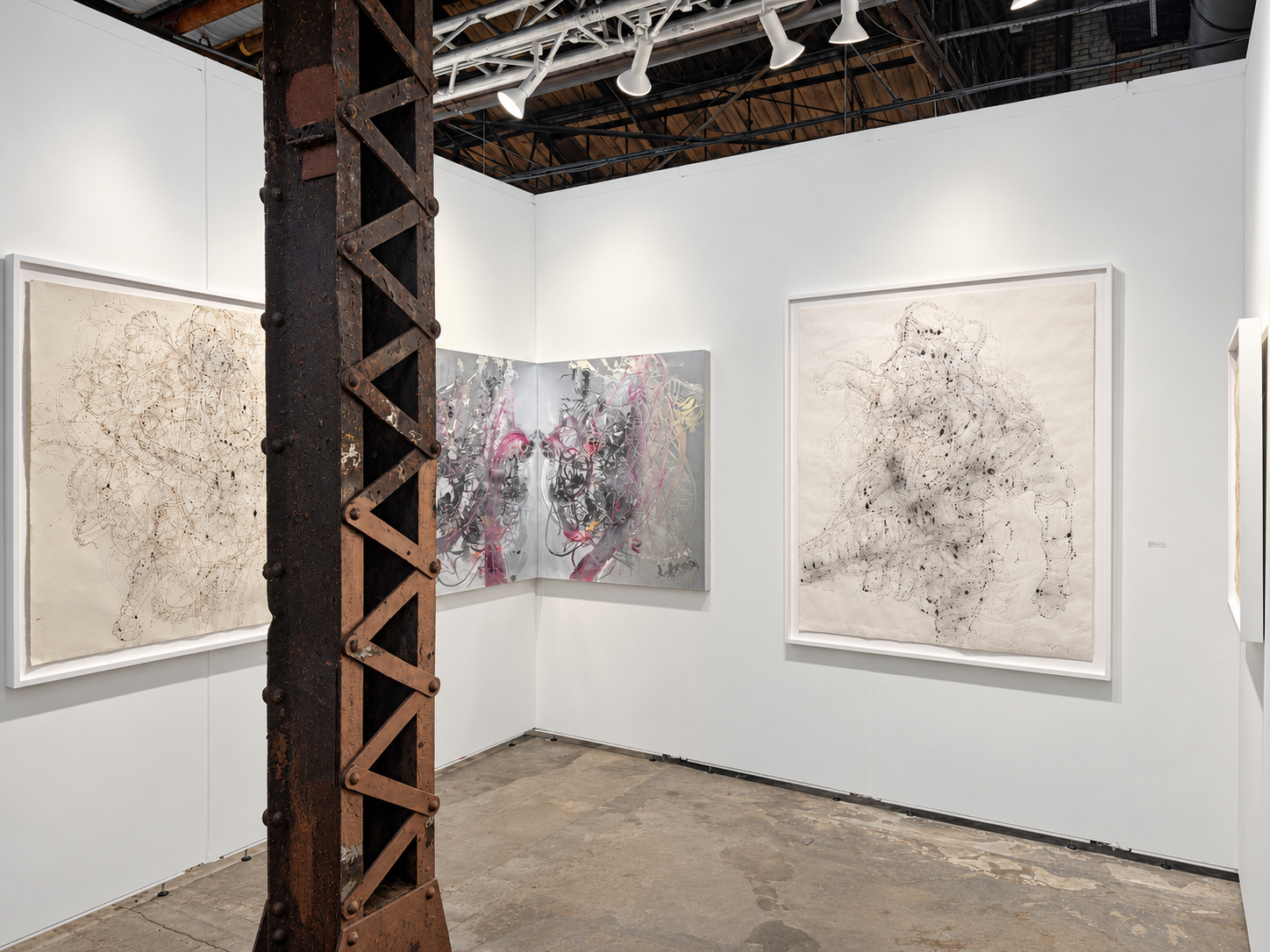
On Saturday, I caught up with New York-based Kelly Freeman, who heads the fair’s parent company Art Market Productions, plus Atlanta-based critic, editor, and curator Sarah Higgins—who curated a public projects exhibition amongst this year’s fair, culminating her years-long efforts closing down the fifty year old magazine Art Papers, where she has worked since 2018. Together, they recounted how Freeman held a forum ahead of launching the fair in 2024 at the Mildred Thompson Legacy Project. There, Atlanta’s art community shared concerns.
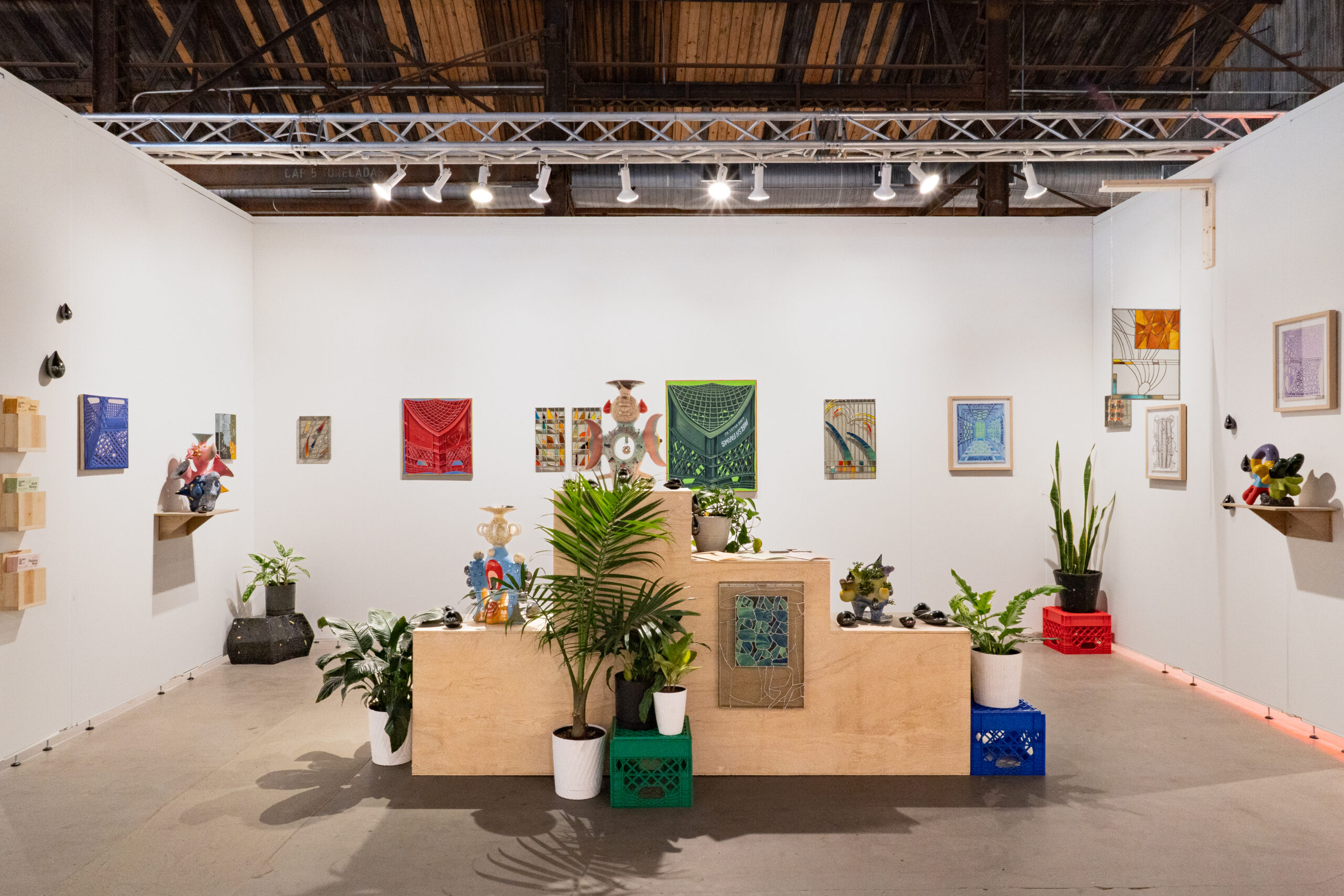
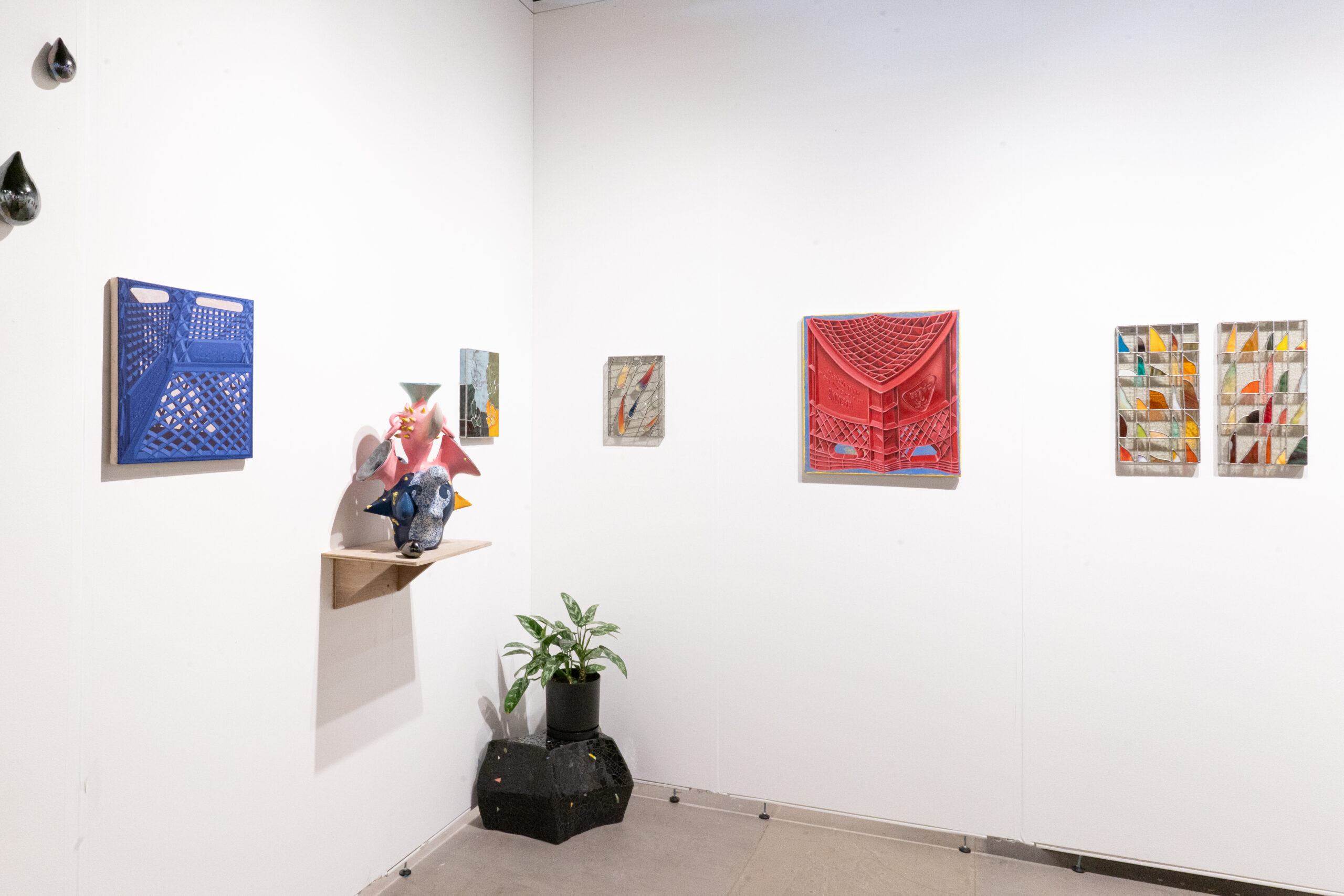
As the years since lockdown accrue, so does art fair fatigue, it seems. I like a robust yet compact event such as this. Systematically maneuvering the rectangular layout’s aisles on opening night, I met canny, seasoned art dealers like Memphis-based David Lusk, New York-based Claire Oliver, and Nashville-based Scott Zieher. The American South dominated. Most of the fair’s eighty-three exhibitors hailed from Tennessee, Georgia, North Carolina, and Florida, including the two responsible for my favorite booths: Nashville-based Tinney Contemporary, and Charlotte-based Toshkova Fine Art Gallery and Advisory. Both offered gorgeous, focused group shows—mesmerizing milk crate paintings by Jack Kenna, stained glass from Devin Balara, and dreamy vessels by Paloma Wall at Tinney, and fourteen artists exploring the deeper nuances to Blackness at TFA, featuring stars like Alison Saar, Chiffon Thomas, and Murjoni Merriweather.
The next evening, I celebrated completing my market report by sprinting to Miami Circle—Atlanta’s answer to Santa Fe’s Canyon Road, a long street lined with galleries devoted to art, collectibles, and interior design. I popped in Anne Irwin Fine Art and noticed that among the floral painters on view, Christina Baker was the fan favorite. Her works were almost sold out. From there, I made sure to hit Johnson Lowe Gallery, which seems to be the scene’s kingpin. I saw a smart blend of buzzy artists there, from Atlantan royalty like sculptor Victoria Dugger and painter Fahamu Pecou to New York counterparts like Anthony Akinbola and Judy Pfaff. I was even pleasantly, very emotionally surprised to reconnect with Nashville-based textile artist Vadis Turner’s laughing sculpture Diane (2023), which I last saw at her show in Birmingham, Alabama.
6pm struck. The galleries closed. I hauled across town to stock up on delicious bottled concoctions for the night ahead at Kava Mama, and ran into a girl we interviewed during our road trip. “Remember that?” I asked. “Now we’re almost done with this president, God willing.”
Armed with a pineapple kava drink plus a hibiscus brewed kratom tea, clad in my Santos Lola Dress, I caught an Uber into the velvety Friday night. First stop, a party honoring the fair’s artists at the polished Mildred Thompson Legacy Project. Next, the chic after party for the Atlanta Center for Photography’s annual gala, where I danced to Afro-Caribbean beats with the PR girl chaperoning me. We concluded at the Clermont Lounge, Atlanta’s oldest running strip club.
I returned to the fair the next day, after sweating bullets at the fabulous yet vertigo-inducing High Museum of Art. Energy remained steady on the floor. Eagled-eyed dealers focused on the crowd, flashing the occasional friendly glance. Before my flight, I caught one last panel discussion titled “The Next 50 Years of Arts in the South: What the Work Needs Now”. It was packed wall to wall, full of nodding guests. I foresee important things happening here. The wider art world’s participation hinges on whether we learn to take Atlanta’s artists on their own terms.