
Six artists reflect on their contributions to C.H.A.I.S.E.S., an exhibition exploring the social lives of the iconic Green chairs in Paris’s Luxembourg Gardens.
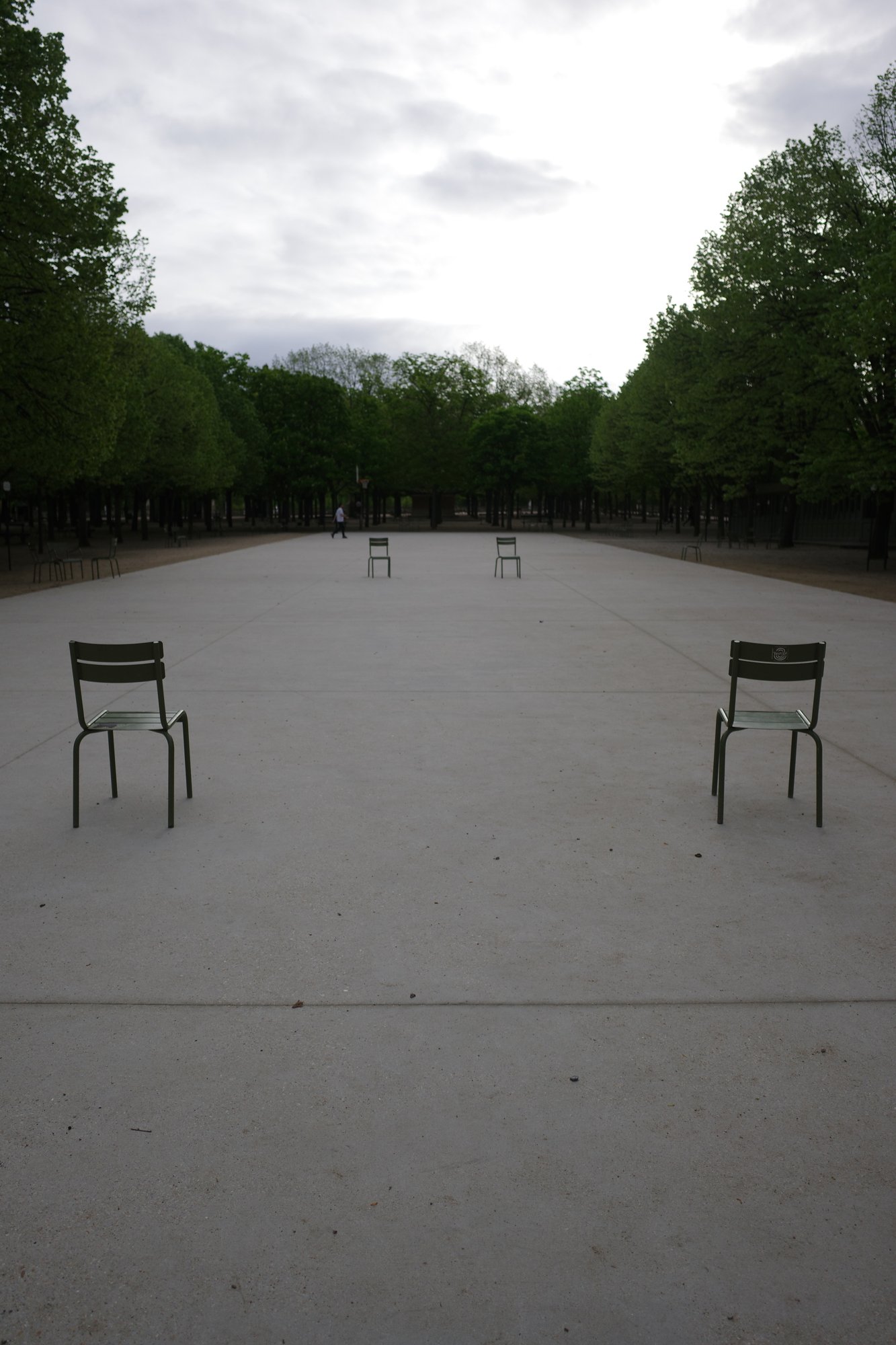
Originally conceived as a wandering observation by Jimmy Gardner as he returned repeatedly to the Luxembourg Gardens, C.H.A.I.S.E.S. reimagines the social life of the chairs and their use by their organic human counterparts. This is an exercise in mapping the movements of these chairs throughout the day as a representation of human behaviour. Four applications were chosen as scripts to study: the Solitary Reader, the Sun-Worshippers, the Lovers’ Spat and the Gathering. What life do the chairs lead and what happens at night when the visitors are gone and the groundskeepers arrange the chairs?
Jimmy Gardner
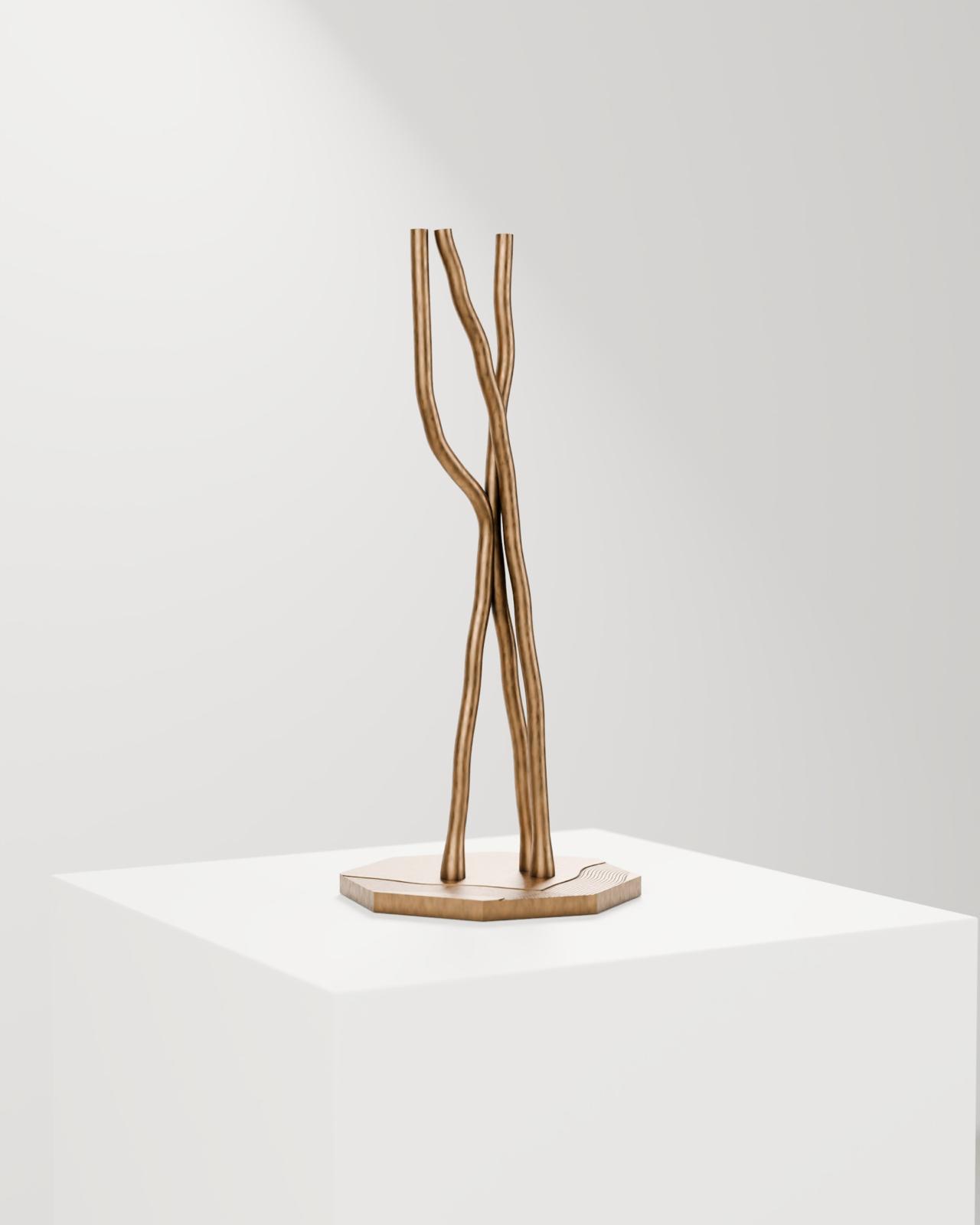
Firstly, Jimmy Gardner models the four Social Scripts central to the exhibition.
“The sculpture of the Sun-Worshippers are closely intertwined as their chairs move gently side-by-side throughout the day following the sun in its path. In the Lovers’ Spat we see a breaking off strand and a third chair joining later. Here, height is time. Each vertical strand is one of the green chairs of the Jardin du Luxembourg over a single afternoon: its foot is the moment the chair was set down, its top the moment the garden emptied. Where a strand leans, the chair was moved; where it runs straight, someone stayed. The scenarios were observed in the garden, performed by its users, recorded as movement data and printed as one continuous body.”
Quinn Lewis
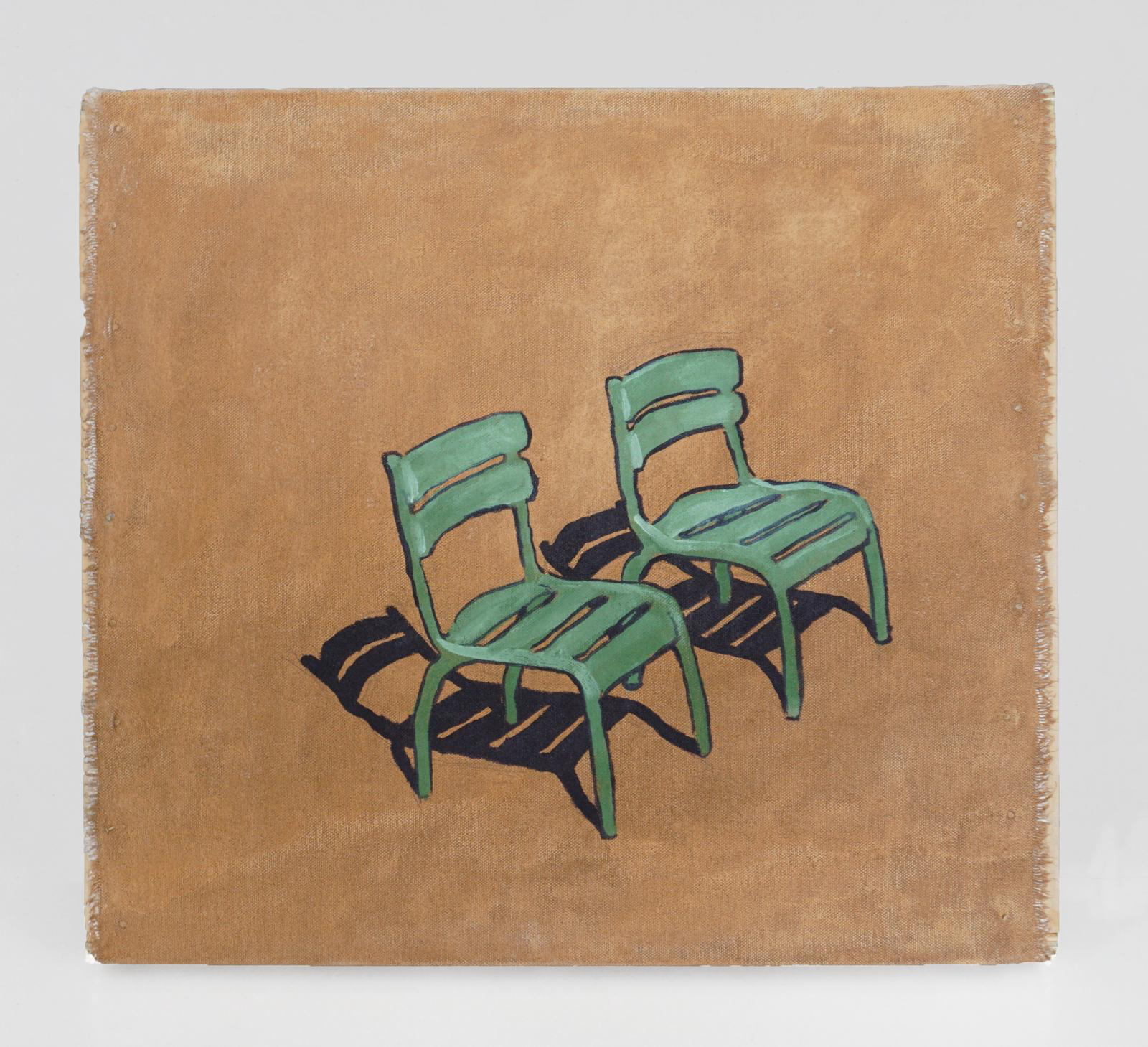
Quinn Lewis presents a series of life drawings from the month of July.
“Each sketch depicts a different system of chairs composed from past garden visitors. The shadows manifested from each configuration are strongly emphasized, grounding each scene in the specific time they were observed. The strong heat seemingly locking the chairs in time as new visitors flocked to other chairs under shade. Viewers are encouraged to imagine their previous function. A series of interactive sculptures serving as a continuation of the life sketches feature a distinct assembly of chairs in morning, afternoon and evening, with drawings of garden visitors that can be manipulated by the viewer to overlap the base scene at various points. These layered drawings depict hypothetical scenarios based on previously observed ways visitors have used the chairs. Through their ability to rearrange the drawn figures by hand-cranking a painted film in front of the set scenes, viewers participate in creating their own combinations of gestures, bodies, objects, and uses.”
Wayne Pate
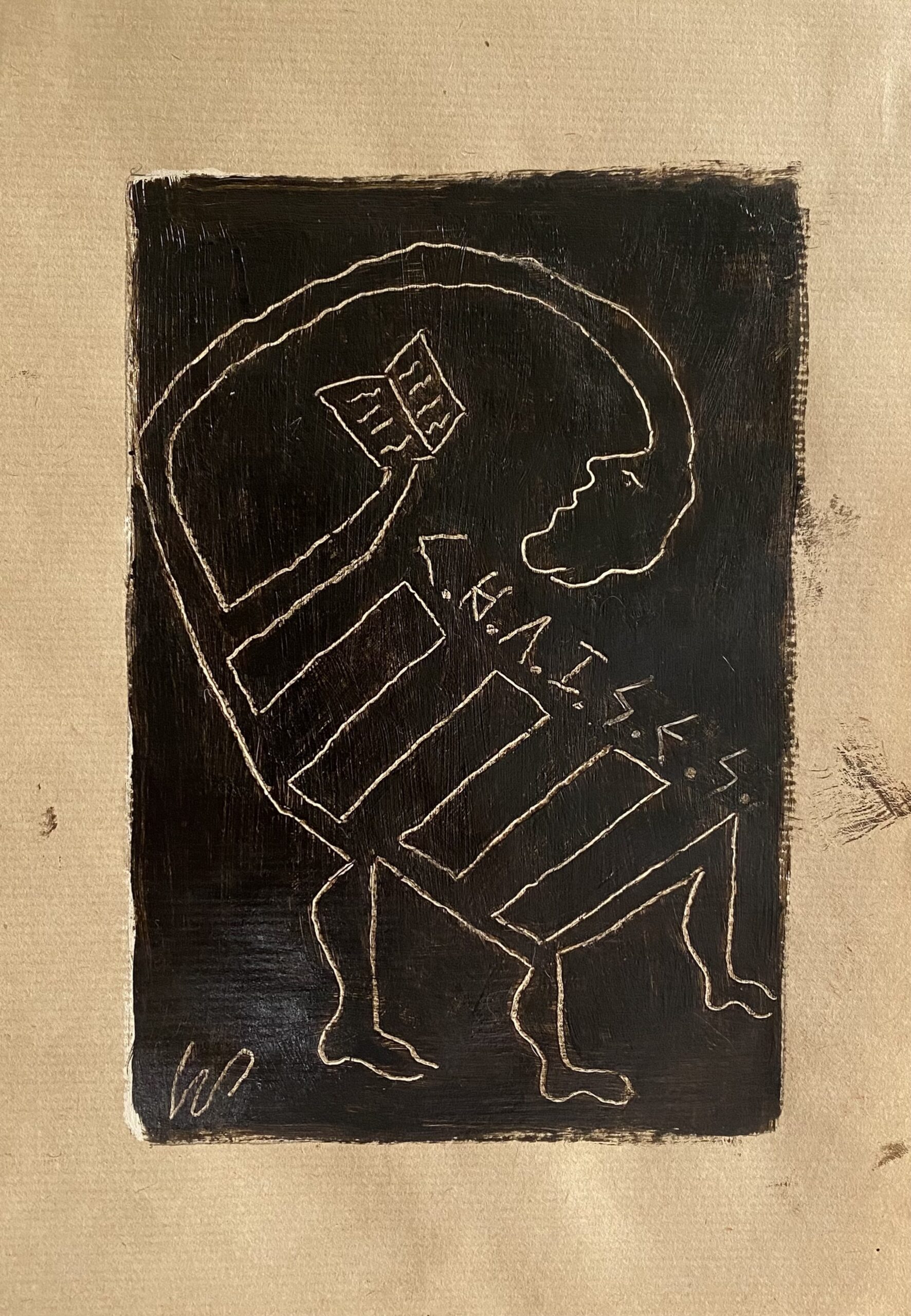
In the paintings of Wayne Pate, which also became the logo or ‘emblem’ of the project, bodies and chairs become one.
‘From my own experience living in Paris and spending time in Jardin du Luxembourg, I too would sit in these chairs under different circumstances and situations each time. So I thought it only right to illustrate the brief morphing of the individual and the object. Furthermore I wanted to capture a Parisian attitude and aesthetic of posted bills and wall art that is ingrained in me from decades passed of visiting and living here.’
Jessica Anne Schwartz
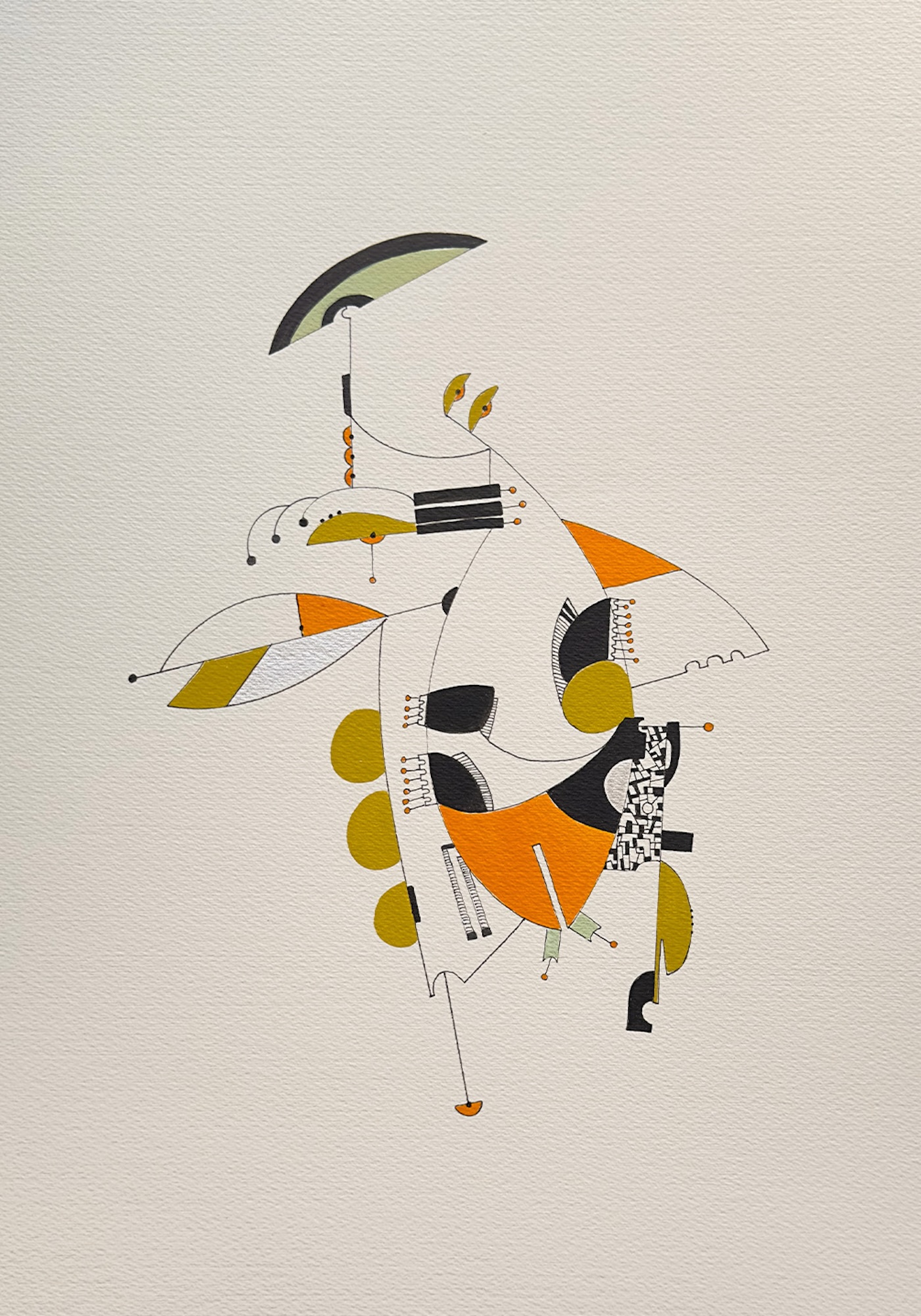
In 2023, Jessica Anne Schwartz spent a year returning to the chairs of the Luxembourg Gardens, using them as a fixed listening post for Synaesthesia Drawings of Luxembourg Gardens.
“The works are sensory recordings of the living soundscape of the gardens: the choreography of the Sénat chairs, children’s laughter, the crunch of footsteps on gravel, the rustle of newspapers and picnic lunches, birdsong, wind in the trees, and the subtle textures of sun and rain. Transcribed in gouache, sumi ink, walnut ink, and mica on heirloom Murillo paper, each mark in color and form corresponds to a specific sonic cue. Sound moves through space as three-dimensional mobiles of color and form, describing the process as “butterfly-netting” the most beautiful-looking sounds and pinning them to paper, transforming an ephemeral experience into a vivid and enduring visual record.”
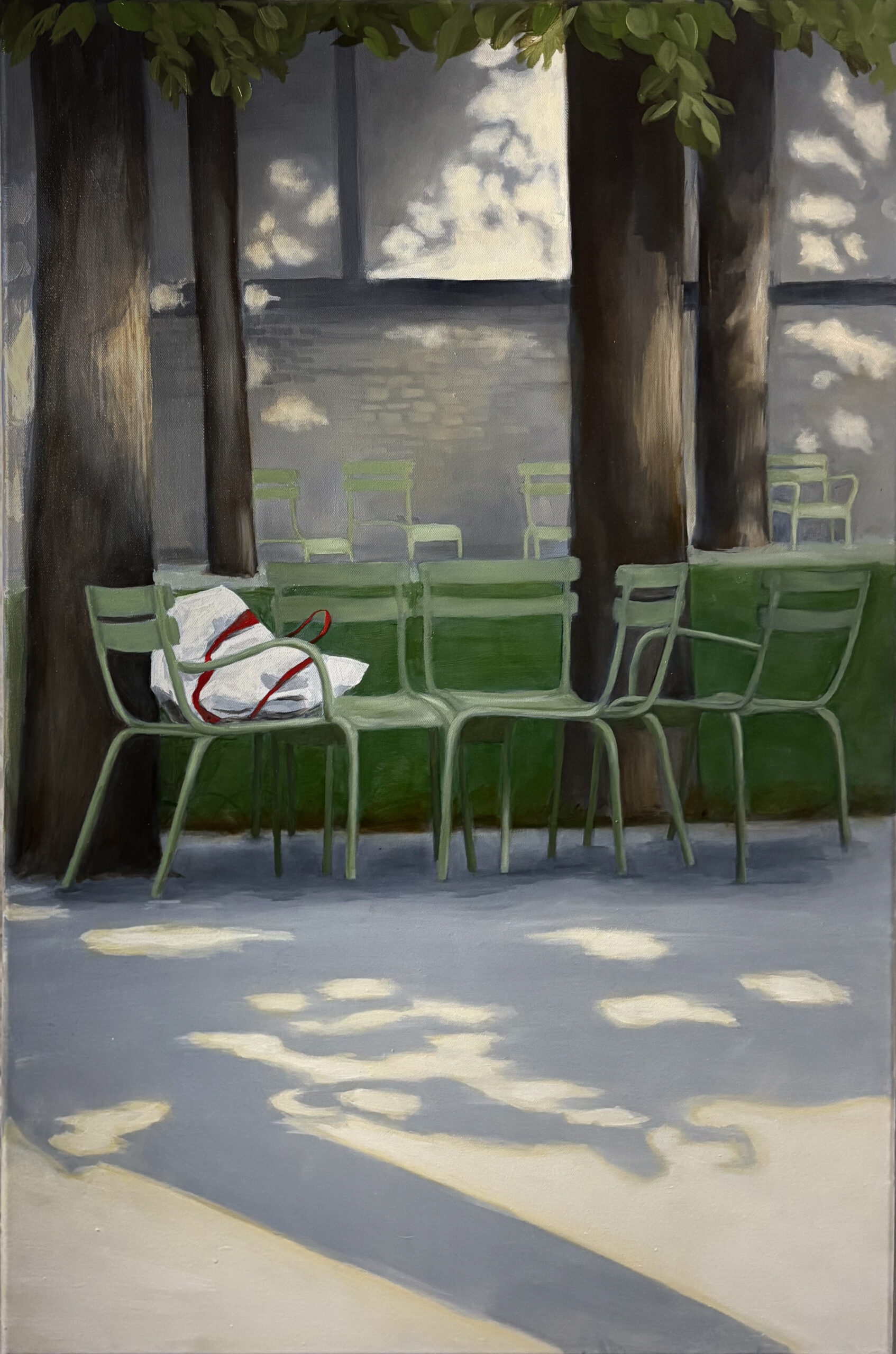
Charlotte Tampol
Charlotte Tampol’s project ‘Reliquary of Touch’ “is an exploration of the residual energy held within the chairs at the Luxembourg Gardens,” she comments.
“Each chair holds its own memory and perspective; thus, their history gives them individuality. As we move them for our needs, we become temporary orchestrators of fate for the lives of each chair. Each chair is alive with touch, memory, and the energies that we have imbued.”
Allard van Hoorn
Finally in the basement, Allard van Hoorn performs a suspended, borrowed chair from the gardens as a resonating object, by attaching magnets and letting it vibrate with a special resonator.
“These sounds that seem to make the chair speak or sing, allow us to speculate what social scripts this chair might have seen, experienced. The installation is completed by a Manifesto-Score for the chairs as monuments to gathered time and archives of the experiences of the users.”