
Blair Wallace speaks with artist Katie Shannon about the aesthetics of industrial music, life in a concrete town, the end of modernity, and her first institutional exhibition at Goldsmiths CCA, London.
In BACK/PRUNE/VIRGIN/RUIN, Katie Shannon maps the psychic and sonic terrain of the end of times. Or, at least, the end of this current time.
The works in the artist’s first institutional exhibition in London dance between the riotous late-night entanglement of bodies and the inherent ennui of growing up in a town in decline. With the question of what constitutes an ending at its core, the artist draws upon two seemingly extraneous narratives — the gradual degradation of Cumbernauld Town Centre in her native hometown, and So Low, a label and club night of post-punk, synth-pop, and wave music that she co-organised in Glasgow — into a contrapuntal reading on the psychogeographical effects engendered by the guttering of public spaces.
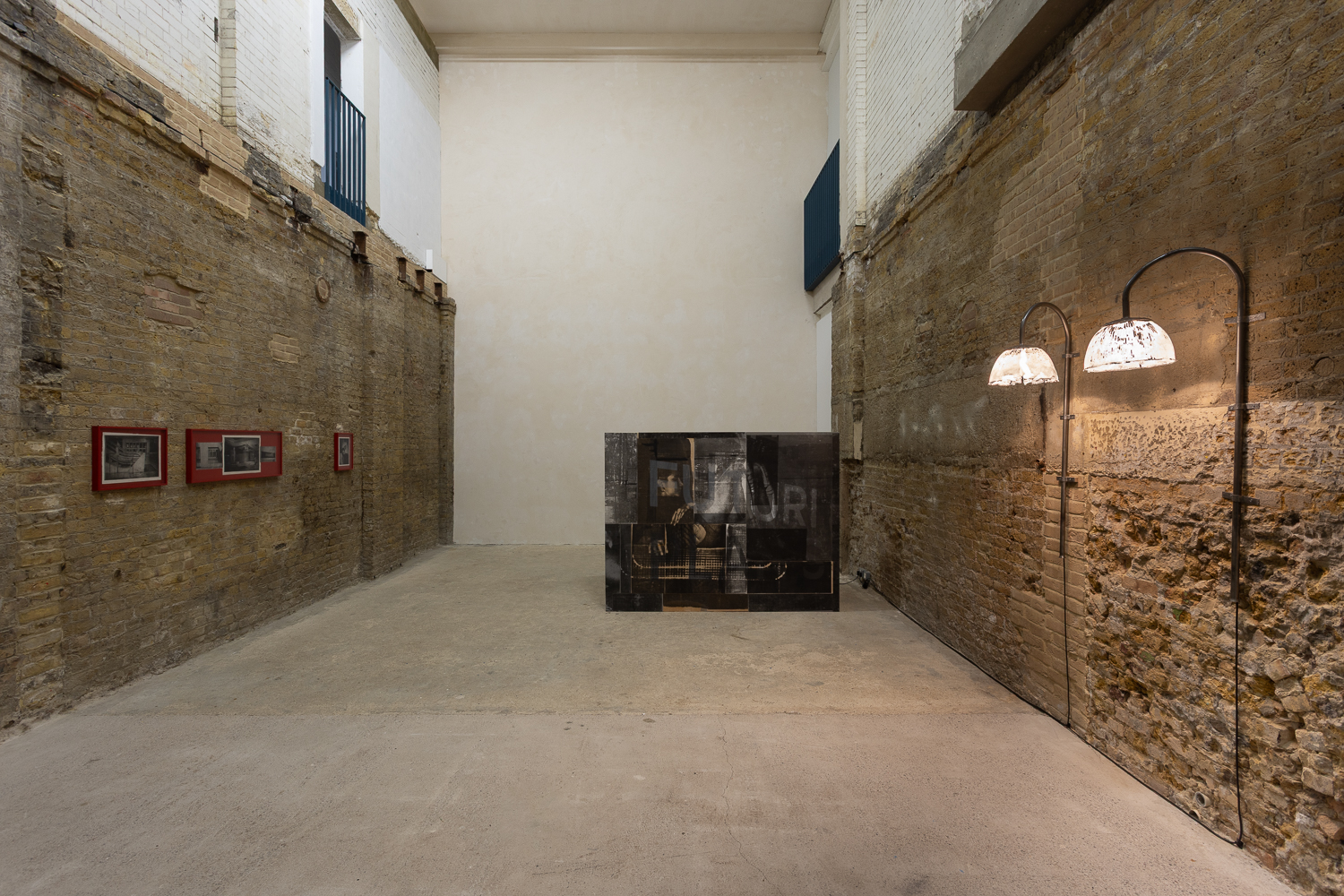
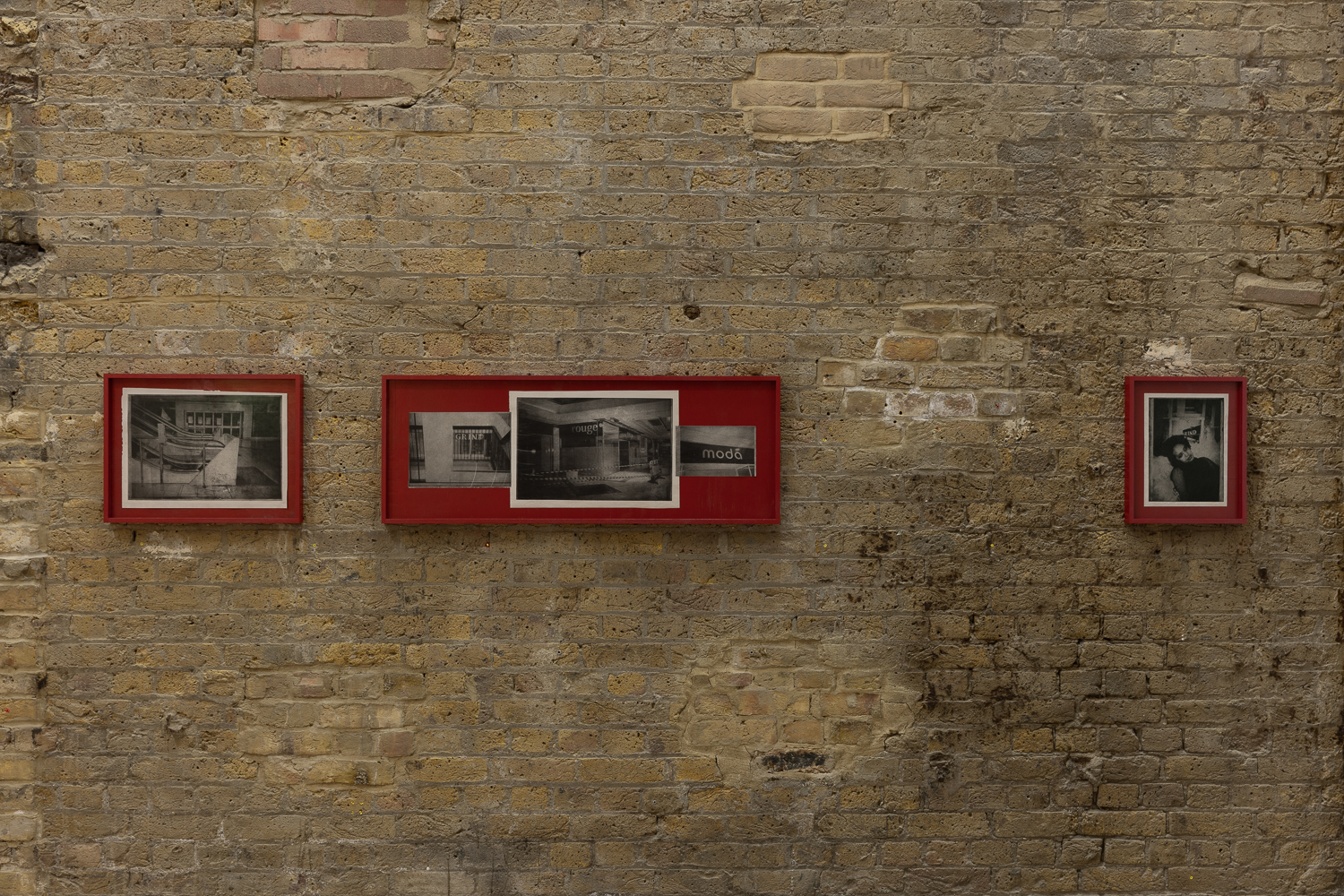
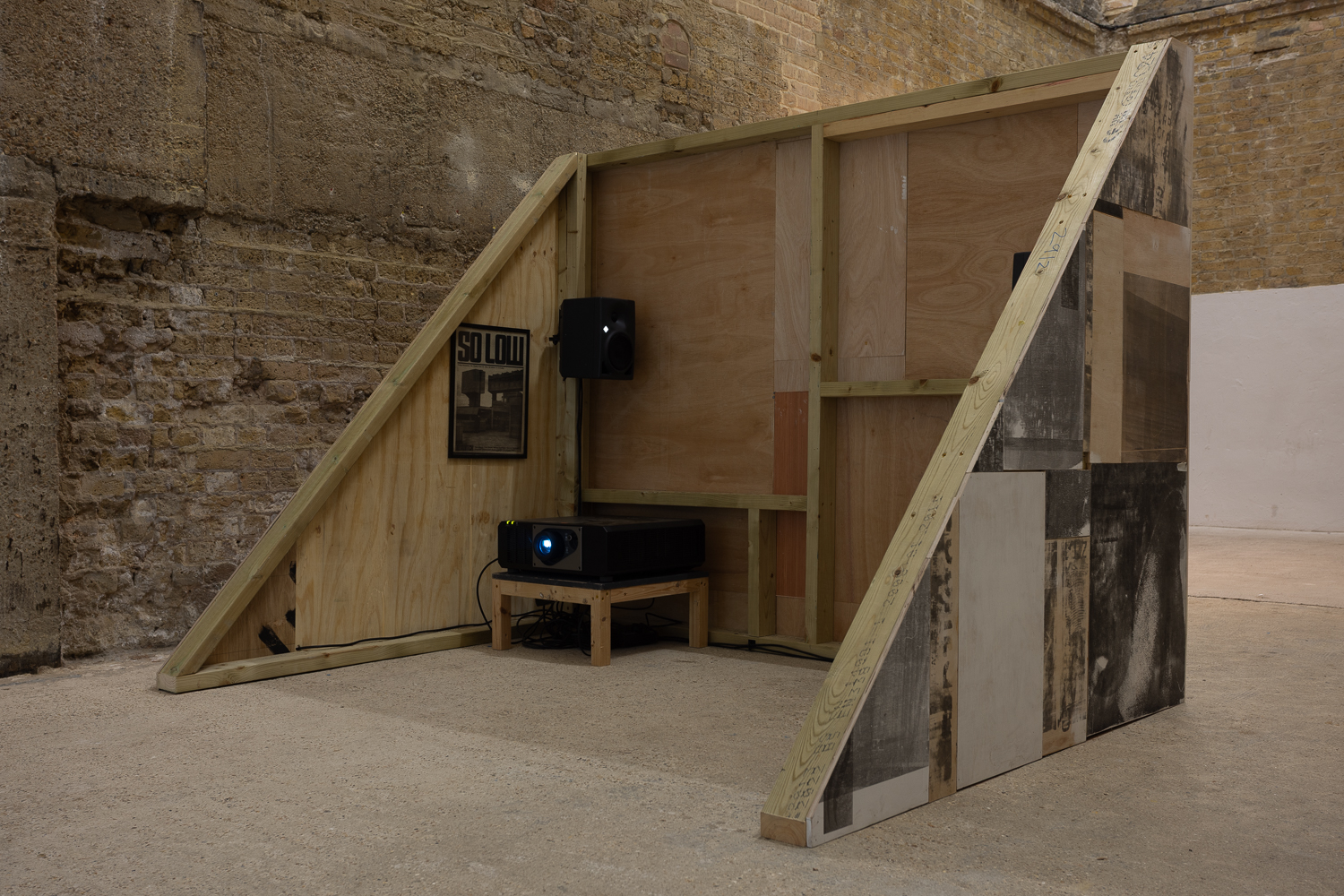
Born in Scotland, and now living and working between Glasgow and London, the polymathic artist’s practice oscillates between sound and disposition; feeling and place; the personal and the collective. The works in her latest show at Goldsmiths CCA constellate the space, forming a spectral mise en abyme, a temporal and spatial drag throughout the exhibition. Photographs taken by Shannon during a recent exploration around the town centre’s all-but-abandoned shopping units appear in a triadic set of steel plate etchings. In GRIND moda, ou sont Les Rouges?! (2026), continental storefront logos ‘rouge’ and ‘moda’ lend nicely to the red-painted frames the prints are set inside — if only to be contrasted by the gnarly logo ‘GRIND’ assigned to a neighbouring unit, which makes a motivic reappearance in the background of a portrait of the artist’s friend in Judith K’26 (2026). Complementing this temporal slippage, in these inflationary times portrays an escalator stopper, rendering the movement of bodies impotent, which has been conjured in the gallery and enfolded in spliced, chopped, and reconstructed screenprints on wood with Stop 1 (2026).
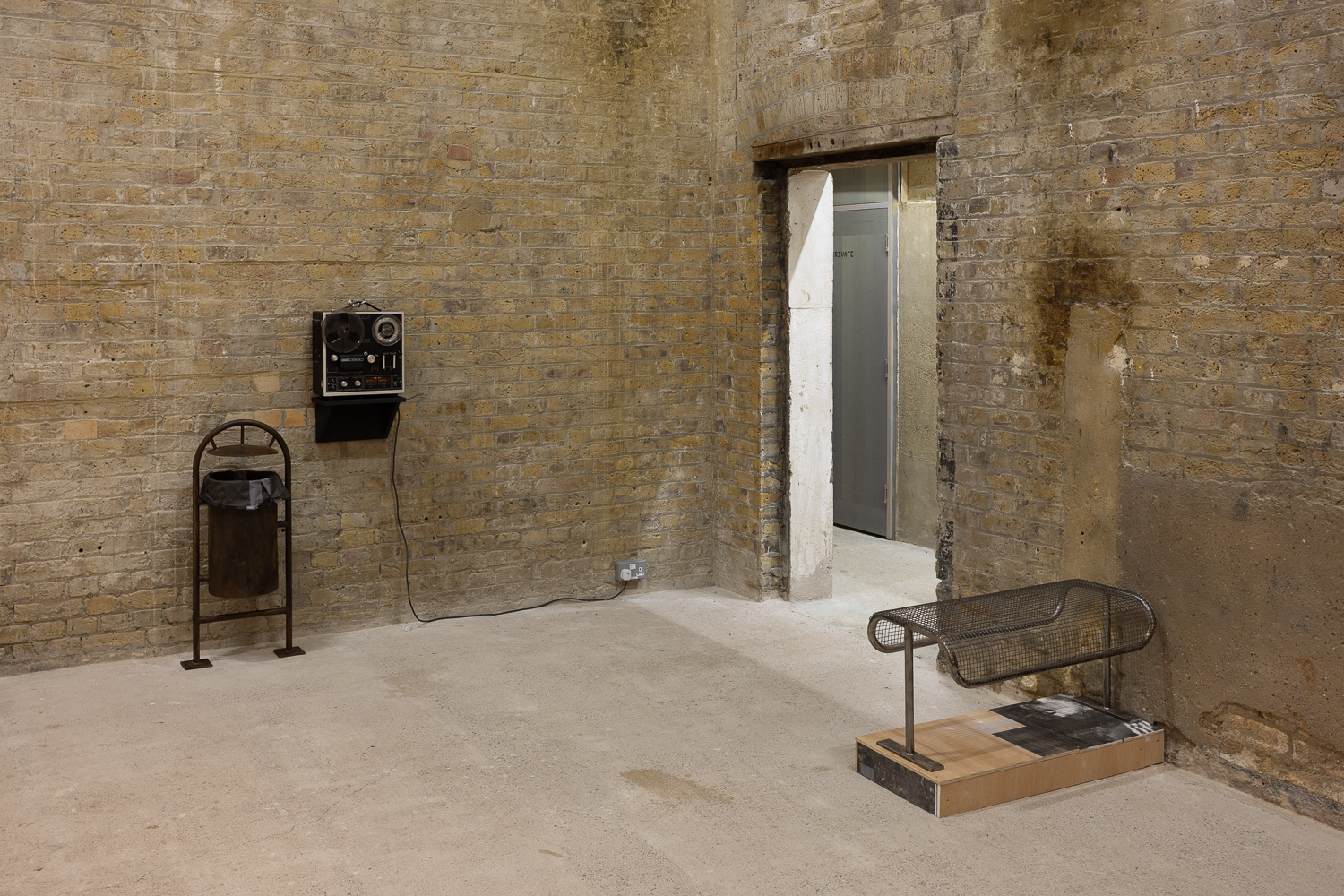
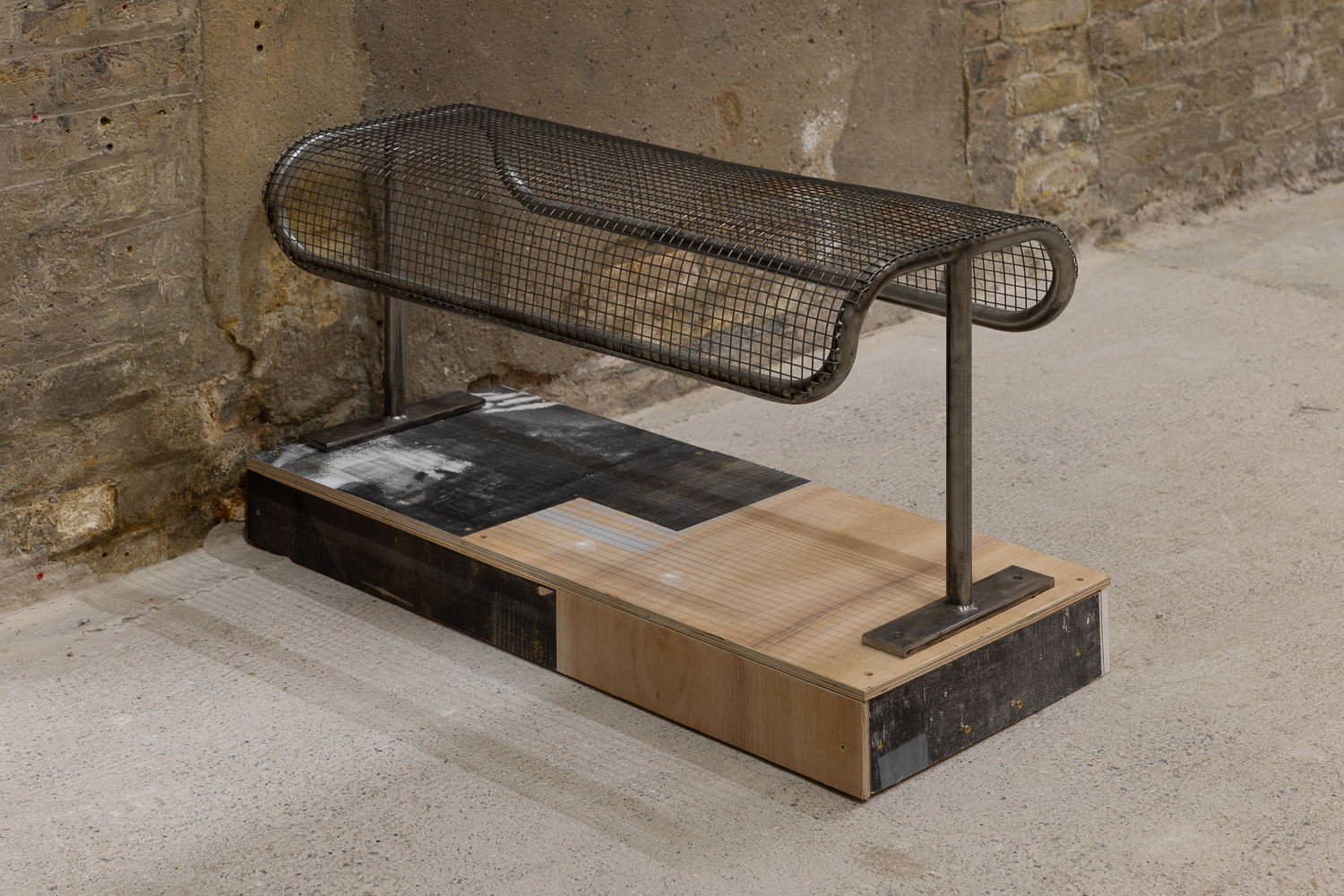
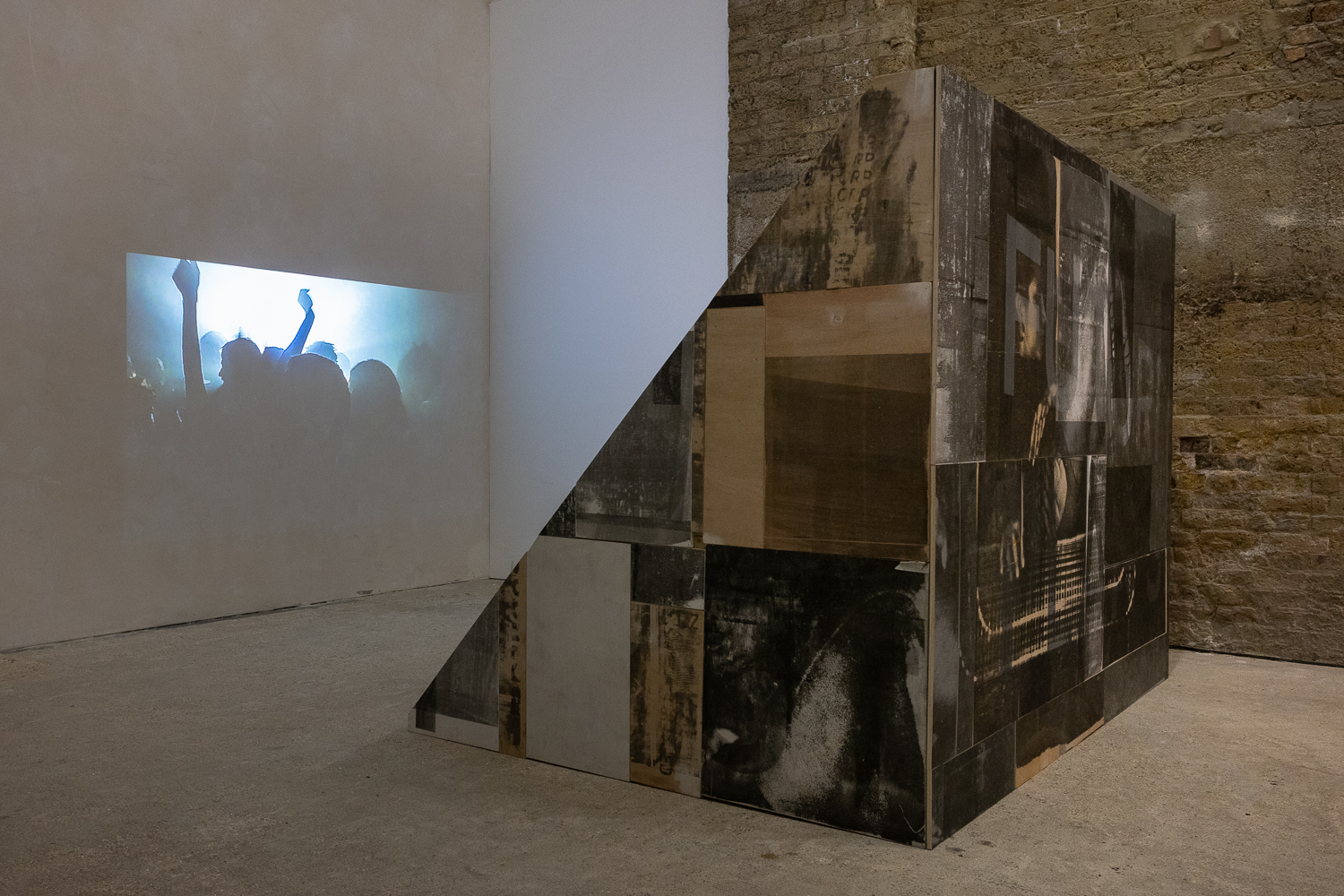
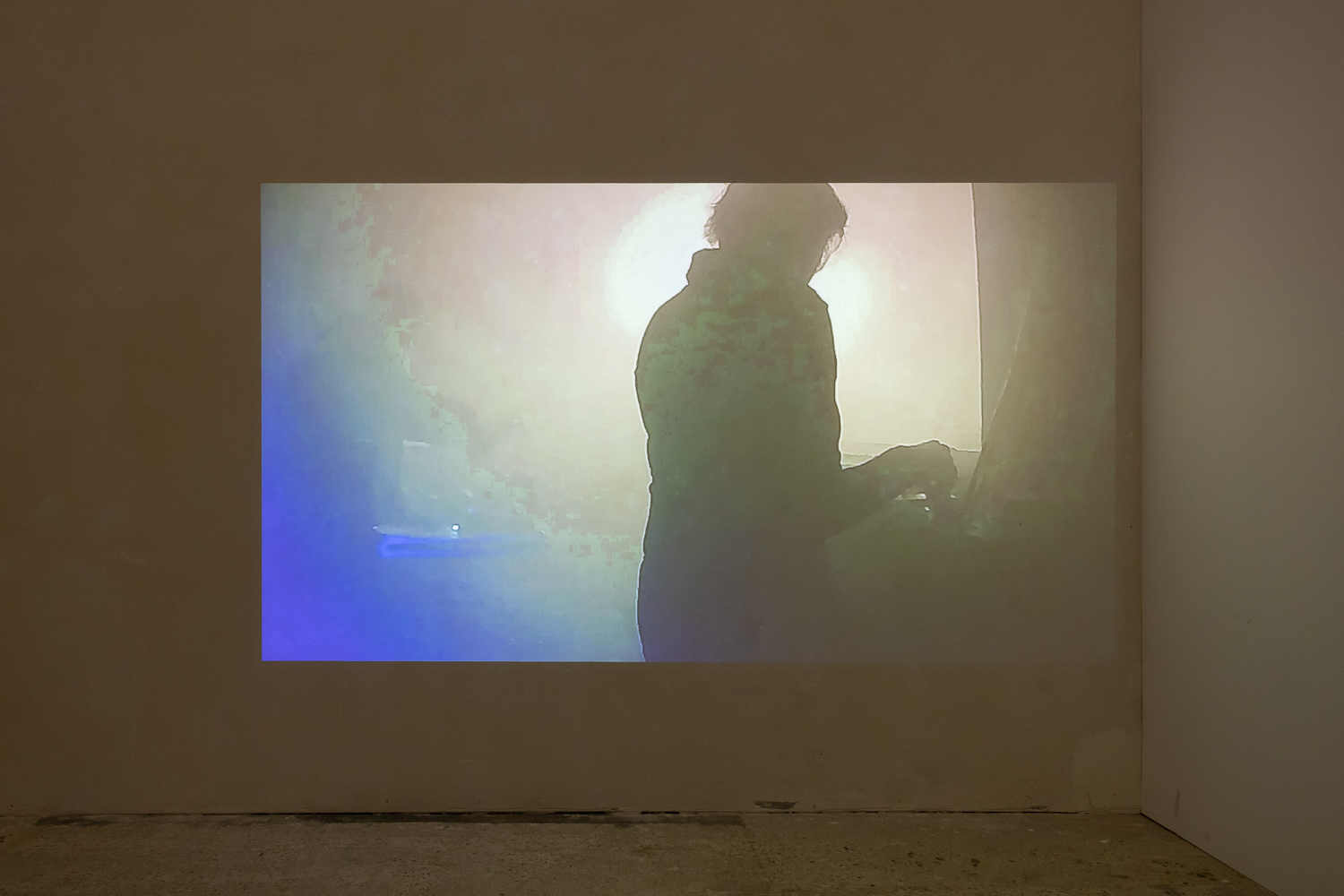
These puzzled-together pieces of halftone give way to another portrait of a friend, sitting with pathos atop a steel bench — a facsimile of one from the town centre — also found in the exhibition. This assemblage, superimposed by an oblique faded ‘FUTURI’, the Latin term for “future”, is juxtaposed with phantomic video footage from the final So Low event overdubbed with audio recorded at the first, Back Room Virgin Prune [totally out of time dub] (2026). This dialogical opposition of movement and stasis gives air to theories from Franco ‘Bifo’ Berardi — namely, collective feelings of impasse, or the end, may be counteracted by the ‘conjunctive interaction’ (as the exhibition guide describes) of bodily relations found in nightlife and social settings.
In this courting of chaos, notes fumbling, time collapsing but never quite falling apart, Shannon’s exhibition takes us on a dérive through the end of a project and a place, once heralded for its socialist-modernist potential, held in perpetual decline.
Following the opening of her exhibition, I met with the artist at ICA, London, prior to a screening of films by Marina Gržinić & Aina Šmid that she co-programmed with long-time collaborator Keira Fox as TLC23. We spoke about influences on her practice, the state of things, and why she’s decided to cease thinking about the end.
BLAIR WALLACE: You frequently splice, appropriate and employ wordplay in your exhibition titles. Where did your latest title come from, and what was your thinking behind the show?
KATIE SHANNON: This show went through a couple of iterations and formations, so the final title ended up as a sort of rework; cut up and slashed. I like to put together words or terms which appear nonsensical but that gesture towards something. The original title contained Virgin Prune, which loosely means ‘naive outsider’. Several musician friends – P6, the modern institute, Han, Ribeka [Becky Marshall] — and I performed a cover of the Virgin Prunes on the last evening of So Low. The slash is a nod to First/Last by Monte Cazzaza; back is the backwards, or the backroom of a club, place or time. Sometimes I’ll appropriate song and film titles: Domestic Exile, a label I used to co-run, came from a Daniel Cullini track; So Low was named after a song by Carol.
Virgin Prune came from late-night conversations with friends, a way of drawing lines across personal and sexual histories. Quite goth in a way. A little Catholic, perhaps. I was reflecting a bit on the failure of the utopian modernist architectural projects and on my experience growing up in Cumbernauld. There are a lot of reflections on teenagehood, music, sex, and violence in the exhibition.
BLAIR: The exhibition draws upon two long-term research projects of yours: the decline and prolonged demolition of Cumbernauld Town Centre, and documents of the club night So Low that you co-organised with Ribeka, Iona Fortune and the late JD Twitch (Keith McIvor) of Optimo. Can you tell me how the idea of exhibiting these projects together came to you?
KATIE: The invite to make an exhibition came from Oliver Fuke at Goldsmiths CCA. We were initially chatting about our shared interests in certain kinds of music… I wasn’t ever planning on making a show about So Low, but it happened from there.
When we first started the project, we had conversations about the idea that if you’re from a concrete town that’s cold, wet, and in a bad mood, that this reverberates around you and forms your taste in music. Initially, I was concerned that all of these ideas weren’t very palatable to put in an exhibition, but I wanted to nod toward places like Cumbernauld as a microcosm for what looks to be happening imminently across the country. Cumbernauld has been a sped-up social and architectural experiment, but it looks like most of us are heading for Asda-town-ification and the associated psychosis that ensues. In some ways, I mourn the aggressive experience of growing up there, because at least there was some life there; it forced you to be alert to the environment around you. Now, the place can’t even keep a chain store open, and dissociation is a feeling on the rise.
I feel like we’re at this point where we’re exiting modernity. The future has been dead for fifty years and I think that is more visible in the outskirts towns [like Cumbernauld] created in the 1960s. The concrete melancholia that comes from being from a place like that has influenced my music taste. I see the room of the event, the night, as a bodily and enlivened one. They are two sides of the same coin. There is a need to release the day time, so they are connected.
BLAIR: Could you tell me more about So Low, and how you became involved in the project?
KATIE: Keith started it. Initially, it was going to be a one-off event. He had asked me to create a poster for the event that’s included in the exhibition. We were interested in parodically creating a pastiche of Italian Industrial records that linked brutalist architecture and industrial music. I chose the building in Cumbernauld as a good example of shit brutalism. After organising the first two events alone, he asked me, Becky Marshall, and Iona to join.
People who are into dark music — taken from my experience during late-night conversations —have mostly gone through quite traumatic events in life. I noticed from organising this event that the music with the darkest lyrics and harshest tones could result in quite visceral reactions from the crowd. I remember one time, a guy had arrived while I was working on the door, and I said, “Listen, it’s quite a particular kind of night and you might not like it.” He came back and said, “That music makes me want to kill myself.” I thought, “I quite like that song,” but I gave him his money back anyway.
I picked up a few red lines from Keith that I will always take forward, one being never try to make a song or work that tries to emulate or sound like the past, because it won’t work. You can play the first hand of the past, but anything that attempts to phonily recreate a feeling or texture synonymous with a bygone time will ultimately find you in uncanny valley. Simon Reynolds talked about this in his book Retromania, and Mark Fisher spoke widely about it too.
And for being such an amazing DJ, Keith told me that it didn’t matter if you couldn’t mix two records together. His philosophy was about sharing music, and getting people into the same room together and playing with their emotions. Particularly music of this gothic ilk: sparkly coldwave or dark industrial, the emotional resonance of that was worth more than being puritanical turntabilists or whatnot.
BLAIR: I want to pick up on your points about us exiting modernity and notions of the uncanny. There’s a kenopsia inherent in your photographs of the town centre.
KATIE: There is something about playing with the uncanny that can, of course, hold a mirror up to contemporary feelings of malaise. I feel like that logic runs through some of the ‘dreamcore’ imagery I’ve been researching. Although to me, it feels a bit oddly bourgeois to voyeur on these fictional depressing places when 2006 still physically exists in the out-of-time towns. It’s affecting people’s psychosphere. Maybe we should actually talk about that and try to do something about it?
BLAIR: We’re in a moment when theorists are constantly contributing new texts that add to apocalyptic contemporary discourse about the demise of civilisation. Could you talk about how you’re thinking about the end?
KATIE: The discourse that I was attracted to around the end, at one point, started to feel maybe arguably fantastical or over, at least. It’s quite pop now. There is obviously this lineage of writers professing or analysing this notion of the end, but there haven’t been any new developments to the argument. Now, you cut to 2026, and there are articles on the BBC asking, “Is humanity going to be over in 10 years?.” I’m not sure how much steam this discourse has left, given that the world has now caught up with what Fisher and [Franco] Berardi were talking about a decade ago. More recently, Berardi has said that the last scraps of humanity are now completely dead — which does feel apparent after witnessing genocide, and we definitely are living in a barbarically violent time — but I disagree with him that we should ‘quit everything’. I think it’s apathetic to retreat. You need to do what you can in the time you are in.
I think this is the end of thinking about ends for me. Maybe it’s better to be a bit more optimistic, as that provides you with energy to actually do things. It’s hard, but everyone is finding life difficult right now. While it relatively affects nothing, I think organising events is one of the last few things that can bring people together. Anything to help take the edge off and make our lives a little more interesting. I think there’s something quite ambiently political about making your experience of this current moment at least sound a little better.
BLAIR: I am curious about the interplay between the movement in the footage from the final So Low and the static escalator stopper which denies motion and passage. Could you speak about the dialogue occurring between the works in the exhibition?
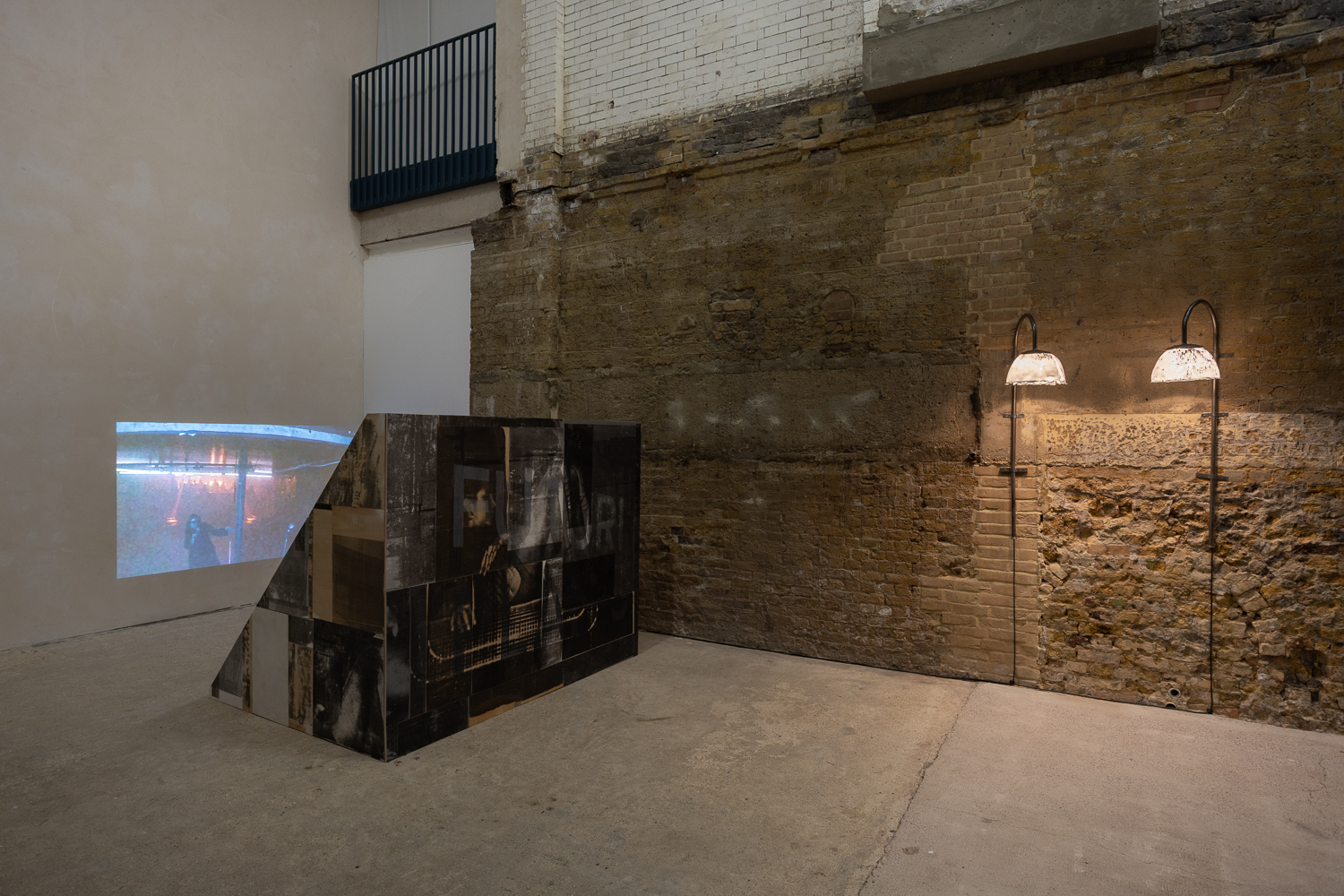
KATIE: Berardi’s theories around conjunction versus connection are an ongoing influence on my work: feeling blocked, having a filtered life, the mutation of the psychosphere. We stopped kissing on the cheek. I thought Stop 1 would be a reification of the stopper from the other room, a bit of slight wry comedy, maybe, about the double-height room of the gallery. Cat, a current student at Goldsmiths, is pictured in this work. It’s got a melancholy to it; she has something sensitive in her pose, face against the wall, thinking about education or, alternatively, lying around the town centre bench, ripped tights, slight sex, not sure what to do or where to go.
We could learn something about blocking, taking up space, and just saying no from our mainland European friends right now. It’s been the longest strike in UK university history at Goldsmiths; it was on my mind whilst making the show. The video is shot in the first person by my friend Amy Gwatkin at the last So Low event. It’s more of a texture or a movement that falls in and out of time musically, it’s spliced and recompiled like Stop 1 (2026) and the reel-to-reelCorridor Laura (2025–2026). It’s about a really intimate last hour, sharing a melancholy.
BLAIR: The etchings within the red frames depict the desolation of Cumbernauld Town Centre, with logos like GRINDand rouge superimposed over gutted shopping units. The energy of these spaces feels particularly brutal. When did you take these photographs, and how were you affected by these spaces?
KATIE: You say brutal; I’d say colloquially sardonic. Those photos are relatively recent. ‘GRIND’, to be fair, is quite brutal. Waitressing long-term is quite brutal! They are shop signs from the town centre. Still attempting to have a little continental glamour with the ‘moda’. ‘Rouge’, prior to it being ‘Internationale’, was a low-tier chain shop, which was a signifier of a better economy than ‘Rouge’, a no-tier copycat shop. It gives me a faint sense of guttural adolescent doom when I walk past it now, as I was forced to shoplift from it as a young person!
BLAIR: Much of your creative output has been through collaborative projects. Could you speak a little about these projects and your draw towards collaboration?
KATIE: I’ve been really lucky to work and create with some really prolific artists. The through-line in all the collaborations I’ve undertaken is the collective experience of not having the means to do something on our own. Also, by their very form, a lot of projects I wouldn’t have been able to undertake them on my own anyways.
My collaboration with Keira Fox as TLC23 is very specific because we have similar research interests. She’s also an amazing dramaturg and performance artist. One of the first collaborations I was involved in was with Francelise McGurn; we wanted to make an artist’s bar. We had a similar experience of the hospitality trundle, so it felt quite cathartic to make that into something of a fantasy — the flip side.
Anything I’ve done with friends has been better than it would have been solo. To produce the projects I’ve been involved with alone, you’d have to be wealthy — and if I were, I probably wouldn’t have done the same things anyway. All of my collaborative projects are totally independent. They’re generally not funded and never supported by a brand, no sponsorship — I’m pretty die-hard about that. You have to work hard and pull together a big pool of labour to exist like this and make these things happen. And you have to do it together. Otherwise, it would be impossible, and my life would be way less interesting.
BLAIR: Your works frequently refashion existing municipal infrastructures and repurpose offcuts from previous works in a manner that is quite self-referential; an event becomes a photograph, which becomes a drawing, then a print or a sculpture and so on. There’s also often a lot of labour involved in the mediums you use. Do processes of labour and reuse speak to your interest in contemporary critiques of time?
KATIE: There is usually something stitched in the lining from a previous project, or something becomes a precursor to a future project. Sometimes I just recycle materials or use whatever I have access to. I make drawings when I can’t do anything else. Print processes are really particular to me, and it isn’t often that I find a good reason to make an etching. For this exhibition, I was thinking about the materiality of the sound of So Low and just the sheer labour involved in producing the nights — I felt that the prints had to be steel plate etchings. I hadn’t made an etching in 12 years and forgot how dirty it is. You become covered in grey, so it kind of physically holds time literally in your skin.
I like works that are long-form and making them slowly, which feels like a strategy to combat ‘immediacy’ — as Anna Kornbluh coined it. Perhaps things matter more when they take some time and you don’t get it quite perfect until the fifth iteration. I’m always trying to make something better.
BLAIR: This brings me to printmaking, which has always been a central component in your practice. You trained in printmaking at college, and later at art school. You can really see the vernacular of poster design and public art forms in your work. There’s a sense of you treating the viewer as a pedestrian that you’re trying to communicate with. There’s even a poster from the first event, So Low Poster 1 (2014), included in the show. How do you see the role of the print within your work and in the world?
KATIE: This show was really a printmaking show, which is my trade, I guess. I studied printmaking at college before studying it at art school. I was taught to be a printmaker in more of a polytechnic style, learning how to make a perfect etching. Previously, I was teaching a course called the Politics of Print in Public Space, and that was the beginning of a process in which I began to view print critically and conceptually. But the work was the fact that we were teaching students about print: the history of independent press, distribution of images, the power of multiples, what does it mean to have a poster in the street — how you can have independent media! And for me, the history of that is through printmaking.
I’m always thinking about prints that are out there in the world, on the street. I’m more in tune with that world rather than being a ‘printmaker’.
BLAIR: We’re speaking here today prior to a screening of experimental films by Marina Grzinic & Aina Smid, which you have organised as TLC23. How important is event organising to you, and how does the lineage of women’s presence in experimental and peripheral scenes inform your work?
KATIE: What an absolute privilege it was to meet Marina. Her work and research are a huge inspiration to me, particularly in thinking through modes of being embodied, your work being about your life, and its conjunction with the political and economic frameworks of your time. Unconsciously, I focus more on what female-identifying people are up to.
Most of the artists, musicians and writers I admire have been involved in left-wing activist communities who are trying to affect change through their work. People with a certain gumption and emotional resonance (which makes for great orators and front people in bands too). People who have issues with the way things are generally don’t listen to wet music. They aren’t avoidant. I admire people who still care about confrontation.