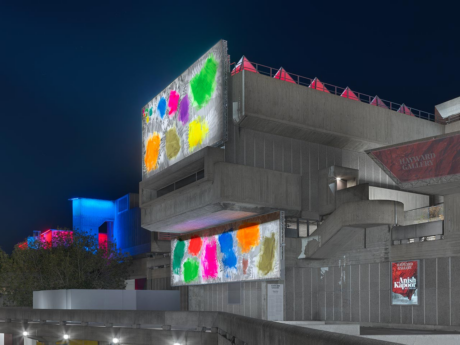

With works reminiscent of Vermeer, Hammershøi and Hopper, Cece Philips’ latest exhibition, All the corners that are left, quietly yet persuasively draws us into the forgotten regions of the home, as well as the self, to create exquisite portraits of place and feeling, observes Hannah Hutchings-Georgiou for Elephant.
Writing about Cece Philips’ work necessitates an examination of where we create. My writing space – which is currently a messy nook in the small crook of my cubic kitchen – would not make for a beautiful portrait akin to those found in Philips’ latest exhibition. There are the piles of books vying for attention, each colourful spine garishly graphic in its rectangular formulation. There is the mass of wires and papers, Post-its and pens, an unappealing Vanitas of modern habits, and discarded odds and ends. And there is the bright white boiler, its plastic cladding unclad, its copper pipes close to rusting, the surrounding paintwork redolent of a former shade worn down. My place of creation, which is a messy space of creation, would certainly not make for an ideal corner in Philips’ show.
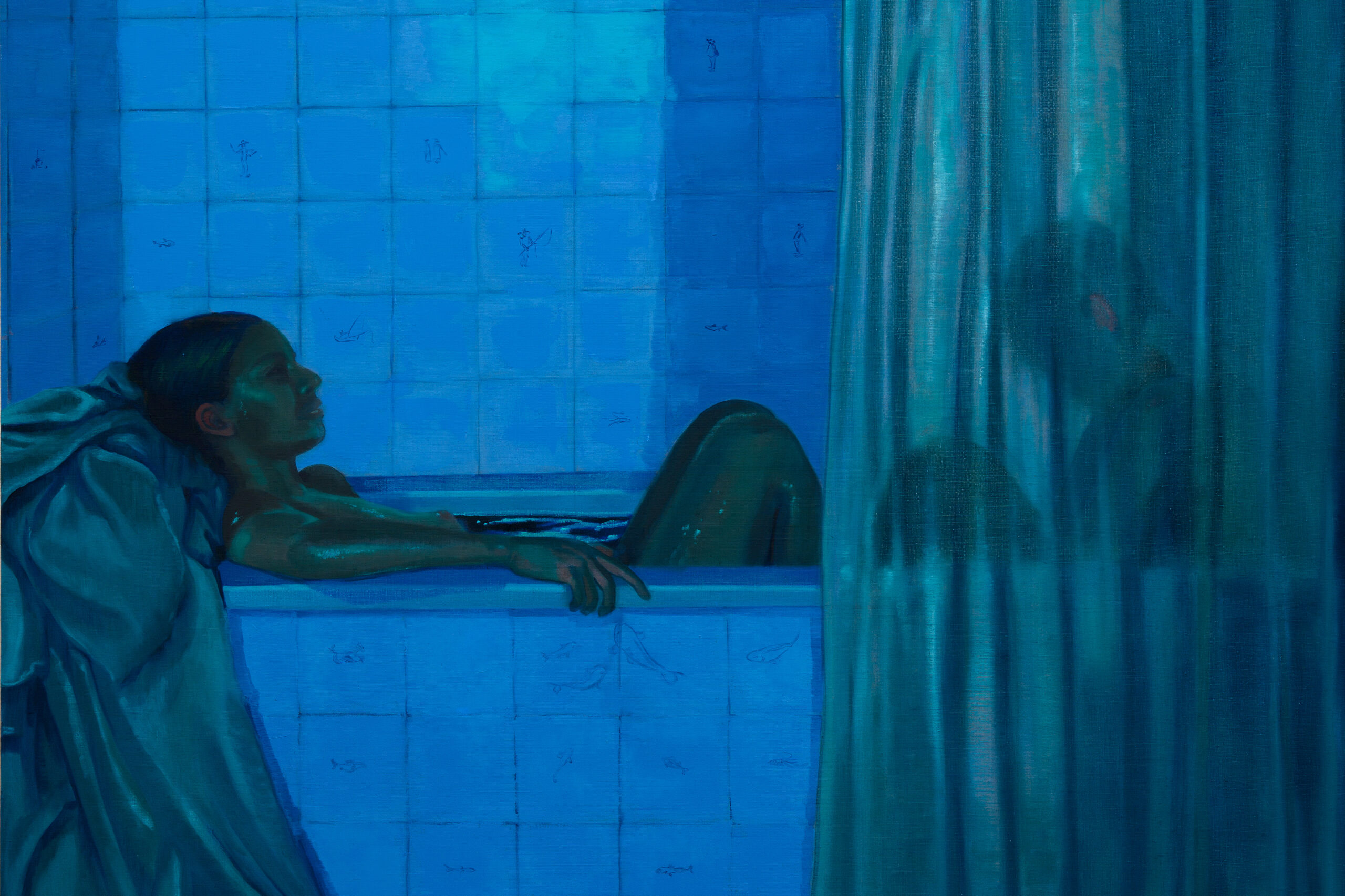
Yet when encountering the artist’s incandescent paintings, my mind wanders back to this nook in my own home. To that unlikely creative crux in the likely site of cooking, chatting, cleaning and relaxing. Philips’ artwork, in its luminous meditation on the body in space and the opaque spaces of the body, encourages me to pause on the corners of my own making; to return to the actual places that contain my own mind, and which are, inevitably, contained deep within it, mess and all. In her recent solo exhibition, All the corners that are left, Philips’ astute painterly sensibility presents us with illuminated corners: niches bathed in mellow yellows, recesses gleaming in solar whites and golds, and domestic interiors externally aglow with the internal light of the artist’s own undimmed and undiminishing creativity. Alive to the shining thoughts of their inhabitants, the titular quiet corners – some occupied, others seemingly empty yet encouraging our occupation of them – lightly hum with activity, creating compositional coordinates to the subject’s inner life.
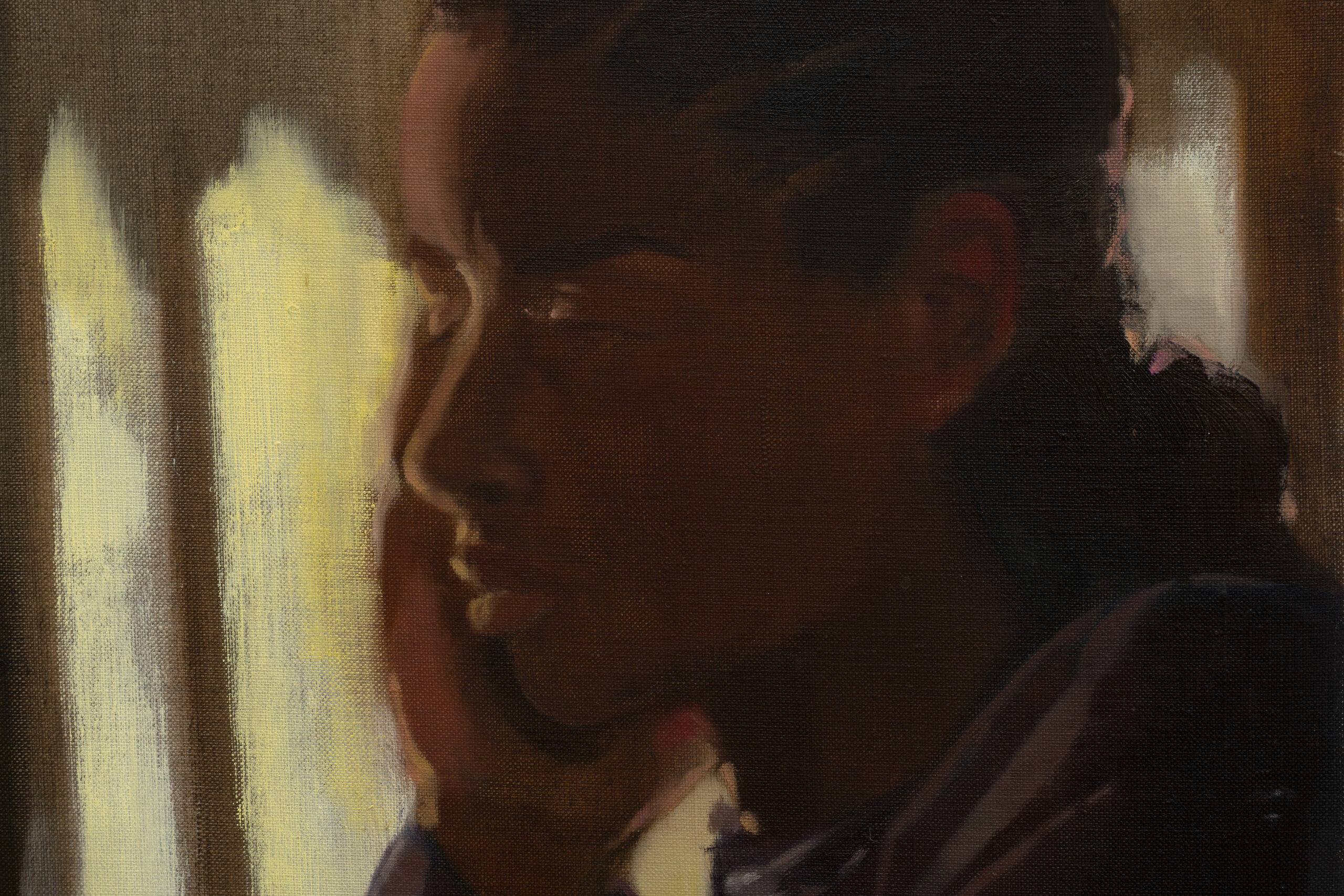
These corners not only mark the quiet workings of Philips’ figures, but also those of her own working life. Unlike the cluttered kitchen corner poorly portrayed in words above, Philips’ painted niches and rooms bear the evidence of artmaking in more poetic visual metonyms than my own. In Day/dream (2026), our gaze is drawn to the polished surface of a table, upon which the paraphernalia of a painter is carefully arranged. A jar of brushes, a bottle of linseed oil or turps, a palette knife, a large hog bristle brush atop a hardback book are all placed like sacred objects from left to right, anticipating the artistic ceremony that is about to commence. What personalises this ceremonial “corner”, transforming it from a still life to one of active portraiture, is the mirror-cum-frame to the proper right of the painting. Here we espy the face of a young Black woman, obscured by shadow but unmistakably lit amongst the artistic apparatus. Is she a smaller painting, self-reflectively alluding to what is taking place away from this one? Is she a reflection of the artist herself, attentively looking, painting and working away from this canvas onto another? Or is she a photograph, part-inspiration, part-decoration, anchoring the artistic scene in the domestic, the studio in the hub of the home, the now public painting we are presently admiring in the parameters of the personal? With impastoed flecks of red and rose, brown and burgundy paint scattered on the tabletop, the residue of a fresh palette being prepared beyond this one is playfully confirmed. But the female face – a human trace cornered within a corner, a subtle mis-en-abyme of life in art and art in life again – mystifies yet identifies place with personality, the niche with the secrets of the soul, the artfully mirrored self with that of the artist one mere centimetres away from this painting. This quiet scene, which bears witness to the processes, deliberations and decisions of the artist-cum-subject, delivers us, therefore, into the intimate acts, as well as areas, of art-making itself.
Smaller works obfuscate the distinction between art and reality, the personal and the public, the artist self and the artistic subject again. Using walnut panels to mount and frame miniature interiors, Philips allows us to close in on a scene from afar, stealing glimpses of an artist at work, a figure seated before a curtained window, another crouching by the side of a bed. Always the translucent slips or orbs of light, which emanate from lampshades or windows or doorways, dramatise these diminutive doll’s house views, turning them into parts of a disjointed dream-narrative, the domestic abode disrupted, albeit rhapsodically, by the artistic reverie flowing out from within. Inevitably there is a comment on looking here; on following the inner gaze that belongs not just to the maker in these miniatures, but the maker of them too. Though we remain voyeurs, gazing, somewhat longingly, from without the wooden demarcations, we are allowed to linger just long enough on their painted thresholds to witness a moment passing, a flicker of a thought turning into light.
Suddenly the corner in Philips’ work is not so much the dust-filled crevice or neglected nook of any twenty-first-century house, but the habitude in which we find ourselves. The spatial axis from which all spiritual orientation and conversation with the world begins. The point in which we simultaneously look out whilst looking in. It is in this, that Philips’ paintings really spatialize subjectivity anew. By centring the corner – and those who are often pushed into one – her works gently move what is marginal, what is overlooked, what is quiet, what is (supposedly) uneventful into view. The corner, so readily approached as a locus of rejection, dirt and “negation,” according to Gaston Bachelard, becomes then, its opposite in Philips’ latest work, unfolding outwards into a loaded position of purpose, an extended portrait of personhood, a luminescent “chamber” of “being”.
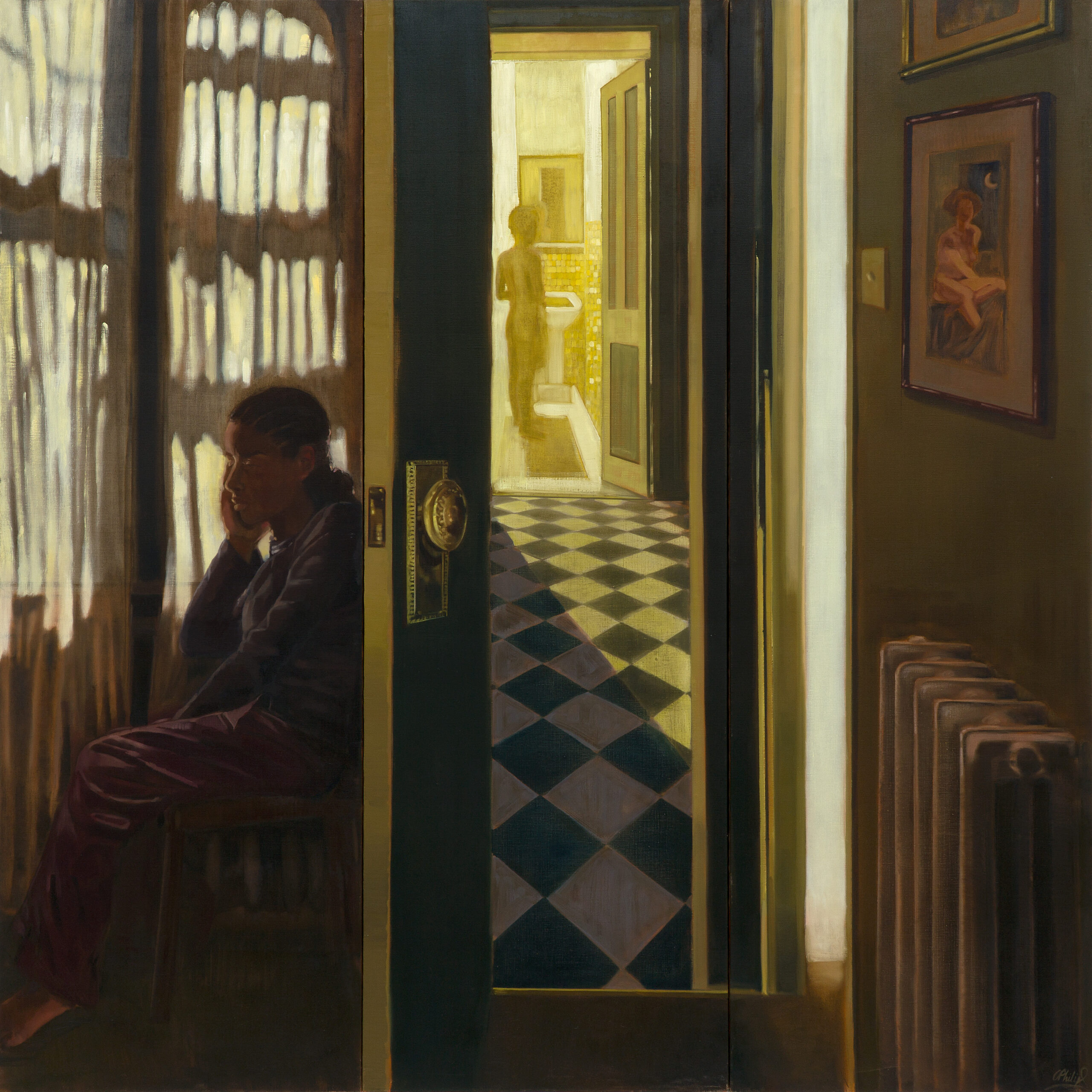
We see this existential expansion and evocation in Three Women (2026), a grand painting that wows and woos the viewer in equal measure. A three-panelled piece, it stages the movement of light around multiple spaces and times, and with it the flight of the imagination, the forays of the inquisitive and pensive mind. Painted into the principal panel is the first door revealing a hall leading onto another door that opens to a figure before a tiled sink awash in shimmering starry golds; behind it, to the right, a foregrounded figure deep in thought; to the left, a painting of a female nude framed by a moonlit window. Openings and closings; distance and proximity; seasonal motions and temporal rhythms; crescent nights and sun-strewn days; light dappling and dancing in dark; three women enveloped by yet emerging from various corners: these interrelated contrasts and asymmetrical subjects are held together elegantly, plotting a narrative that has no beginning nor end, but seamlessly bleeds or succeeds one scene into another, in any order one should choose. Is the contemplative woman, a figure reminiscent of the artist herself, dreaming the other two women into being? Are they her at different stages of the day, month or year? Are these apparitions or versions of former selves or future lives? Philips’ does not respond to such questions, but leads us from the corner to the door, from the flash of an idea to the bold body of stories it beautifully becomes, implicating and emplacing us into these composed but uncanny spaces, and attuning our senses to the subtle harmonies at play within the silent canvas frame.
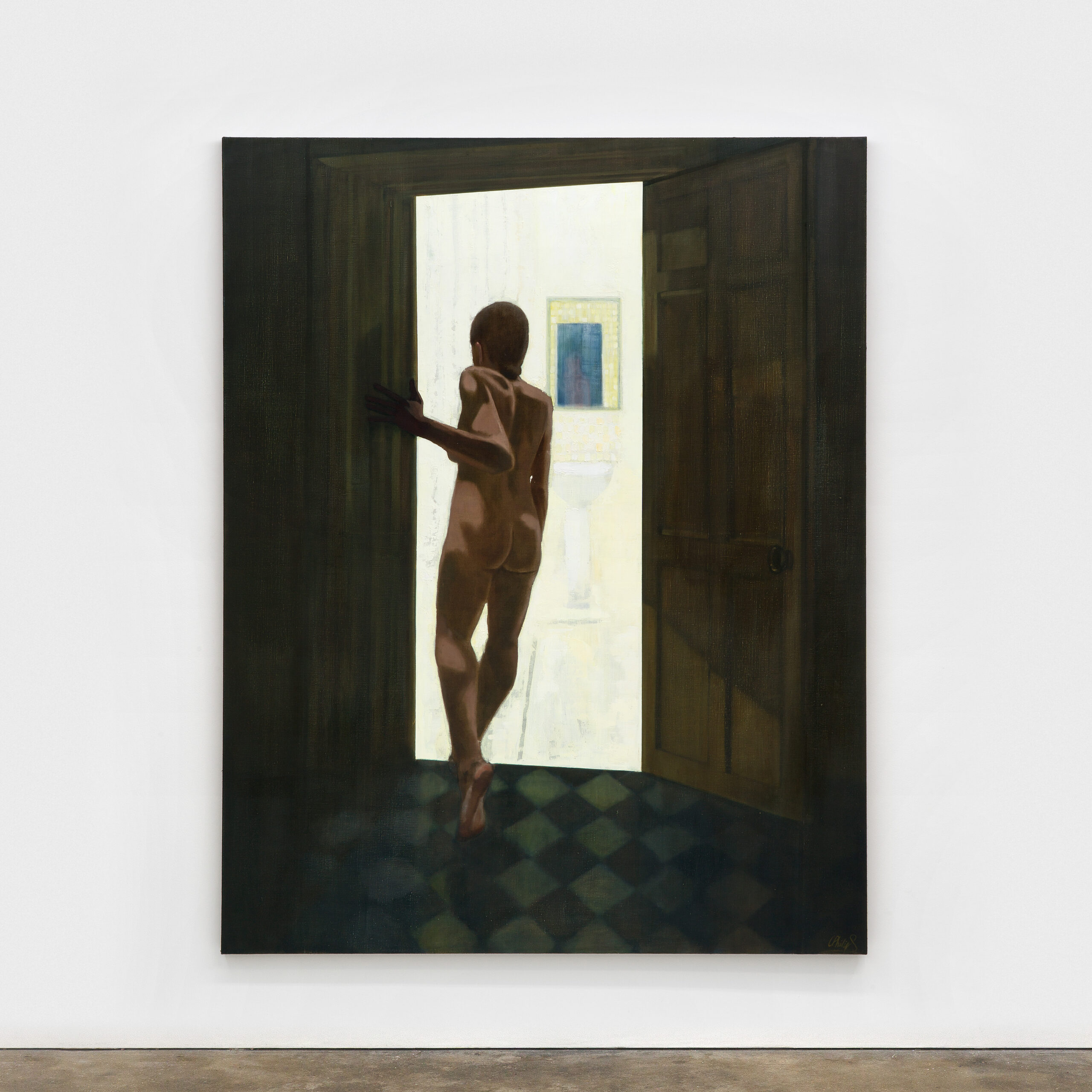
That we have come in from the cold, through a door, into the warm splendour of this work on the ground floor of Public Gallery is a mirroring not lost on me. See, the door is open, Philips says, her painting a trick of reality, the trompe l’oeil of the main panel an entrance into the optical corners and perceptional pathways that abound in her work. We are invited in, no longer onlookers as with the small vignettes, but subjects in our own right standing in doorways, treading across thresholds, ready to be moved and changed in shafts and hues of light and dark, again and again.
Structuring the three-floored gallery space as one would a house of the mind, works of rest, relaxation and slumber, twilight and dreams, are found in the basement; while those of imaginative flight and intrigue arrest at the top (one’s unconscious and hyper-conscious, as Bachelard would deem them, respectively). We venture downstairs, to the basement, where the hauntings of the house echo and the slippage between what’s real and what’s magically, marvellously not is evinced in a will-o-wisp scene of somnolence, in the knife-edge schism of a silver-scaled kitchen, in the doubling of bathing forms, shadowy bathers, filmy fissures of fantasy flowing in and out of an almost nacreous bath. And then we climb up the stairs to be accosted by brightness streaming into dim interiors, a crescent moon swimming in a nightscape of blue, a painter espied between two doors ajar, a green curtain rippling in the breeze, creating its own canvas of city lights, an interplay of colour and crease, inner and outer reassembling into its affective and affecting folds; a thin object no longer dividing two worlds but holding them tautly as one. These latter works – The place where there is no darkness, These unhomely walls, Retreatand Nightdream (all 2026) – which exist at the top of the gallery, draw the outside in, situate the light within the domicile of the domestic, the creative spark in the furnished corners of the hearth. Imagination and contemplation are not so much tethered to the rafters as basking there, radiating in the light that only a person, a subject, an inhabitant can bring to undiscovered heights. For is it not what but who makes a corner? And is not a corner of emotion, of vision, of artistic creation, interaction or relaxation made by the body that exists in a room, a bathroom and a hall? People make space; the space doth not make the people, despite us thinking it does, and in All the corners that are left, Philips generously creates a place for us to dwell, an invisible zone in which, we, too, can breathe and be, uniting or letting go of the extant world so that ours can exist freely in this, her, art’s, created plot of time; the corner that is really a universe.