
Two years after Walter Dahn’s death, Sprüth Magers in Berlin looks back on the German artist’s experimental approach to painting. Sofia Hallström speaks to gallery director Franziska von Hasselbach about Dahn’s work and the freedom with which he made it.
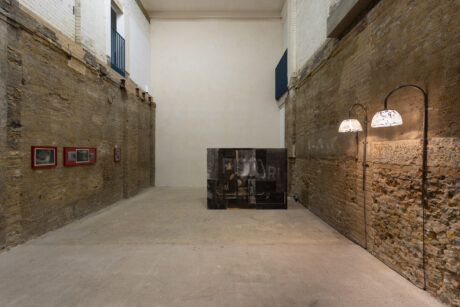
“Death to the fascist insect that preys upon the life of the people.” The revolutionary motto of the Symbionese Liberation Army is screen-printed across one of the small works in the opening room of Let’s Get Married, Let’s Get Lost, the first posthumous exhibition of Walter Dahn (1954 – 2024) at Sprüth Magers, Berlin. Nearby, a 1963 issue of The Psychedelic Review is printed onto another canvas. Next to it, the text “I Am a Cinematographer” hovers above a horse in profile. Hung salon-style, the wall is a constellation of the complexities and eccentricity behind Dahn’s world. The works date from 1983–84 to around 2017, providing a visual kickstart into the ideas and provocations, and visual references, often drawn from newspaper clippings, pop culture, records and Dahn’s own archive. Dahn made his name in 1980s Cologne, then the centre of the European art world. Its galleries were booming, its clubs were loud with punk and the Neue Deutsche Welle, and DIY energy spilled straight into the artist’s studio.
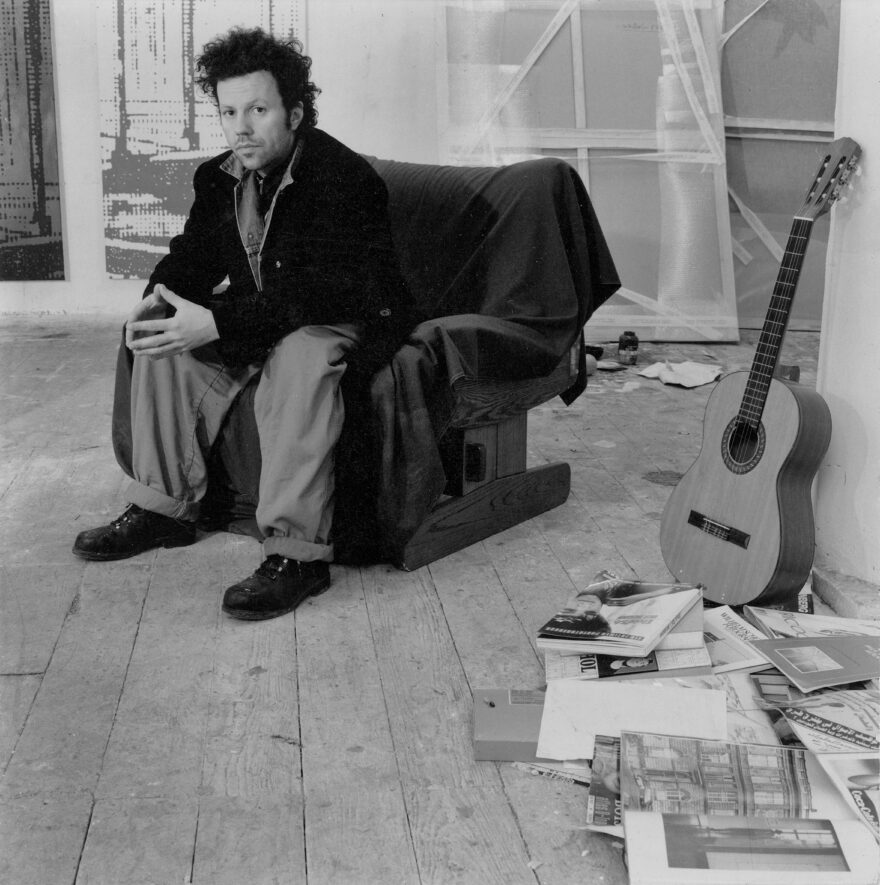
Dahn’s career began during the high point of postmodernism. Appropriation was the order of the day, and Dahn’s friends, including Sigmar Polke, Richard Prince, Keith Haring and Jean-Michel Basquiat, were invested in its theory: the death of the author, the artist as a figure or concept. Dahn had a prolific output of work and the exhibition makes this clear. Divided into four distinct approaches to Dahn’s process, the exhibition can only hint at how much lay behind the work. “We tried to compose an exhibition that speaks about that freedom and honesty,” director Franziska von Hasselbach tells me, “and about the search for authenticity in painting. Personally, I find that really refreshing. It’s a wonderful reminder of why we do what we do.” Two years after his death, Sprüth Magers is once again showing the work of Dahn, one of the gallery’s founding artists. Putting on the first show since an artist’s death altered the curatorial approach to show. “When you work with a living artist, they are often more interested in showing their newest works, and they often don’t want to revisit the very beginnings,” von Hasselbach explains. “Walter in particular always had a very specific idea about how to compose his exhibitions.”
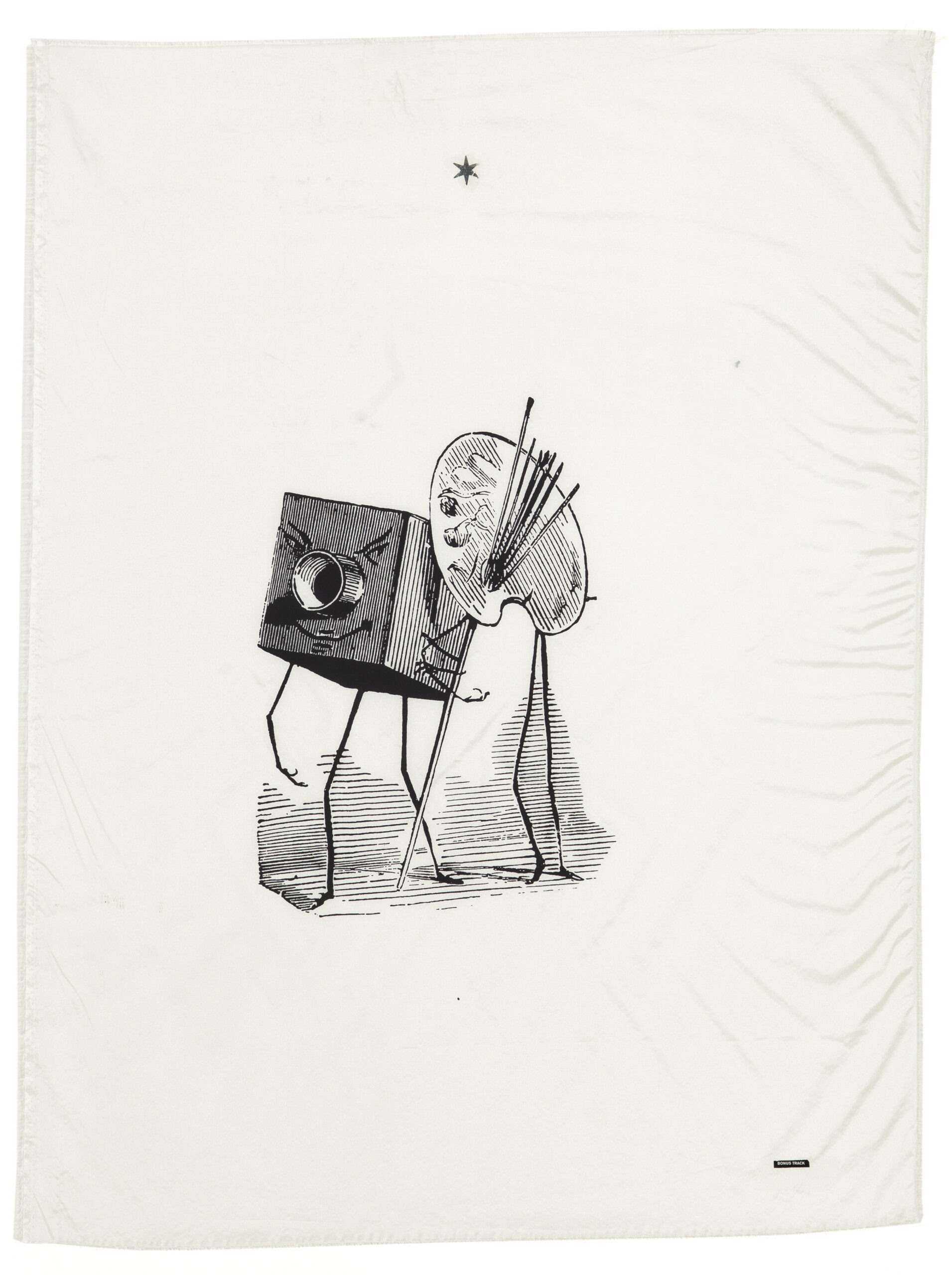
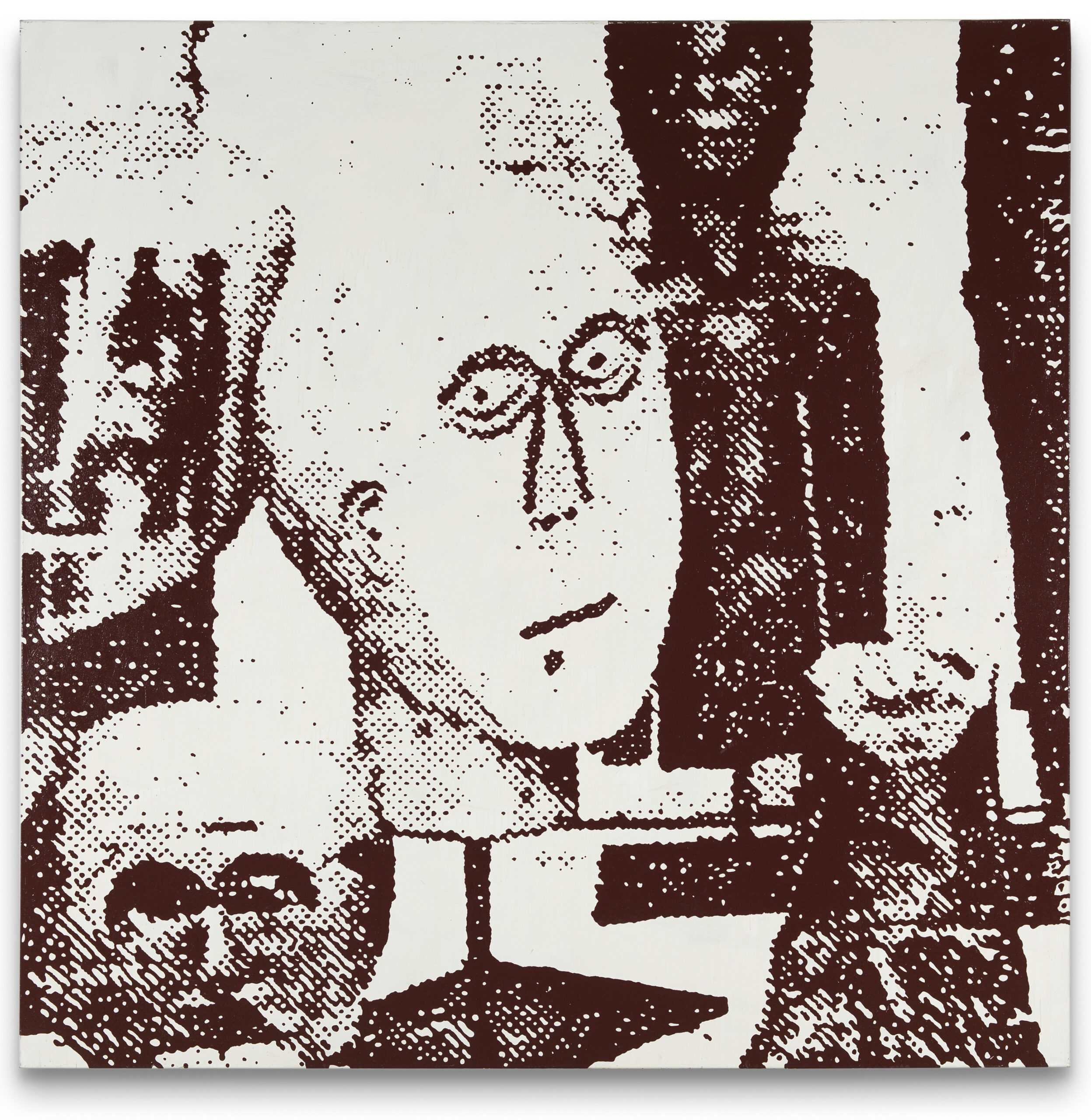
Dahn came of age in Cologne at the turn of the 1980s. He had joined Joseph Beuys’s class at 17, and he went on to co-found the Mülheimer Freiheit and pioneer what became known as “Bad” Painting. He painted fast and cheap, using water-based house paint on raw nettle cloth and spray cans on canvas, and often worked on the same canvas as his friends. From 1984, he turned to silkscreen, which he called a “marriage of photography and painting”. Richard Prince, a close friend and long-time collector, observed that Dahn’s work “went through an incredible number of styles of painting very quickly”. Dahn refused a signature style and refused to explain why he made certain artistic decisions. It is refreshing to stand in front of art like this. The references don’t line up, the visual languages clash, and nothing is held back. The works are experimental, fairly explosive, and crackling with energy.
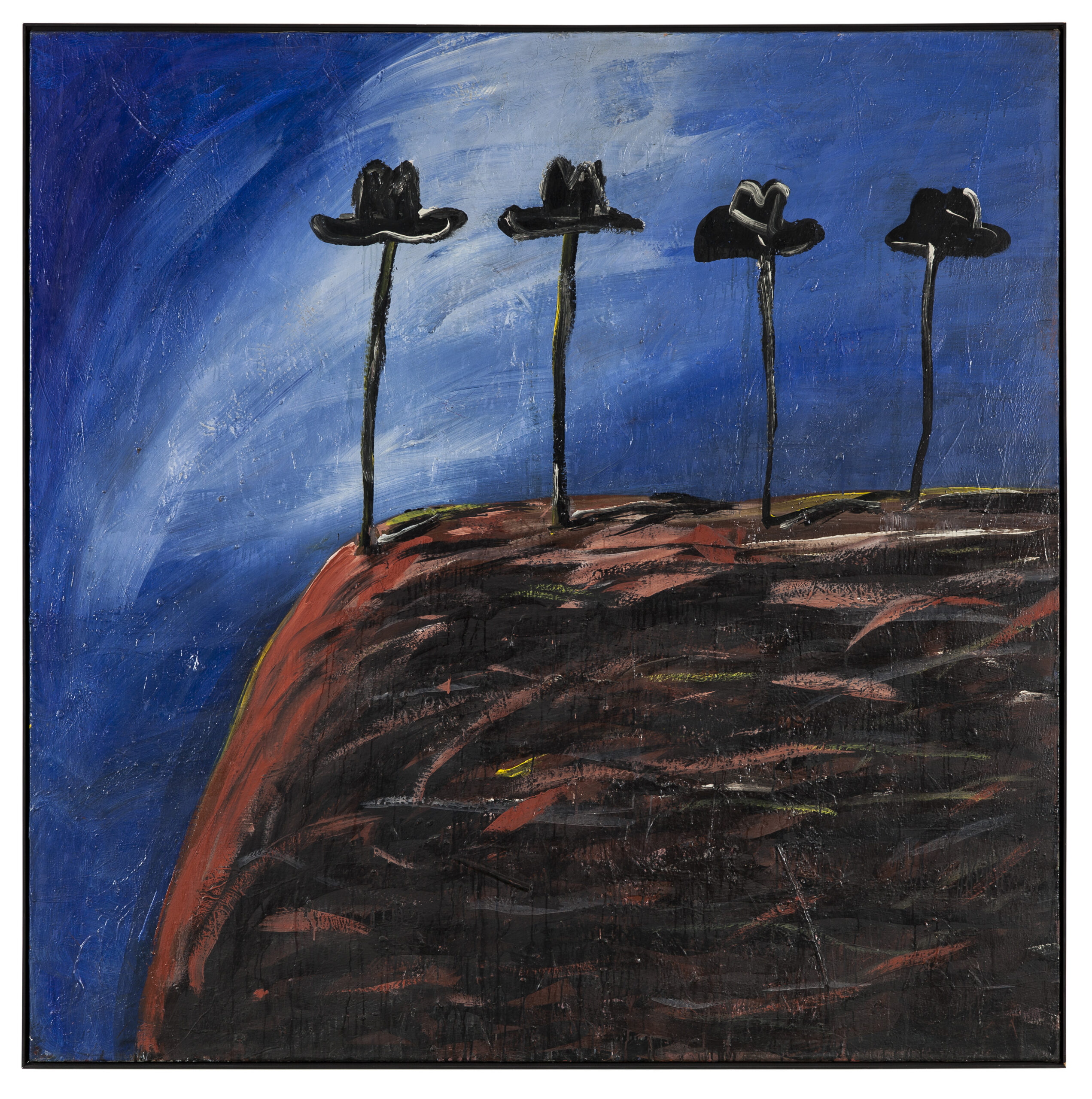
To understand those paintings, von Hasselbach argues, you have to remember how little painting was expected to matter at the time. “It was a moment when all the ‘-isms’ had more or less been thought through. There was Minimalism, l’art pour l’art, Fluxus, Conceptual art. Nobody was really interested in painting or its history, which offered a certain freedom, because if you painted, no one really cared.” She is not convinced that “Bad” Painting is the right label. “It is painting, and when you see these works there’s a confidence in the execution that feels quite unique, a fearlessness that is really refreshing.” The group itself had a matter-of-fact name, taken from the street where its studio stood. But, she says, “I think it’s important to notice that Freiheit, freedom, was part of the name, because that’s really what it was. People would come and go, and they even painted together; one would start a painting and another would finish it.” That freedom shows in the sheer range of the paintings. Some canvases are drenched in colour, with yellows and a deep, almost iridescent orange swept across the surface. In Untitled (Steinbock) (1985), a horned beast drawn in rough black strokes lowers its backswept horns while a naked man stands on its back, arms stretched upwards. Vier für ein Ave Maria (1982) borrows its title from the German release of a 1968 spaghetti western. The canvas is crowded with crosses, with a cowboy-like figure kneeling at its centre. In Gitarren für Tirana (1988), a Roman column towers over a swirling ring of guitars. Each canvas speaks an entirely different visual language, yet they are unified by a commitment to unfiltered honesty, to painting what he cared about with no concern for style or good taste.
Whilst curating the show, what struck von Hasselbach most was how the work now stands on its own. “You see how an artist’s oeuvre can exist completely disconnected from the person and develop a life of its own. I find a lot of beauty in that. There’s a lot of love in the work, a lot of attention, a real interest in how images are made.” That spirit runs through the room. The first large canvas is a 1983 spray painting based on a drawing by George Condo. Nearby hangs Zur Not malen wir auch mit der Nase (1982), in which a brush painter paints with a painter rather than the other way round. For roughly the last 20 years of his life, Dahn taught at the art academy in Braunschweig, and many of his students are now artists in their own right. “They talk about his work in a wonderful way,” says von Hasselbach. His pull reaches beyond those who knew him, too: Cyprien Gaillard “never met Walter but has always loved the work, and I think it’s fair to say Walter is an artist he looks to.” Even within the gallery, among colleagues in press, IT and every other department, many of whom joined long after its founding, the response has been striking. “I think there’s a language in the work that translates,” she says. For her, it comes down to generosity: “When he quoted an artist or a piece of music, it was first and foremost to honour that person or that band. So the work is really an invitation. It feels like he’s surfing, in a subtle way, through everything, and taking us along on his ride.”
Dahn’s generation made work in a country still reluctant to look at its past. His response was never to lecture or to tell viewers what to think. If his work teaches anything, it does so through example: the freedom to make images, and the sheer joy of making them. His paintings are too raw, too funny and too alive to ignore, and that is why they land so hard now. In an art world grown cautious, and a country growing anxious again, here is an artist who borrowed from everyone, explained nothing and held nothing back. Freiheit, as von Hasselbach reminds us, was always in the name. And Dahn’s message, in her words, is simple: “Feel confident in what you do.”