
At the heart of the Malta International Contemporary Art Space (MICAS), Kemi Onabulé embraces cultural and personal limbo.

Silence speaks volumes and, in the case of Kemi Onabulé’s showcase at MICAS, space does much the same. Two figures sit at the fore of her 2025 oil work Sacred Grove, though neither contemplates the lush body of water at its centre. Instead, the leftmost figure confronts the viewer, while his scene partner casts a glance over his left shoulder. Away from the tense emotional exchange between the two men, a round-bellied figure of fertility steps into the water; the root force of the abundant greenery surrounding all three forms wholly ignored as her non-observors enjoy the landscape she has born.
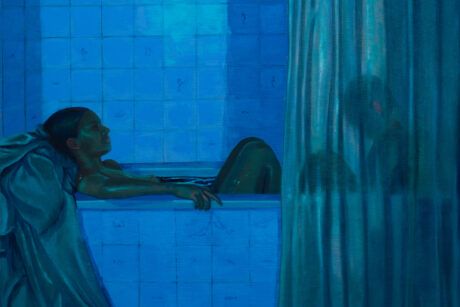
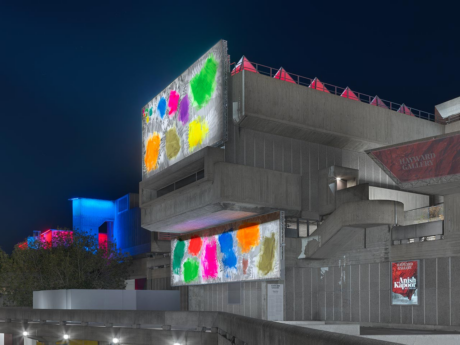
This thrumming cord between creation, observation and natural resources vibrates at the heart of MICAS’ latest exhibition, featuring the work of artists Kemi Onabulé, Megan Rooney and Nathanaëlle Herbelin. From the sun that lights up Megan Rooney’s large-scale colourist pieces to Herbelin’s votive invoking fertility, there is a sense of a hopeful surrender to the natural world, in all its wild unpredictability – albeit within the seventh-century fortress’ protective walls which close round the artists’ work like the watchful eye of an observant mother.

With Rooney at its head and Herbelin at the exhibition’s feet, Kemi’s work sits at the proverbial womb of MICAS – best positioned to interrogate the exhibition space’s containment and natural force. Soaring limestone walls frame the gallery’s descent towards a waiting sea and cradles the three-floor exhibition space. It’s not just nature’s extremes in the overwhelming fertility of Malta’s flora and vast surrounding seas that inspired Kemi, but a sense of limbo celebrated by the small island.
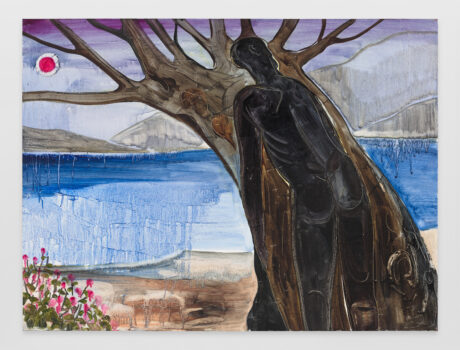
Her own heritage traces back to Greece, Nigeria and England; she’s now based in a small London studio, and Kemi mentions that she struggles to impose strict borders on her work. The artist’s shadowy figures – stand-ins for humanity as a whole – walk through oceanside scenes that stretch beyond the frame and hint at a wider artistic world with an endless horizon. So too does the island stretch on, nestled between Sicily and North Africa in a geographical limbo.
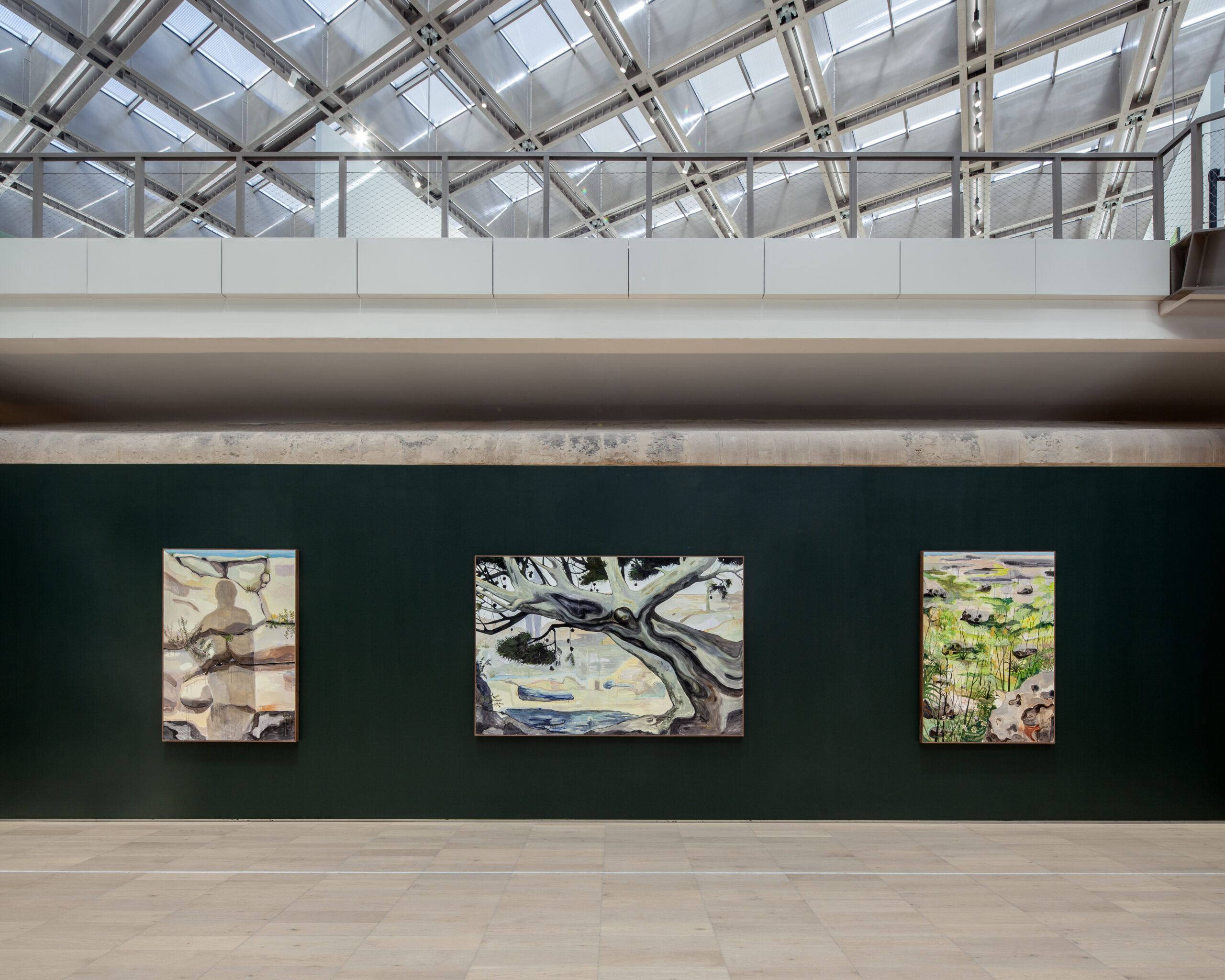
Kemi admits to a feeling of belonging in this ‘in-between’ space, and it’s something her often ghostly figures share. In Here By The Sea (St. Peters), she explains that the shy figure at its heart was layered up and cut back, both there and not there, caught between two rocky outcrops. Standing in front of the piece Kemi notes these are some of the largest paintings she has produced, but that she still struggled to contain them. In View of Floriana, a cave looks out onto a lush grove of trees; in Landmark a figure emerges from a tree whose branches catch at the edges of the frame; in Consumed, a figure stands in the midst of incomplete circular ripples. Everywhere in her work, there is a suggestion of more.